









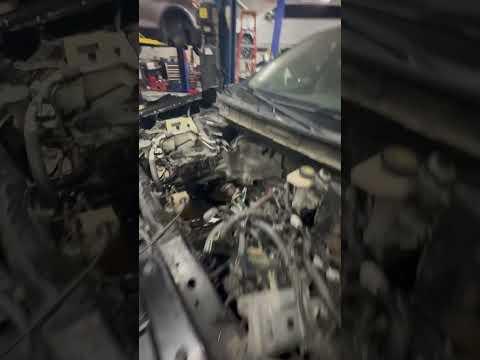







2016 Nissan Rogue Timing Belt vs Timing Chain: Troubleshoot & Replace the Timing Chain
Learn why the Rogue uses a timing chain and get step-by-step service info, tools, parts, and torque specs
2016 Nissan Rogue Timing Belt vs Timing Chain: Troubleshoot & Replace the Timing Chain
Learn why the Rogue uses a timing chain and get step-by-step service info, tools, parts, and torque specs


🔧 Rogue - Timing Belt Replacement
Your Rogue does not use a timing belt. The 2.5L engine uses a timing chain, which normally lasts a long time and isn’t a routine maintenance item like a belt.
If you’re chasing a noise, check-engine light, or cam/crank timing codes, the repair you’re looking for is typically timing chain service (chain + guides + tensioner) and resealing the front cover.
Difficulty Level: Advanced | Estimated Time: 6-10 hours
⚠️ Safety & Precautions
- ⚠️ Work on a cold engine; hot coolant and metal can burn you.
- ⚠️ Support the engine before removing the right-side mount; use a jack with a wood block under the oil pan.
- ⚠️ Keep hands clear when loosening the crank pulley bolt; it is very tight.
- ⚠️ Disconnect the battery negative terminal to prevent accidental starts.
- ⚠️ Cleanliness matters: dirt in the open engine can cause damage.
🔧 Required Tools
You'll need the following tools for this repair:
- Safety glasses
- Nitrile gloves
- Wheel chocks
- Floor jack (rated 3-ton minimum)
- Jack stands (rated 3-ton minimum)
- Wood block (2x6)
- 3/8" drive ratchet
- 1/2" drive breaker bar (24" minimum)
- Torque wrench (10-250 ft-lbs range)
- Socket set (8mm-22mm)
- Wrench set (10mm-19mm)
- Phillips screwdriver #2
- Flat trim tool
- Pliers
- Serpentine belt tool (14mm)
- Crank pulley puller kit (specialty)
- Crankshaft pulley holding tool (specialty)
- Gasket scraper (plastic)
- Brake cleaner spray
- Shop towels
- Drain pan (2-gallon minimum)
- Funnel
- Paint marker
🔩 Required Parts
HowToo sells all the parts you need for this repair:
- Timing chain kit (chain + guides + tensioner) - Qty: 1
- Front timing cover sealant (RTV silicone, OEM-style) - Qty: 1
- Crankshaft front oil seal - Qty: 1
- Accessory drive belt - Qty: 1
- Engine coolant (Nissan-compatible) - Qty: 2 gallons
- Engine oil - Qty: 5 quarts
- Oil filter - Qty: 1
- RTV-safe gasket remover wipes - Qty: 1
📋 Before You Begin
- Park on level ground, set the parking brake, and use wheel chocks behind the rear wheels.
- Disconnect the battery using a 10mm socket (negative terminal first).
- Raise the front and support it on jack stands at proper lift points.
- Remove the plastic engine cover (if equipped) using a 10mm socket.
- RTV = liquid gasket maker that must cure.
- TDC = top dead center; piston at the top.
🔨 Step-by-Step Instructions
Follow these steps in order:
Step 1: Remove the right front wheel and splash shield
- Use a 21mm socket to remove the wheel lug nuts and remove the wheel.
- Use a flat trim tool and Phillips screwdriver #2 to remove the fender liner/splash shield fasteners.
Step 2: Drain coolant (and plan for an oil change)
- Place a drain pan under the radiator drain.
- Open the drain and let coolant flow out; use pliers if the drain is stiff.
- You’ll typically contaminate engine oil when the front cover comes off—plan to replace engine oil and oil filter at reassembly.
Step 3: Remove the accessory drive belt
- Use a serpentine belt tool (14mm) to rotate the belt tensioner and slip the belt off.
- Snap a belt routing photo first.
Step 4: Support the engine and remove the right engine mount
- Place a floor jack with a wood block (2x6) under the oil pan and apply light support (do not lift hard).
- Use a socket set (14mm-19mm) to remove the right engine mount and bracket bolts.
- Torque on reassembly (typical): Torque to 62 Nm (46 ft-lbs) for mount-to-body bolts.
- Torque on reassembly (typical): Torque to 80 Nm (59 ft-lbs) for mount/bracket bolts.
- Keep bolts grouped by location.
Step 5: Remove the crank pulley (harmonic balancer)
- Harmonic balancer = crank pulley that drives the belt.
- Use a crankshaft pulley holding tool (specialty) to keep the pulley from turning.
- Use a 1/2" drive breaker bar with the correct socket (typically 19mm or 22mm) to remove the crank bolt.
- Use a crank pulley puller kit (specialty) to pull the pulley off straight.
- Torque on reassembly (typical): Torque to 175 Nm (129 ft-lbs) for crank pulley bolt.
Step 6: Remove the front timing cover
- Remove any remaining brackets and fasteners blocking the cover using a 10mm socket and 12mm socket.
- Use a gasket scraper (plastic) carefully to break the RTV seal; do not gouge aluminum.
- Clean mating surfaces with brake cleaner spray and shop towels.
- Torque on reassembly (typical): Torque to 12 Nm (9 ft-lbs) for front cover small bolts.
Step 7: Set the engine to TDC on cylinder #1 (compression)
- Rotate the crank using a socket and ratchet until the timing marks align.
- Use a paint marker to mark the chain-to-sprocket positions before disassembly.
- Do not rotate cams with the chain removed.
Step 8: Remove chain tensioner and guides
- Use a 10mm socket to remove the timing chain tensioner bolts.
- Remove the chain guides using a 10mm socket and 12mm socket.
- Torque on reassembly (typical): Torque to 10 Nm (89 in-lbs) for tensioner bolts.
- Torque on reassembly (typical): Torque to 12 Nm (9 ft-lbs) for guide bolts.
Step 9: Remove the timing chain
- Carefully lift the chain off the cam sprockets and crank sprocket by hand.
- Keep the sprockets from moving; if needed, hold with a wrench set (17mm-19mm) on the cam hex (if equipped).
Step 10: Install the new timing chain (align colored links to marks)
- Place the chain on the crank sprocket first, then route up to the cam sprockets.
- Align the chain’s colored links with the timing marks on each sprocket (crank and both cams).
- Install new guides using a 10mm socket and 12mm socket, then install the tensioner using a 10mm socket.
- Release (or “pull the pin” on) the tensioner so it applies tension.
Step 11: Verify timing by hand-rotating the engine
- Rotate the engine clockwise two full turns using a ratchet and socket.
- Re-check that timing marks return to correct alignment (colored links may not line up again every rotation; sprocket marks should).
- If it binds, stop and re-check timing.
Step 12: Reseal and install the front timing cover
- Install a new crankshaft front oil seal (tap evenly) using a socket that matches the seal’s outer diameter.
- Apply a continuous bead of front timing cover sealant (RTV) to the cover per the kit instructions.
- Install the cover and hand-start all bolts, then tighten in a crisscross pattern using a torque wrench.
- Torque (typical): Torque to 12 Nm (9 ft-lbs) for front cover bolts.
Step 13: Reinstall crank pulley, belt, mount, shields, and wheel
- Install the crank pulley and bolt using a crankshaft pulley holding tool (specialty) and torque wrench.
- Torque (typical): Torque to 175 Nm (129 ft-lbs) for crank pulley bolt.
- Reinstall the engine mount and bracket using a socket set, then torque fasteners.
- Reinstall the accessory belt using a serpentine belt tool (14mm).
- Reinstall splash shield fasteners using a Phillips screwdriver #2 and flat trim tool.
- Reinstall the wheel and tighten lug nuts using a 21mm socket.
- Torque: Torque to 113 Nm (83 ft-lbs) for wheel lug nuts.
Step 14: Refill fluids and reconnect battery
- Refill coolant using a funnel with Nissan-compatible coolant.
- Change oil and filter using the appropriate socket set and drain pan.
- Reconnect the battery negative terminal using a 10mm socket.
- Let RTV cure per label before starting.
✅ After Repair
- Start the engine and listen for abnormal rattles at idle.
- Check for oil leaks around the front cover and crank seal.
- Top off coolant after the first full warm-up/cool-down cycle.
- If the check-engine light comes on, scan for codes (cam/crank correlation codes mean timing is off).
💰 DIY vs Shop Cost
Shop Cost: $1,400-$2,600 (parts + labor)
DIY Cost: $250-$650 (parts only)
You Save: $750-$2,000 by doing it yourself!
Shop labor rates vary but typically run $100-$150/hour. This repair takes a shop approximately 6-10 hours.
🎯 Ready to get started?
HowToo makes it easy: same-day/2-day shipping on every part, plus all the tools and specialty tools you need! Check out the parts and tools sections below to add everything to your cart.
Assumption: Torque values shown are typical for this engine family; verify with a factory spec source for your exact fasteners before final tightening.