









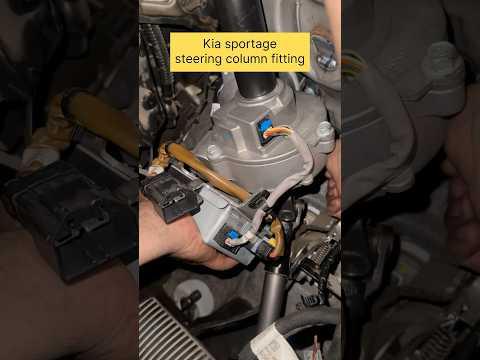




2016 Kia Sportage Power Steering Pump Replacement? Fix MDPS/EPS Steering Assist Issues
Learn why there’s no hydraulic pump and how to diagnose and replace the EPS/MDPS column, with tools, parts, safety steps, and SAS calibration tips for 2014, 2015, 2016
2016 Kia Sportage Power Steering Pump Replacement? Fix MDPS/EPS Steering Assist Issues
Learn why there’s no hydraulic pump and how to diagnose and replace the EPS/MDPS column, with tools, parts, safety steps, and SAS calibration tips for 2014, 2015, 2016


🔧 Sportage - Electric Power Steering Unit Replacement (No Pump)
Your Sportage uses an electric power steering system (MDPS/EPS), so it does not have a belt-driven hydraulic power steering pump to replace. If you’re having heavy steering, warnings, or noises, the usual “pump replacement” equivalent is replacing the EPS/MDPS steering column (or EPS motor/torque sensor, depending on what failed).
Difficulty Level: Advanced | Estimated Time: 3-6 hours
⚠️ Safety & Precautions
- ⚠️ Airbag/SRS risk: You will be working near the driver airbag and clock spring. Disconnect the battery and wait before touching SRS connectors.
- ⚠️ Steering angle/clock spring: Keep the front wheels straight and do not rotate the clock spring with the steering wheel removed.
- ⚠️ Battery disconnect required: Disconnect the negative battery terminal and wait at least 3 minutes before airbag work.
- ⚠️ Calibration required: EPS/SAS (steering angle sensor) calibration may be required after installation.
- ⚠️ Support the steering column during removal so it doesn’t drop and damage wiring.
🔧 Required Tools
You'll need the following tools for this repair:
- Safety glasses
- Mechanic gloves
- 10mm socket
- 12mm socket
- 14mm socket
- 17mm socket
- 19mm socket
- 3/8" drive ratchet
- 6" extension
- Torque wrench (10-150 ft-lbs range)
- Flat trim removal tool
- Phillips screwdriver #2
- Torx bit set
- Steering wheel puller (specialty)
- Paint marker
- Scan tool with EPS + SAS calibration (specialty)
🔩 Required Parts
HowToo sells all the parts you need for this repair:
- Electric power steering column/MDPS assembly - Qty: 1
- Steering column intermediate shaft pinch bolt - Qty: 1
- Steering wheel retaining nut - Qty: 1
📋 Before You Begin
- Park on level ground with the front wheels pointing straight.
- Turn the ignition OFF and remove the key/fob from the vehicle.
- Disconnect the negative battery terminal using a 10mm socket, then wait at least 3 minutes.
- Use a paint marker to mark steering wheel-to-shaft alignment before removal. This helps keep the wheel centered.
- Assumption: You’re replacing the full EPS/MDPS column assembly (common repair path on this system).
🔨 Step-by-Step Instructions
Follow these steps in order:
Step 1: Remove the lower dash panels
- Use a flat trim removal tool to gently pop off the driver-side lower trim panels.
- Remove any screws with a Phillips screwdriver #2 or the appropriate Torx bit.
- Set all fasteners aside in a small tray. Keep screws grouped by panel.
Step 2: Remove the driver airbag module
- From the sides/rear of the steering wheel, remove the airbag retaining fasteners using the correct Torx bit.
- Carefully pull the airbag outward just enough to access connectors.
- Disconnect the airbag connector(s) by lifting the lock tab first (if equipped), then unplug.
- Place the airbag face-up on a flat surface, away from your work area.
Step 3: Remove the steering wheel
- Mark the steering wheel and shaft relationship using a paint marker.
- Remove the steering wheel retaining nut using a 19mm socket.
- Install a steering wheel puller (specialty) and remove the steering wheel straight off.
- Do not rotate the clock spring once the wheel is off. The clock spring is a ribbon cable spool that keeps electrical connections while turning.
Step 4: Remove steering column covers and connectors
- Remove upper/lower column shrouds using a Phillips screwdriver #2 and/or Torx bit.
- Unplug EPS/column electrical connectors by depressing the tabs and pulling straight out.
- Unclip wiring retainers carefully using a flat trim removal tool.
Step 5: Disconnect the intermediate steering shaft
- Locate the intermediate shaft joint at the base of the steering column.
- Use a paint marker to mark the shaft and joint alignment.
- Remove the pinch bolt using a 12mm socket or 14mm socket (varies by fastener).
- Slide the joint off the column input. Wiggle gently—don’t pry hard.
Step 6: Unbolt and remove the steering column/MDPS assembly
- Support the column with one hand while removing fasteners.
- Remove the column mounting bolts/nuts using a 14mm socket and/or 17mm socket.
- Lower the column assembly and remove it from the driver footwell area.
- Torque note: During reassembly, tighten all steering/column fasteners with a torque wrench to factory specification for your exact fastener locations. (These values vary by joint and bracket.)
Step 7: Install the replacement EPS/MDPS assembly
- Position the replacement column and start all mounting bolts/nuts by hand.
- Tighten mounting fasteners using a 14mm socket/17mm socket, then Torque to factory specification with a torque wrench.
- Reconnect the intermediate shaft to your alignment marks and install a new pinch bolt using a 12mm socket/14mm socket.
- Torque to factory specification with a torque wrench.
Step 8: Reconnect wiring and reinstall trims
- Reconnect all column/EPS connectors until they click.
- Reinstall steering column covers using a Phillips screwdriver #2 and/or Torx bit.
- Reinstall lower dash panels using the flat trim removal tool and removed screws.
Step 9: Reinstall steering wheel and airbag
- Install the steering wheel to your paint marks.
- Install a new steering wheel nut using a 19mm socket, then Torque to factory specification with a torque wrench.
- Reconnect the airbag connector(s) and locks fully.
- Reinstall the airbag module fasteners using the correct Torx bit.
Step 10: Restore power and calibrate
- Reconnect the battery negative terminal using a 10mm socket.
- Use a scan tool with EPS + SAS calibration (specialty) to run Steering Angle Sensor (SAS) zero-point calibration and clear EPS/SRS codes if present.
- If the steering wheel is off-center after calibration, do not “fix it” by moving the wheel on the splines—have the front toe alignment set correctly.
✅ After Repair
- Start the engine and confirm the EPS warning light turns off after bulb check.
- Turn lock-to-lock slowly in a parking lot and confirm smooth assist with no binding.
- Road test at low speed first, then normal speeds, confirming steering wheel is centered.
- Scan again for stored codes using a scan tool (specialty).
- If any SRS light stays on, stop and recheck airbag/clock spring connections.
💰 DIY vs Shop Cost
Shop Cost: $900-$2,200 (parts + labor)
DIY Cost: $450-$1,500 (parts only)
You Save: $450-$700 by doing it yourself!
Shop labor rates vary but typically run $100-$150/hour. This repair takes a shop approximately 3-6 hours.
🎯 Ready to get started?
HowToo makes it easy: same-day/2-day shipping on every part, plus all the tools and specialty tools you need! Check out the parts and tools sections below to add everything to your cart.