









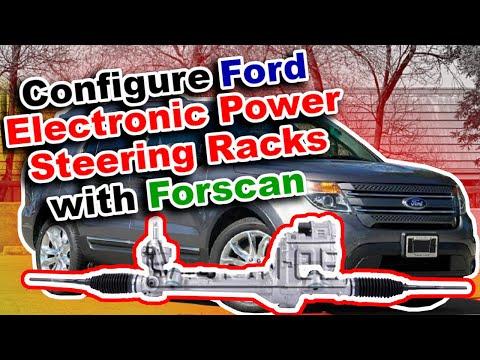







2016 Ford Explorer Power Steering Pump Replacement? EPAS Troubleshooting & Rack Repair Guide
Learn why there’s no hydraulic pump, how to diagnose EPAS faults, and replace the steering rack with tools, parts, and calibration tips
2016 Ford Explorer Power Steering Pump Replacement? EPAS Troubleshooting & Rack Repair Guide
Learn why there’s no hydraulic pump, how to diagnose EPAS faults, and replace the steering rack with tools, parts, and calibration tips


🔧 Explorer - Power Steering “Pump” Replacement (Not Equipped: EPAS)
Your Explorer uses EPAS (Electric Power Assisted Steering). That means there is no hydraulic power steering pump or fluid reservoir to replace like older systems.
If you’re having steering problems, the usual repair is diagnosing/repairing the electric steering gear (rack) assembly, related wiring/fuses, or doing a calibration—not replacing a pump.
Difficulty Level: Advanced | Estimated Time: 5-9 hours
⚠️ Safety & Precautions
- ⚠️ Disconnect the negative battery cable before touching EPAS wiring or the steering gear.
- ⚠️ Do not let the steering wheel rotate freely while the gear is disconnected (can damage the clockspring—an electrical ribbon behind the wheel).
- ⚠️ Support the vehicle with jack stands; never rely on a jack alone.
- ⚠️ Plan for a professional alignment after steering gear/outer tie-rod work.
- ⚠️ Keep hands clear when lowering/raising the subframe area.
🔧 Required Tools
You'll need the following tools for this repair:
- Safety glasses
- Mechanic gloves
- Wheel chocks
- Floor jack (rated 3-ton minimum)
- Jack stands (rated 3-ton minimum)
- Breaker bar (1/2")
- Torque wrench (10–250 ft-lbs range)
- Socket set (8mm–24mm, 3/8" and 1/2")
- Wrench set (8mm–24mm)
- Torx bit set (T20–T55)
- Pry bar (12–18")
- Flat trim tool
- Needle-nose pliers
- Tie-rod end puller (specialty)
- Paint marker
- OBD2 scan tool with Ford EPAS/PSCM functions (specialty)
🔩 Required Parts
HowToo sells all the parts you need for this repair:
- Electric power steering gear (EPAS rack) assembly - Qty: 1
- Outer tie rod end nuts - Qty: 2
- Steering intermediate shaft pinch bolt/nut kit - Qty: 1
- Subframe fasteners (one-time-use if specified) - Qty: 1 set
- Alignment service - Qty: 1
📋 Before You Begin
- Park on level ground, set the parking brake, and place wheel chocks behind the rear wheels.
- Center the steering wheel and point the front wheels straight ahead.
- Use a paint marker to mark the relationship of the steering shaft to the gear input (helps keep alignment close).
- Disconnect the battery: use a 10mm socket to remove the negative cable and isolate it.
- Plan scan-tool work: you will typically need to clear EPAS codes and perform steering angle/center calibration after installation.
🔨 Step-by-Step Instructions
Follow these steps in order:
Step 1: Confirm the system (EPAS, no pump)
- Open the hood and look for a power steering fluid reservoir. On your Explorer, there should be no reservoir and no belt-driven pump.
- Locate the EPAS gear electrical connector low at the rear of the engine/subframe area (access is from underneath).
Step 2: Raise and support the front
- Use a floor jack (rated 3-ton minimum) at the front center jacking point and lift the vehicle.
- Set it securely on jack stands (rated 3-ton minimum) at the proper frame/support points.
- Remove both front wheels using a 19mm socket (common lug size) and a breaker bar (1/2").
Step 3: Disconnect the outer tie rods from the knuckles
- Remove the tie-rod end nut on each side using a socket/wrench set (size as equipped).
- Separate the tie-rod end from the steering knuckle using a tie-rod end puller (specialty). (This tool pushes the joint apart without hammering.)
- Tip: Count turns if removing tie rods.
Step 4: Disconnect the steering intermediate shaft from the gear
- From the driver footwell area and/or from underneath (access varies), locate the intermediate shaft coupling at the steering gear input.
- Match-mark the shaft/coupler with a paint marker.
- Remove the pinch bolt using a socket set (size varies by build).
- Slide the shaft off the gear input. Do not rotate the steering wheel after this.
- Torque: Reinstall and torque to Ford specification for your build.
Step 5: Unplug the EPAS electrical connectors
- Locate the steering gear motor/module connectors.
- Release locks with a flat trim tool as needed, then unplug by hand.
- Secure the harness out of the way.
Step 6: Create clearance (subframe/brace components as needed)
- Remove any underbody shields using a socket set and trim tool.
- If a brace/crossmember blocks removal, remove its bolts using a socket set.
- Torque: Reinstall and torque to Ford specification.
Step 7: Unbolt and remove the steering gear (rack)
- Support the gear with a floor jack or by hand with help (it’s awkward and heavier than it looks).
- Remove the steering gear mounting bolts using a socket set and breaker bar.
- Work the gear out through the opening (usually toward the driver side with careful repositioning).
- Torque: Reinstall and torque steering gear mounting bolts to Ford specification.
Step 8: Install the new EPAS steering gear
- Compare old vs new gear (mount points, connector locations, tie-rod threads) before installation.
- Position the new gear and start mounting bolts by hand to avoid cross-threading.
- Tighten using a socket set, then final-tighten with a torque wrench.
- Torque: Torque to Ford specification.
Step 9: Reconnect steering shaft, wiring, and tie rods
- Reconnect EPAS connectors until they click/lock by hand.
- Install the intermediate shaft onto the gear using your match marks, then install pinch bolt using a socket set.
- Torque: Torque pinch bolt to Ford specification.
- Reconnect tie-rod ends to knuckles, install new nuts using a socket set.
- Torque: Torque tie-rod end nuts to Ford specification.
Step 10: Reassemble and reinstall wheels
- Reinstall any braces/shields using a socket set.
- Reinstall wheels using a 19mm socket.
- Lower the vehicle and torque lug nuts in a star pattern using a torque wrench.
- Torque: Torque lug nuts to the wheel/lug label specification.
Step 11: Battery reconnect + EPAS calibration
- Reconnect the negative battery cable using a 10mm socket.
- Connect your OBD2 scan tool with Ford EPAS/PSCM functions (specialty).
- Clear any stored EPAS/PSCM codes.
- Perform steering angle sensor / center point calibration if your scan tool provides it. (Calibration teaches the vehicle what “straight” is.)
✅ After Repair
- Start the engine and turn the wheel gently lock-to-lock while stopped. Feel for smooth, even assist.
- Verify there are no warning messages for steering assist.
- Road test at low speed first. Confirm the wheel returns to center normally.
- Get a 4-wheel alignment as soon as possible.
- If any EPAS light/message remains, scan again and address codes before driving far.
💰 DIY vs Shop Cost
Shop Cost: $1,200-$2,400 (parts + labor + alignment)
DIY Cost: $450-$1,400 (parts only, plus alignment)
You Save: $750-$1,000 by doing it yourself!
Shop labor rates vary but typically run $100-$150/hour. This repair takes a shop approximately 4-7 hours.
🎯 Ready to get started?
HowToo makes it easy: same-day/2-day shipping on every part, plus all the tools and specialty tools you need! Check out the parts and tools sections below to add everything to your cart.