









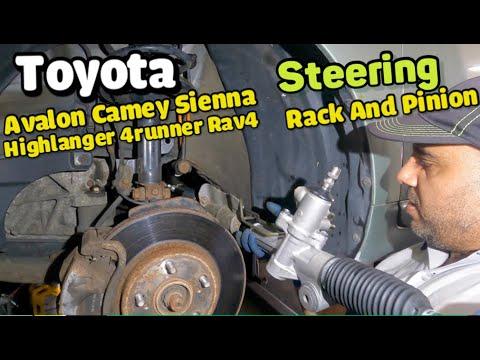







2014 Toyota Highlander Power Steering Pump Replacement? EPS Diagnosis & Steering Rack Repair Guide
Learn why there’s no hydraulic pump, how to troubleshoot EPS issues, replace the steering rack, and perform calibration for 2014, 2015, 2016, 2017, 2018, 2019
2014 Toyota Highlander Power Steering Pump Replacement? EPS Diagnosis & Steering Rack Repair Guide
Learn why there’s no hydraulic pump, how to troubleshoot EPS issues, replace the steering rack, and perform calibration for 2014, 2015, 2016, 2017, 2018, 2019


🔧 Highlander - Power Steering Pump Replacement
Your Highlander does not use a hydraulic power steering pump. It uses Electric Power Steering (EPS), so there’s no pump, no belt-driven unit, and no power steering fluid to replace or bleed.
What you replace instead: the EPS steering rack/gear assembly (the electric motor and control unit are part of the rack on most setups) if it has failed.
Difficulty Level: Advanced | Estimated Time: 4-7 hours
⚠️ Safety & Precautions
- ⚠️ Disconnect the negative battery terminal and wait 90 seconds before working near steering components (airbag system protection).
- ⚠️ Keep the steering wheel centered and locked; do not let it spin with the rack disconnected (prevents clock spring damage).
- ⚠️ Use jack stands on solid points; never work under a vehicle supported only by a jack.
- ⚠️ After steering work, you must get a professional alignment. Driving without it can be unsafe.
- ⚠️ EPS may require steering angle sensor zero-point calibration with a scan tool after install.
🔧 Required Tools
You'll need the following tools for this repair:
- Safety glasses
- Mechanic gloves
- Floor jack (rated 3-ton minimum)
- Jack stands (rated 3-ton minimum)
- Wheel chocks
- Torque wrench (20–200 ft-lbs range)
- Socket set (10mm–22mm)
- Wrench set (10mm–22mm)
- Breaker bar (1/2-inch drive)
- Trim clip removal tool
- Flathead screwdriver
- Pry bar
- Needle-nose pliers
- Tie rod end puller (specialty)
- Paint marker
- Bungee cord
- Engine support bar (specialty)
- Scan tool with Toyota EPS/SAS calibration (specialty)
🔩 Required Parts
HowToo sells all the parts you need for this repair:
- EPS steering rack/gear assembly - Qty: 1
- Outer tie rod ends - Qty: 2 Replace in pairs
- Steering rack mounting hardware (bolts/nuts as applicable) - Qty: 1 set
- Steering intermediate shaft pinch bolt/nut (as applicable) - Qty: 1
- Front subframe bolts (as applicable) - Qty: 1 set
- Threadlocker (medium strength) - Qty: 1
📋 Before You Begin
- Park on level ground, set the parking brake, and use wheel chocks behind the rear wheels.
- Center the steering wheel and keep it centered. Use a seat belt through the wheel or a bungee cord to hold it in place.
- Disconnect the battery using a 10mm socket on the negative terminal, then wait 90 seconds.
- Plan for calibration: have a scan tool with Toyota EPS/SAS functions ready. (Calibration “teaches” the vehicle straight-ahead again.)
- Assumption: Your Highlander has EPS (no hydraulic pump/fluid), which is standard for this model.
🔨 Step-by-Step Instructions
Follow these steps in order:
Step 1: Lift and secure the front end
- Use a floor jack (rated 3-ton minimum) to lift the front.
- Set the vehicle down onto jack stands (rated 3-ton minimum) at the proper lift points.
- Remove both front wheels using a 21mm socket (typical lug size) and a breaker bar.
Step 2: Remove under covers/splash shields
- Remove clips and screws using a trim clip removal tool, 10mm socket, and flathead screwdriver.
- Set all fasteners aside in a tray so they don’t get lost.
Step 3: Disconnect the outer tie rod ends
- Remove the cotter pin with needle-nose pliers (a cotter pin is a small safety pin that locks the nut).
- Remove the tie rod end nut using a 19mm socket (common size).
- Separate the joint using a tie rod end puller (specialty).
- Tip: Don’t hammer the steering knuckle.
Step 4: Mark and disconnect the steering intermediate shaft
- Use a paint marker to mark the relationship between the shaft and rack input (helps keep the steering wheel centered).
- Remove the pinch bolt using a 12mm socket or 14mm socket (varies by fastener).
- Slide the shaft up/off the rack input. Use a pry bar gently if needed.
- Tip: Keep the steering wheel locked centered.
Step 5: Disconnect EPS electrical connectors
- Unplug the EPS connectors from the rack using a flathead screwdriver to release locking tabs if needed.
- Inspect for corrosion or damaged pins before reassembly.
Step 6: Support the powertrain and loosen the front subframe (if required for clearance)
- Install an engine support bar (specialty) and tension it per the tool instructions (this supports the engine from above).
- Use a paint marker to mark subframe position to help alignment on reinstall.
- Loosen subframe bolts with a breaker bar (1/2-inch drive) and the appropriate socket set (17mm–22mm).
- Lower the subframe slightly as needed for rack removal, while watching for strain on hoses/wiring.
Step 7: Remove the steering rack mounting bolts and rack
- Remove rack mounting bolts using a socket set (14mm–19mm) (varies by fastener).
- Support the rack as the last bolts come out so it doesn’t drop.
- Work the rack out through the opening (this may take rotating and careful maneuvering).
Step 8: Install the new EPS steering rack
- Compare old vs new rack (connectors, mounts, length) before installing.
- Position the new rack and start all mounting bolts by hand.
- Apply threadlocker (medium strength) if the hardware requires it.
- Tighten mounting bolts with a torque wrench: Torque to 100 Nm (74 ft-lbs) (common rack mount spec; verify for your fasteners if available).
Step 9: Reinstall/torque the subframe (if loosened)
- Raise and align the subframe to your paint marks using a floor jack (rated 3-ton minimum).
- Tighten bolts with a torque wrench: Torque to 180 Nm (133 ft-lbs) (common subframe bolt range; verify for your fasteners if available).
Step 10: Reconnect the intermediate shaft
- Align your paint marks and slide the shaft onto the rack input.
- Install the pinch bolt using the correct socket and tighten with a torque wrench: Torque to 35 Nm (26 ft-lbs) (common pinch bolt spec; verify if available).
Step 11: Reconnect tie rod ends and set a basic toe
- Install tie rod ends and nuts using a 19mm socket and torque wrench: Torque to 49 Nm (36 ft-lbs) (typical; verify if available).
- Install a new cotter pin using needle-nose pliers.
- If you replaced tie rods: match the old length (count turns) to get you close enough to drive to alignment.
Step 12: Reinstall covers, wheels, and lower the vehicle
- Reinstall under covers using a 10mm socket and trim clip removal tool.
- Install wheels and snug lug nuts using a 21mm socket.
- Lower the vehicle and torque lug nuts with a torque wrench: Torque to 103 Nm (76 ft-lbs).
Step 13: Restore power and perform EPS/SAS calibration
- Reconnect the battery using a 10mm socket.
- Use a scan tool with Toyota EPS/SAS calibration (specialty) to perform steering angle sensor zero-point calibration.
- Clear EPS/ABS codes and recheck for returning faults.
✅ After Repair
- Start the engine and confirm the steering wheel turns smoothly lock-to-lock with no binding.
- Verify the EPS warning light is off. If it’s on, scan using the scan tool and address codes.
- Road test at low speed first. Confirm the wheel is centered and it tracks straight.
- Get a 4-wheel alignment as soon as possible.
💰 DIY vs Shop Cost
Shop Cost: $1,400-$3,000 (parts + labor)
DIY Cost: $650-$1,800 (parts only)
You Save: $750-$1,200 by doing it yourself!
Shop labor rates vary but typically run $100-$150/hour. This repair takes a shop approximately 4-7 hours.
🎯 Ready to get started?
HowToo makes it easy: same-day/2-day shipping on every part, plus all the tools and specialty tools you need! Check out the parts and tools sections below to add everything to your cart.