









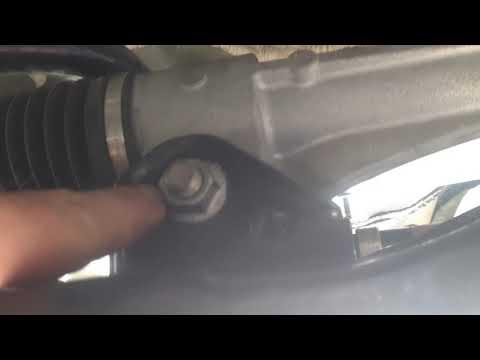







2014 Toyota Camry Power Steering Pump Replacement? EPS Steering Rack Diagnosis & Repair Guide
Learn why the Camry uses electric power steering (no pump), plus step-by-step EPS rack replacement, tools, and calibrations
2014 Toyota Camry Power Steering Pump Replacement? EPS Steering Rack Diagnosis & Repair Guide
Learn why the Camry uses electric power steering (no pump), plus step-by-step EPS rack replacement, tools, and calibrations


🔧 Camry - Power Steering “Pump” Replacement (EPS Reality Check)
Your Camry uses Electric Power Steering (EPS), so it does not have a hydraulic power steering pump, fluid, or hoses to replace. When steering assist fails, the usual repair is replacing the EPS steering gear (rack) assembly or fixing power/ground, wiring, or related sensors.
Difficulty Level: Advanced | Estimated Time: 6-10 hours
⚠️ Safety & Precautions
- ⚠️ Disconnect the 12V battery before unplugging EPS connectors or working near the steering column.
- ⚠️ Airbag precaution: after disconnecting the 12V battery, wait at least 90 seconds before working near the steering column (airbag system backup power).
- ⚠️ Keep the steering wheel straight and do not rotate it while the steering shaft is disconnected, or you can damage the clock spring (the ribbon cable for the airbag/horn inside the steering wheel).
- ⚠️ Support the vehicle with jack stands on solid points; never rely on a jack.
- ⚠️ Hybrid caution: avoid disturbing orange high-voltage cables. This job typically does not require HV shutdown if you don’t touch HV components.
🔧 Required Tools
You'll need the following tools for this repair:
- Safety glasses
- Mechanic gloves
- Wheel chocks
- Floor jack (rated 3-ton minimum)
- Jack stands (rated 3-ton minimum)
- Breaker bar 1/2"
- Torque wrench 1/2"
- Socket set (8mm-22mm)
- Wrench set (10mm-22mm)
- Ratchet 3/8"
- Extensions set (3" and 6")
- Trim clip remover
- Pry bar
- Needle-nose pliers
- Paint marker
- Tie rod end puller (specialty)
- Subframe support (engine support bar or transmission jack) (specialty)
- Scan tool with EPS utilities (Toyota Techstream-capable) (specialty)
🔩 Required Parts
HowToo sells all the parts you need for this repair:
- EPS steering gear (rack) assembly - Qty: 1
- Outer tie rod ends - Qty: 2 Replace in pairs
- Inner tie rods - Qty: 2 Recommended while rack is out
- Tie rod end cotter pins - Qty: 2
- Steering gear mounting hardware kit - Qty: 1 If offered for your rack
📋 Before You Begin
- Park on level ground, center the steering wheel, and set the parking brake.
- Chock the rear wheels with wheel chocks.
- Open the trunk and disconnect the 12V negative battery terminal using a 10mm wrench, then wait 90 seconds.
- Use a paint marker to mark the relationship between the steering intermediate shaft and the rack input shaft. This helps keep the steering wheel centered.
- Plan for a professional alignment afterward. Even if you measure carefully, toe will change.
🔨 Step-by-Step Instructions
Follow these steps in order:
Step 1: Lift and secure the front end
- Place wheel chocks behind the rear tires.
- Use a floor jack to lift the front, then place jack stands under solid lift points.
- Remove both front wheels using a breaker bar 1/2" and the correct socket.
- When reinstalling wheels later: Torque to 103 Nm (76 ft-lbs) using a torque wrench 1/2".
Step 2: Remove lower covers and access the rack area
- Remove the front lower engine under cover/splash shields using a trim clip remover and socket set (10mm-12mm as needed).
- Set all clips/bolts aside in a tray so they don’t get lost.
Step 3: Disconnect the steering intermediate shaft from the rack
- Inside the engine bay/near the firewall area, locate the steering intermediate shaft pinch joint (this is the clamping joint that connects the column shaft to the rack input).
- Use a paint marker to add clear alignment marks if you haven’t already.
- Remove the pinch bolt using the correct socket set and ratchet 3/8", then slide the shaft off the rack input.
- Tip: Strap the steering wheel so it can’t spin.
Step 4: Unplug EPS electrical connectors
- Locate the EPS motor/ECU connectors on the steering gear.
- Release connector locks and unplug using your fingers or needle-nose pliers gently (don’t pull on wires).
- If harness clips are attached to the rack, remove them with a trim clip remover.
- Tip: Take a photo before unplugging.
Step 5: Separate the outer tie rod ends from the steering knuckles
- Remove the cotter pin with needle-nose pliers.
- Remove the tie rod end nut using the correct socket and ratchet.
- Use a tie rod end puller (specialty) to separate the joint from the knuckle. (A tie rod puller pushes the stud out without hammering.)
- Count and record the number of turns to remove each outer tie rod from the inner tie rod using a wrench set. This helps get you close for the alignment.
Step 6: Support and lower the front subframe as needed
- Position a subframe support (engine support bar or transmission jack) (specialty) under the subframe area so it can’t drop unexpectedly.
- Use the correct socket set and breaker bar 1/2" to loosen subframe fasteners enough to create clearance to remove the rack (exact bolt locations vary by underbody layout).
- Lower the subframe slightly and evenly using the support tool. Do not stretch wiring or hoses.
Step 7: Remove the EPS steering gear (rack) assembly
- Remove the rack mounting bolts using the correct socket set, extensions, and ratchet.
- Work the rack out through the opening (usually toward the driver side) while watching wiring and boots.
- Tip: Move slowly; don’t tear the rack boots.
Step 8: Transfer/compare parts and install the new rack
- Compare the new rack to the old rack (mount points, electrical connectors, overall length) before installation.
- If replacing inner/outer tie rods, install them onto the new rack using the appropriate wrench set and socket set.
- Slide the new rack into place and start mounting bolts by hand to avoid cross-threading.
- Tighten rack mounting bolts using a torque wrench 1/2" to the Toyota service-manual specification for your rack/subframe fasteners.
Step 9: Reconnect steering shaft, wiring, and tie rods
- Reconnect the steering intermediate shaft to the rack input, matching your paint marker marks.
- Install and tighten the pinch bolt using the correct socket set and torque wrench to the Toyota service-manual specification.
- Plug in EPS connectors until they click. Reattach harness clips using a trim clip remover as needed.
- Thread the outer tie rods back on using the same turn count, then install into knuckles.
- Install new cotter pins using needle-nose pliers after tightening the tie rod nuts to the Toyota service-manual specification.
Step 10: Reassemble under covers and reinstall wheels
- Raise and re-secure the subframe (if lowered) using the subframe support, then torque fasteners with a torque wrench 1/2" to Toyota service-manual specification.
- Reinstall splash shields using a trim clip remover and socket set.
- Reinstall wheels using a socket set; final-tighten: Torque to 103 Nm (76 ft-lbs) with a torque wrench 1/2".
- Lower the vehicle using a floor jack.
Step 11: Restore power and run EPS calibrations (critical)
- Reconnect the 12V negative terminal using a 10mm wrench.
- Connect your scan tool with EPS utilities (Toyota Techstream-capable) (specialty).
- Run the EPS utility to initialize/zero the steering/torque sensor as required by the EPS system.
- If warning lights remain (EPS/VSC), use the scan tool to check codes and complete any required zero-point calibrations.
✅ After Repair
- Start the vehicle and confirm the steering assist feels normal at idle and during a slow parking-lot test.
- Turn lock-to-lock slowly and listen for clunks, rubbing, or binding. Stop if anything feels notchy.
- Confirm the steering wheel is centered while driving straight. If not, do not “just live with it.” Get it aligned.
- Get a 4-wheel alignment as soon as possible to prevent tire wear.
- Re-scan for codes with a Techstream-capable scan tool and confirm no EPS-related codes return.
💰 DIY vs Shop Cost
Shop Cost: $1,400-$2,800 (parts + labor)
DIY Cost: $650-$1,800 (parts only)
You Save: $750-$1,000 by doing it yourself!
Shop labor rates vary but typically run $100-$150/hour. This repair takes a shop approximately 6-10 hours.
🎯 Ready to get started?
HowToo makes it easy: same-day/2-day shipping on every part, plus all the tools and specialty tools you need! Check out the parts and tools sections below to add everything to your cart.