












2013 Toyota Corolla Power Steering Pump? Troubleshoot EPS Steering & Replace the EPS Rack
No hydraulic pump on this model—diagnose EPS warning lights, scan codes, tools, steps, and key safety tips
2013 Toyota Corolla Power Steering Pump? Troubleshoot EPS Steering & Replace the EPS Rack
No hydraulic pump on this model—diagnose EPS warning lights, scan codes, tools, steps, and key safety tips


🔧 Corolla - Power Steering “Pump” Replacement
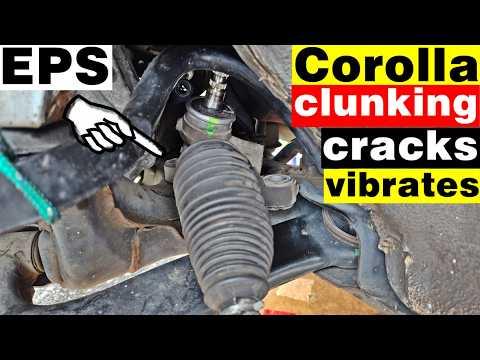
Your Corolla uses Electric Power Steering (EPS), which means there is no hydraulic power steering pump, no power steering fluid reservoir, and no pump belt to replace. If you’re having steering issues, the fix is usually in the EPS system (steering column EPS motor/torque sensor) or the steering rack (EPS rack), not a pump.
Difficulty Level: Intermediate to Advanced | Estimated Time: 2-6 hours (depends on which EPS part)
⚠️ Safety & Precautions
- ⚠️ Disconnect the negative battery cable before EPS work to prevent accidental EPS motor movement.
- ⚠️ If working near the steering column, avoid disturbing the airbag (SRS) wiring/connectors.
- ⚠️ Support the car with jack stands on a level surface; never rely on a jack alone.
🔧 Required Tools
You'll need the following tools for this repair:
- 10mm socket
- 12mm socket
- 14mm socket
- 17mm socket
- 3/8" drive ratchet
- 3/8" drive torque wrench
- Flat trim tool
- Needle-nose pliers
- Floor jack (rated 3-ton minimum)
- Jack stands (rated 3-ton minimum)
- Wheel chocks
- Safety glasses
- Mechanic gloves
- Scan tool with Toyota EPS codes (specialty)
🔩 Required Parts
HowToo sells all the parts you need for this repair:
- EPS steering rack assembly - Qty: 1
- Outer tie rod ends - Qty: 2 Replace in pairs
- Steering rack mounting hardware - Qty: 1 set
- Steering intermediate shaft pinch bolt - Qty: 1
📋 Before You Begin
- Park on level ground, set the parking brake, and chock the rear wheels.
- Center the steering wheel and keep it centered (don’t let it spin freely).
- Disconnect the battery: use a 10mm socket to remove the negative terminal and wait 2 minutes.
- EPS is electric—no fluid to drain.
🔨 Step-by-Step Instructions
Follow these steps in order:
Step 1: Confirm what you’re replacing (no pump on this car)
- Open the hood and look for a power steering fluid reservoir—your Corolla should not have one.
- If you’re seeing a leak, it’s likely engine oil/coolant, not power steering fluid.
- Use a scan tool with Toyota EPS codes (specialty) to check for EPS trouble codes (they guide the correct repair).
Step 2: Lift and secure the front of the car
- Use a floor jack (rated 3-ton minimum) to lift the front.
- Set it down on jack stands (rated 3-ton minimum) at the proper lift points.
Step 3: Remove the front wheels
- Use a 21mm socket to remove the lug nuts and pull both front wheels off.
Step 4: Disconnect the outer tie rod ends from the knuckles
- Remove the cotter pin with needle-nose pliers.
- Remove the tie rod nut with a 17mm socket.
- Separate the joint (you may need a tie-rod separator tool; it’s a fork/puller used to pop the joint free).
Step 5: Disconnect the steering intermediate shaft from the rack
- From the driver footwell area (or at the rack input, depending on access), remove any lower panels using a flat trim tool.
- Mark alignment (paint mark) so the steering wheel stays centered.
- Remove the pinch bolt using a 12mm socket (or as equipped) and slide the joint off.
Step 6: Unplug the EPS electrical connectors at the rack
- Locate the rack’s EPS connectors and unplug them carefully.
- Use a flat trim tool to release any wiring clips so you don’t tear the harness.
Step 7: Remove the steering rack mounting bolts and remove the rack
- Support the rack as you remove bolts so it doesn’t drop.
- Remove rack mounting bolts using a 14mm socket and/or 17mm socket (varies by bracket location).
- Slide the rack out carefully through the wheel well/subframe opening.
Step 8: Install the new rack and reconnect everything
- Position the rack and start all mounting bolts by hand.
- Tighten rack bolts using a torque wrench: Torque to factory spec (spec varies by fastener/location; I’ll give exact numbers once I know which rack/fastener set you have).
- Reconnect EPS electrical connectors firmly.
- Reconnect the intermediate shaft and tighten pinch bolt using a torque wrench: Torque to factory spec.
- Reconnect tie rod ends and tighten nuts using a torque wrench: Torque to factory spec, then install new cotter pins.
Step 9: Reinstall wheels and lower the car
- Install wheels and snug lug nuts using a 21mm socket.
- Lower the car, then torque lug nuts with a torque wrench: Torque to 103 Nm (76 ft-lbs).
Step 10: Restore power and perform EPS checks
- Reconnect the battery negative terminal using a 10mm socket.
- Use a scan tool with Toyota EPS codes (specialty) to clear codes and run EPS calibration/zero-point if required.
✅ After Repair
- Start the car and verify the steering wheel turns smoothly lock-to-lock with no warning lights.
- Check for EPS warning light on the dash; scan for codes if it stays on.
- Get a professional alignment anytime the rack/tie rods are removed.
💰 DIY vs Shop Cost
Shop Cost: $900-$2,200 (parts + labor + alignment)
DIY Cost: $350-$1,200 (parts only)
You Save: $550-$1,000 by doing it yourself!
Shop labor rates vary but typically run $100-$150/hour. This repair takes a shop approximately 3-6 hours.
🎯 Ready to get started?
HowToo makes it easy: same-day/2-day shipping on every part, plus all the tools and specialty tools you need! Check out the parts and tools sections below to add everything to your cart.
Quick questions (so I give you the correct repair)
- 🔎 Are you trying to fix a stiff steering / EPS warning light, or are you chasing a fluid leak you thought was power steering?
- 🔎 Do you want instructions for replacing the EPS steering rack or the steering column EPS motor/torque sensor?