












2012-2019 Nissan Versa Power Steering Pump Replacement? Fix Heavy Steering on EPS System (Engine: Inline 4 1.6L)
Learn why there’s no hydraulic pump, plus step-by-step EPS checks, fuses, battery tests, and scan-tool diagnostics
2012-2019 Nissan Versa Power Steering Pump Replacement? Fix Heavy Steering on EPS System (Engine: Inline 4 1.6L)
Learn why there’s no hydraulic pump, plus step-by-step EPS checks, fuses, battery tests, and scan-tool diagnostics for 2012, 2013, 2014, 2015, 2016, 2017, 2018, 2019


🔧 Versa - Power Steering Pump Replacement (Not Equipped)
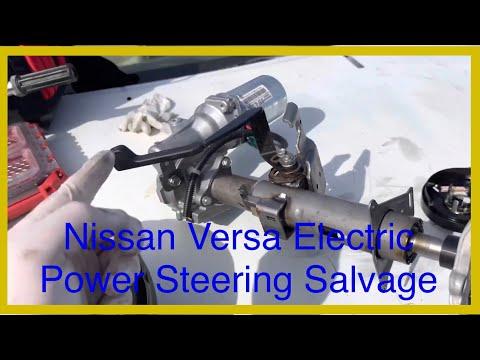
Your Versa uses Electric Power Steering (EPS), which means there is no hydraulic power steering pump, no belt-driven pump, and no power steering fluid to replace.
If your steering feels heavy or you have a power steering warning light, the fix is usually in the EPS electrical system (battery/charging, fuses, wiring, steering column EPS unit, or steering rack).
Difficulty Level: Beginner (checks) / Advanced (EPS parts replacement) | Estimated Time: 0.5-1.0 hours (checks) / 4-8 hours (rack/column)
⚠️ Safety & Precautions
- ⚠️ Disconnect the negative battery terminal before working near the steering column; the airbag system is nearby.
- ⚠️ If lifting the front of your Versa, support it on jack stands on a level surface.
- ⚠️ After steering/suspension work, a professional alignment is required to prevent unsafe handling and tire wear.
- ⚠️ If the steering wheel is removed, keep it centered to avoid damaging the clock spring (a ribbon cable for airbag/horn controls).
🔧 Required Tools
You'll need the following tools for this repair:
- 10mm socket
- 10mm wrench
- 12mm socket
- 14mm socket
- 17mm socket
- 19mm socket
- 3/8" drive ratchet
- 3/8" drive torque wrench (10–100 ft-lbs)
- Flathead screwdriver
- Trim clip removal tool
- Needle-nose pliers
- Floor jack (rated 2-ton minimum)
- Jack stands (rated 2-ton minimum)
- Wheel chocks
- Work light
- Multimeter (specialty)
- OBD2 scan tool with ABS/EPS capability (specialty)
- Safety glasses
- Nitrile gloves
🔩 Required Parts
HowToo sells all the parts you need for this repair:
- EPS-related fuse(s) (as equipped) - Qty: 1
- Battery terminal anti-corrosion washers - Qty: 2
- 12V battery (if failed testing) - Qty: 1
- Serpentine belt (only if charging/belt issue found) - Qty: 1
- Electric power steering rack/gear assembly (if diagnosed failed) - Qty: 1
- Outer tie rod end(s) (recommended if worn) - Qty: 2
- Cotter pin(s) for tie rod end castle nut - Qty: 2
📋 Before You Begin
- Park on level ground, point the front wheels straight, and set the parking brake.
- Place wheel chocks behind the rear tires.
- Disconnect the battery: use a 10mm wrench to remove the negative (-) terminal, then wait 3 minutes before working near the steering column.
- EPS is voltage-sensitive; weak batteries cause issues.
🔨 Step-by-Step Instructions
Follow these steps in order:
Step 1: Confirm your Versa is EPS (no pump)
- Open the hood and look for a power steering fluid reservoir—there won’t be one on your Versa with EPS.
- Look at the belt area: there is no belt-driven power steering pump on this system.
- If you were quoted a “pump,” it usually means an EPS rack or EPS column unit, not a hydraulic pump.
Step 2: Check battery connections (common cause of heavy steering)
- Use a 10mm wrench to remove both battery terminals.
- Clean the terminals and posts; reinstall and tighten securely with the 10mm wrench.
- Use a multimeter (specialty) to check voltage:
- Engine off: about 12.6V for a healthy, fully charged battery.
- Engine running: about 13.5–14.8V (charging system working).
Step 3: Scan for EPS trouble codes
- Plug in an OBD2 scan tool with ABS/EPS capability (specialty) and pull codes.
- Write down EPS codes before clearing anything; the codes point to the failed area (low voltage, torque sensor, motor, rack, etc.).
Step 4: Check EPS fuses (basic DIY “replacement” that matches the symptom)
- Use a flathead screwdriver to open the fuse box cover(s).
- Use needle-nose pliers to pull the EPS-related fuse(s) and inspect for a broken element.
- Replace any blown fuse with the same amperage rating.
Step 5: If replacement is required—what actually gets replaced (rack or column)
- If codes and testing confirm a failed EPS component, the usual replaceable assemblies are:
- EPS steering rack/gear assembly (at the front subframe)
- EPS steering column unit (inside the cabin)
- This is an Advanced repair because it may require steering angle/neutral calibration and an alignment.
- If you want DIY steps for rack or column, use the exact failed part.
✅ After Repair
- Start your Versa and confirm the steering assist works normally and the warning light stays off.
- Re-scan with the OBD2 scan tool with ABS/EPS capability (specialty) to confirm no EPS codes return.
- If any steering parts were removed/replaced, get a 4-wheel alignment immediately.
💰 DIY vs Shop Cost
Shop Cost: $150-$250 (diagnosis) / $900-$2,000 (EPS rack or column installed)
DIY Cost: $0-$60 (battery/fuse fixes) / $400-$1,200 (parts only, if replacing EPS assembly)
You Save: $150-$800+ by doing it yourself!
Shop labor rates vary but typically run $100-$150/hour. This repair takes a shop approximately 0.5-1.0 hours (checks) or 4-8 hours (rack/column).
🎯 Ready to get started?
HowToo makes it easy: same-day/2-day shipping on every part, plus all the tools and specialty tools you need! Check out the parts and tools sections below to add everything to your cart.
Guide for Serpentine Belt replace for these Nissan vehicles
| Year Make Model | Sub Model | Engine | Body Style |
|---|---|---|---|
| 2019 Nissan Versa | - | Inline 4 1.6L | - |
| 2018 Nissan Versa | - | Inline 4 1.6L | - |
| 2017 Nissan Versa | - | Inline 4 1.6L | - |
| 2016 Nissan Versa | - | Inline 4 1.6L | - |
| 2015 Nissan Versa | - | Inline 4 1.6L | - |
| 2014 Nissan Versa | - | Inline 4 1.6L | - |
| 2013 Nissan Versa | - | Inline 4 1.6L | - |
| 2012 Nissan Versa | - | Inline 4 1.6L | - |
| 2012 Nissan Versa | - | Inline 4 1.8L | - |