









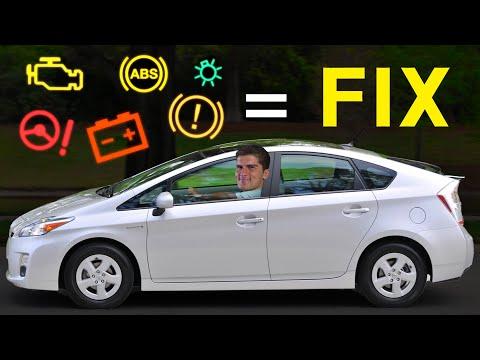





2004-2015 Toyota Prius No-Start? Troubleshoot “No Starter Motor” Issues (MG1/READY Guide) (Engine: Inline 4 1.8L)
Step-by-step checks for no READY/no crank: 12V battery, fuses, terminals, scan codes, and hybrid safety tips
2004-2015 Toyota Prius No-Start? Troubleshoot “No Starter Motor” Issues (MG1/READY Guide) (Engine: Inline 4 1.8L)
Step-by-step checks for no READY/no crank: 12V battery, fuses, terminals, scan codes, and hybrid safety tips for 2004, 2005, 2006, 2007, 2008, 2009


🔧 Prius - Starter Motor Replacement (Not Applicable on This Hybrid)
Your Prius does not use a traditional 12V starter motor like a normal gasoline car. The gasoline engine is cranked by an electric motor-generator inside the transaxle (called MG1), controlled by the hybrid system.
If you have a “no crank/no start,” the fix is usually 12V power, hybrid control, or (rarely) transaxle/MG1-related—NOT a bolt-on starter replacement.
Difficulty Level: Intermediate (diagnosis) / Advanced (MG1/transaxle work) | Estimated Time: 0.5-2.0 hours (checks) / 10-16 hours (transaxle replacement)
⚠️ Safety & Precautions
- ⚠️ High voltage hybrid system: never touch orange cables/connectors.
- ⚠️ If you must work near the inverter/transaxle, disable the HV battery using the service plug and wait the specified time before touching HV components.
- ⚠️ Use jack stands; never rely on a jack alone.
- ⚠️ If the car won’t go to READY, do not keep cycling power repeatedly; you can set more faults.
- Battery disconnect: 12V battery negative cable can be disconnected for basic checks; HV battery service plug is only for HV-related work.
🔧 Required Tools
You'll need the following tools for this repair:
- 10mm socket
- 12mm socket
- Ratchet (3/8")
- Torque wrench (10–100 Nm range)
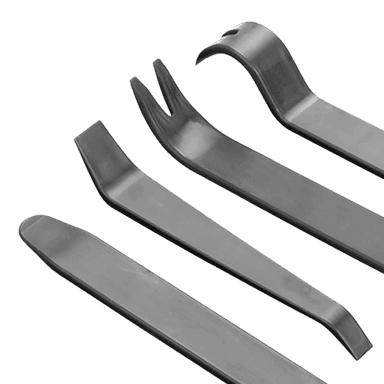
- Trim clip remover tool
- Digital multimeter
- OBD2 scan tool with Toyota hybrid support (Techstream-capable) (specialty)
- Insulated mechanic gloves (1000V-rated) (specialty)
- Safety glasses
- Floor jack (rated 3-ton minimum)
- Jack stands (rated 3-ton minimum)
- Wheel chocks
🔩 Required Parts
HowToo sells all the parts you need for this repair:
- 12V auxiliary battery - Qty: 1 (only if testing fails)
- 12V battery terminal hardware kit - Qty: 1 (only if corroded/damaged)
- AM2 / IG2 style fuses (assorted mini/low-profile) - Qty: 1 (only if blown)
📋 Before You Begin
- Park on level ground, shift to P, and set the parking brake.
- Keep the smart key at least 15 feet away if you’re unplugging connectors (prevents accidental wake-up).
- If lifting the car, use wheel chocks and support with jack stands.
- On hybrids, “READY” matters more than “crank.”
🔨 Step-by-Step Instructions
Follow these steps in order:
Step 1: Confirm the symptom (no READY vs no engine start)
- Press the brake pedal firmly and push POWER to start.
- If the dash shows READY, the hybrid system is on; the engine may stay off at idle and that can be normal.
- If READY does NOT appear, focus on 12V power, fuses, or hybrid faults (not a starter).
Step 2: Check 12V battery voltage (most common cause)
- Open the hatch and access the 12V battery area (use trim clip remover tool as needed).
- Use a digital multimeter across the battery terminals.
- As a quick rule: ~12.6V is healthy resting; near/under ~12.0V is often too weak for hybrids to boot computers.
- If the battery is low, charge it fully or replace it before doing anything else.
Step 3: Inspect battery terminals and grounds
- Use a 10mm socket to check terminal tightness (do not over-tighten).
- Look for white/green corrosion, loose clamps, or damaged cables.
- If disconnecting the 12V battery negative terminal, use 10mm socket and move it aside so it can’t spring back.
Step 4: Check key fuses related to hybrid “wake-up”
- With the car OFF, open the under-hood fuse/relay box.
- Use a digital multimeter to test fuses for continuity (better than just looking).
- Common “no READY” contributors are IG/AM-type circuits; replace only fuses that test bad using the correct AM2 / IG2 style fuses.
Step 5: Scan for hybrid and power management trouble codes
- Plug in an OBD2 scan tool with Toyota hybrid support (Techstream-capable) (specialty).
- Read codes from Hybrid Control, Power Management, Engine, and Transmission control modules.
- Record codes before clearing anything; the code list is your roadmap to the real failed part.
- Clear codes only after you’ve written them down and fixed the cause.
Step 6: If you were expecting a “starter,” understand the actual repair path
- There is no external starter motor to unbolt and replace on your Prius.
- If diagnosis points to MG1/transaxle failure, the typical fix is transaxle replacement (advanced job involving hybrid high voltage and coolant).
- If MG1 is suspected, plan on shop-level work.
Step 7: If the engine won’t start but READY is on
- Use your scan tool to check for engine-related codes (misfire, fuel, immobilizer, etc.).
- Do not assume “starter”—if READY is on, the hybrid system can crank the engine, so the problem is usually fuel/ignition/sensor/compression or a hybrid control limitation.
✅ After Repair
- Verify the car enters READY normally and no warning lights remain.
- Use the scan tool to confirm no pending hybrid/power management codes.
- Test drive: confirm normal acceleration and that the engine starts/stops normally during driving.
💰 DIY vs Shop Cost
Shop Cost: $150-$350 (diagnosis/12V issues) OR $3,500-$6,500 (transaxle/MG1-related replacement)
DIY Cost: $0-$350 (scan/12V battery/fuses, parts only)
You Save: $150-$350+ by doing the basic checks yourself!
Shop labor rates vary but typically run $100-$150/hour. This repair takes a shop approximately 1-2 hours for diagnostics, or 10-16 hours for transaxle replacement.
🎯 Ready to get started?
HowToo makes it easy: same-day/2-day shipping on every part, plus all the tools and specialty tools you need! Check out the parts and tools sections below to add everything to your cart.
Guide for Vehicle Battery replace for these Toyota vehicles
| Year Make Model | Sub Model | Engine | Body Style |
|---|---|---|---|
| 2015 Toyota Prius | - | Inline 4 1.8L | - |
| 2014 Toyota Prius | - | Inline 4 1.8L | - |
| 2013 Toyota Prius | - | Inline 4 1.8L | - |
| 2012 Toyota Prius | - | Inline 4 1.8L | - |
| 2011 Toyota Prius | - | Inline 4 1.8L | - |
| 2010 Toyota Prius | - | Inline 4 1.8L | - |
| 2009 Toyota Prius | - | Inline 4 1.5L | - |
| 2008 Toyota Prius | - | Inline 4 1.5L | - |
| 2007 Toyota Prius | - | Inline 4 1.5L | - |
| 2006 Toyota Prius | - | Inline 4 1.5L | - |
| 2005 Toyota Prius | - | Inline 4 1.5L | - |
| 2004 Toyota Prius | - | Inline 4 1.5L | - |