









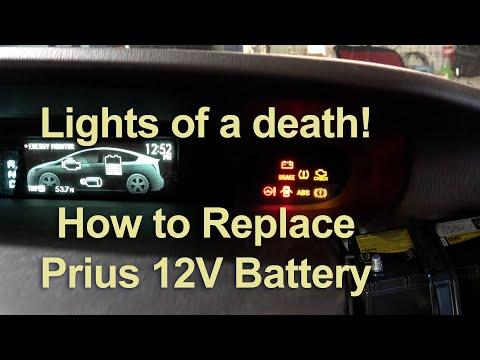







2004-2015 Toyota Prius “Alternator” Problem: How to Test DC-DC Charging & Replace the 12V Battery (Engine: Inline 4 1.8L)
Step-by-step multimeter voltage checks in READY mode, 12V AGM battery swap, tools, parts, and safety tips
2004-2015 Toyota Prius “Alternator” Problem: How to Test DC-DC Charging & Replace the 12V Battery (Engine: Inline 4 1.8L)
Step-by-step multimeter voltage checks in READY mode, 12V AGM battery swap, tools, parts, and safety tips for 2004, 2005, 2006, 2007, 2008, 2009


🔧 Prius - Alternator (Not Equipped) - Charging System Check & 12V Battery Replacement
Your Prius does not use a traditional belt-driven alternator. Instead, the hybrid system charges the 12V system through a DC-DC converter (built into the inverter assembly), so an “alternator replacement” isn’t a real service item on your Prius.
This guide shows you how to (1) verify the 12V charging system is working and (2) replace the 12V battery, which is the most common fix when people suspect an alternator problem.
Difficulty Level: Beginner | Estimated Time: 0.5-1.5 hours
⚠️ Safety & Precautions
- ⚠️ Hybrid safety: Do not touch orange cables or hybrid components.
- ⚠️ When the car is in READY, high-voltage systems are active even if the engine is off.
- ⚠️ Remove metal jewelry (rings/watches) before working near the 12V battery.
- ⚠️ Battery acid risk: Use gloves and eye protection.
- Battery disconnect: For battery replacement, disconnect the negative (-) cable first and reconnect it last.
🔧 Required Tools
You'll need the following tools for this repair:
- 10mm socket
- 10mm wrench
- Ratchet (3/8")
- 3" extension (3/8")
- Trim clip removal tool
- Digital multimeter
- Torque wrench (inch-pound)
- Nitrile gloves
- Safety glasses
🔩 Required Parts
HowToo sells all the parts you need for this repair:
- 12V AGM battery (Prius-specific fitment) - Qty: 1
- Battery terminal anti-corrosion pads - Qty: 2
- Battery terminal protectant spray - Qty: 1
📋 Before You Begin
- Park on level ground and power the car OFF.
- Open the rear hatch and keep it open while you work.
- Have your radio presets/clock in mind—some settings may reset.
- Multimeter tip: DC volts, 20V range. (A multimeter measures voltage so you can confirm charging.)
🔨 Step-by-Step Instructions
Follow these steps in order:
Step 1: Confirm the “alternator” symptom with a charging test
- Use a digital multimeter and set it to DC Volts.
- At the under-hood jump start terminal (in the fuse/relay box), place the red probe on + and the black probe on a clean metal ground.
- With the car OFF, you’ll typically see around 12.2–12.8V on a healthy, charged 12V battery.
- Put the car in READY (foot on brake, press Power). Measure again with the digital multimeter.
- In READY, you should typically see about 13.5–14.8V. This confirms the DC-DC converter is charging the 12V system.
- If voltage stays near 12V in READY, the issue is usually not a battery—diagnosis of the charging system is needed (often inverter/DC-DC related).
Step 2: Access the 12V battery area
- In the rear cargo area, remove the floor panel and storage trays by hand.
- Use a trim clip removal tool to release any plastic clips holding the right-side trim covers (work slowly so clips don’t break).
- Locate the 12V battery on the passenger-side rear area.
Step 3: Disconnect the negative (-) terminal first
- Use a 10mm wrench to loosen the negative terminal clamp nut.
- Remove the negative cable from the battery and tuck it aside so it can’t spring back.
- Torque to 5.4 Nm (48 in-lbs) when reinstalling the terminal clamp nut later.
- Tip: Wrap the removed cable end with a rag.
Step 4: Disconnect the positive (+) terminal
- Flip open the red protective cover on the positive terminal.
- Use a 10mm wrench to loosen the positive terminal clamp nut and remove the cable.
- Torque to 5.4 Nm (48 in-lbs) when reinstalling the terminal clamp nut later.
Step 5: Disconnect the battery vent tube
- Locate the small vent tube on the side of the battery.
- Pull it straight off by hand (no tools needed).
- This tube routes gases outside the car—make sure it goes back on.
Step 6: Remove the battery hold-down and lift the battery out
- Use a 10mm socket, ratchet (3/8"), and 3" extension (3/8") to remove the hold-down bracket fasteners.
- Lift the battery straight up and out. Batteries are heavy—use both hands.
- Torque to 5.4 Nm (48 in-lbs) for the hold-down fasteners during reinstallation.
Step 7: Install the new 12V AGM battery
- Set the new battery into place in the same orientation as the old one.
- Reinstall the hold-down bracket using the 10mm socket, ratchet (3/8"), and 3" extension (3/8").
- Torque to 5.4 Nm (48 in-lbs).
- Reconnect the battery vent tube by pushing it firmly onto the battery vent port.
- Install the battery terminal anti-corrosion pads on the posts.
Step 8: Reconnect terminals (positive first, negative last)
- Reconnect the positive terminal first and tighten using the 10mm wrench. Torque to 5.4 Nm (48 in-lbs).
- Close the red positive terminal cover.
- Reconnect the negative terminal last and tighten using the 10mm wrench. Torque to 5.4 Nm (48 in-lbs).
- Spray a light coat of battery terminal protectant spray on the terminals.
Step 9: Reassemble cargo trim
- Reinstall any trim pieces and cargo floor panels by hand.
- Make sure nothing is pinching the vent tube or battery cables.
✅ After Repair
- Start the car to READY and confirm there are no warning messages.
- Use the digital multimeter again at the jump terminal: confirm around 13.5–14.8V in READY.
- Reset the clock and re-initialize the auto-up/down windows if needed (hold the window switch fully up for a couple seconds after it closes).
- If READY voltage is still near 12V, the issue is likely in the DC-DC converter/inverter charging path and is best diagnosed with a hybrid-capable scan tool.
💰 DIY vs Shop Cost
Shop Cost: $250-$450 (parts + labor)
DIY Cost: $200-$350 (parts only)
You Save: $50-$100 by doing it yourself!
Shop labor rates vary but typically run $100-$150/hour. This repair takes a shop approximately 0.5-1.0 hours.
🎯 Ready to get started?
HowToo makes it easy: same-day/2-day shipping on every part, plus all the tools and specialty tools you need! Check out the parts and tools sections below to add everything to your cart.
Guide for Vehicle Battery replace for these Toyota vehicles
| Year Make Model | Sub Model | Engine | Body Style |
|---|---|---|---|
| 2015 Toyota Prius | - | Inline 4 1.8L | - |
| 2014 Toyota Prius | - | Inline 4 1.8L | - |
| 2013 Toyota Prius | - | Inline 4 1.8L | - |
| 2012 Toyota Prius | - | Inline 4 1.8L | - |
| 2011 Toyota Prius | - | Inline 4 1.8L | - |
| 2010 Toyota Prius | - | Inline 4 1.8L | - |
| 2009 Toyota Prius | - | Inline 4 1.5L | - |
| 2008 Toyota Prius | - | Inline 4 1.5L | - |
| 2007 Toyota Prius | - | Inline 4 1.5L | - |
| 2006 Toyota Prius | - | Inline 4 1.5L | - |
| 2005 Toyota Prius | - | Inline 4 1.5L | - |
| 2004 Toyota Prius | - | Inline 4 1.5L | - |