









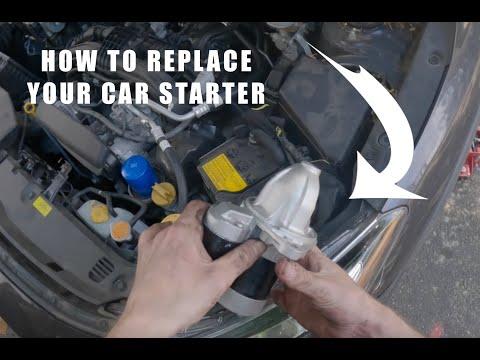





How to Replace the Starter Motor on a 2005-2019 Subaru Outback (Engine: Flat 6 3.6L)
Step-by-step DIY guide with required tools, parts, torque specs, and safety tips for 2005
How to Replace the Starter Motor on a 2005-2019 Subaru Outback (Engine: Flat 6 3.6L)
Step-by-step DIY guide with required tools, parts, torque specs, and safety tips for 2005


🔧 Outback - Starter Motor Replacement
Replacing the starter motor on your Outback involves disconnecting the battery, accessing the starter near the engine/transmission area, removing the electrical connections, and swapping the starter assembly. The starter is what cranks the engine when you turn the key or press the start button, so a weak or failed starter can cause no-crank or intermittent starting.
Difficulty Level: Intermediate | Estimated Time: 2-3 hours
⚠️ Safety & Precautions
- ⚠️ Disconnect the negative battery cable before touching the starter wiring. The starter power cable is always hot when the battery is connected.
- ⚠️ Let the engine cool fully before working. The starter area is close to hot engine and exhaust components.
- ⚠️ Support your Outback securely if you raise it. Never rely on a floor jack alone.
- ⚠️ Keep metal tools away from the positive starter terminal to prevent sparks or short circuits.
- ⚠️ The starter is heavier than it looks. Support it with one hand while removing the final mounting bolt.
🔧 Required Tools
You'll need the following tools for this repair:
- 10mm socket
- 12mm socket
- 14mm socket
- 3/8-inch ratchet
- 3/8-inch 6-inch extension
- 3/8-inch universal joint adapter
- 10mm wrench
- 12mm wrench
- 14mm wrench
- Flathead screwdriver
- Trim clip removal tool
- Torque wrench 10-80 ft-lbs
- Floor jack rated 3-ton minimum
- Jack stands rated 3-ton minimum
- Wheel chocks
- Mechanic gloves
- Safety glasses
- Battery terminal brush
- Shop light
🔩 Required Parts
HowToo sells all the parts you need for this repair:
- Starter motor assembly - Qty: 1
- Battery terminal corrosion protector - Qty: 1
- Electrical contact cleaner - Qty: 1
📋 Before You Begin
- Park your Outback on level ground, shift to Park, and apply the parking brake.
- Place wheel chocks behind the rear wheels before lifting the front.
- Open the hood and let the engine cool completely.
- Disconnect the negative battery cable using a 10mm wrench. A negative cable is the black cable marked with “−”.
- If you raise the vehicle, lift only at approved Subaru jacking points and set it securely on jack stands.
- Some radio and clock settings may reset after the battery is disconnected.
🔨 Step-by-Step Instructions
Follow these steps in order:
Step 1: Disconnect the Battery
- Use a 10mm wrench to loosen the nut on the negative battery terminal.
- Lift the negative cable off the battery post and move it aside so it cannot spring back.
- Use a battery terminal brush to clean the battery post if corrosion is present.
- Black cable comes off first.
Step 2: Remove the Engine Cover if Equipped
- Use your hands to lift the plastic engine cover upward from its rubber mounting points.
- If any plastic clips are fitted, use a trim clip removal tool to release them gently.
- Set the cover aside where it will not be stepped on.
Step 3: Raise the Front of the Vehicle if More Access Is Needed
- Place wheel chocks behind the rear wheels.
- Use a floor jack rated 3-ton minimum to lift the front of your Outback at the front center jacking point.
- Set the vehicle onto jack stands rated 3-ton minimum.
- Gently shake the vehicle by hand to confirm it is stable before going underneath.
Step 4: Locate the Starter Motor
- Use a shop light to look at the rear side of the engine where it meets the transmission.
- The starter motor is a small cylindrical motor mounted to the transmission bellhousing. The bellhousing is the metal case between the engine and transmission.
- Identify the large battery cable and the small signal wire on the starter solenoid. The solenoid is the smaller cylinder attached to the starter that sends power into the starter motor.
Step 5: Remove the Starter Heat Shield or Bracket if Equipped
- Use a 10mm socket or 12mm socket with a 3/8-inch ratchet to remove any small shield or bracket blocking access to the starter.
- Keep the bolts in order so they go back into the same locations.
- Take a phone photo first.
Step 6: Disconnect the Small Starter Signal Wire
- Use your fingers to press the locking tab and pull the small connector straight off the starter solenoid.
- If the connector is stuck, use a flathead screwdriver to gently lift the locking tab.
- Do not pull on the wire itself. Pull on the connector body.
Step 7: Disconnect the Main Starter Power Cable
- Pull back the rubber protective boot from the large starter terminal by hand.
- Use a 12mm socket with a 3/8-inch ratchet to remove the nut holding the main power cable.
- Move the cable away from the starter and keep the nut safe.
- Spray the terminal end lightly with electrical contact cleaner if it is dirty.
Step 8: Remove the Starter Mounting Bolts
- Support the starter with one hand.
- Use a 14mm socket, 3/8-inch ratchet, and 3/8-inch 6-inch extension to loosen the starter mounting bolts.
- If access is tight, add a 3/8-inch universal joint adapter. A universal joint adapter lets the socket bend slightly to reach angled bolts.
- Remove the upper and lower starter mounting bolts.
- Hold the starter firmly as the last bolt comes out.
Step 9: Remove the Old Starter
- Pull the starter straight away from the transmission mounting surface.
- Work it out slowly through the available space.
- Compare the old starter to the new starter motor assembly before installation.
- Make sure the mounting ears, electrical terminals, and nose shape match.
Step 10: Install the New Starter
- Position the new starter motor assembly against the transmission bellhousing by hand.
- Start both mounting bolts by hand first to avoid cross-threading. Cross-threading means the bolt enters crooked and damages the threads.
- Use a 14mm socket, 3/8-inch ratchet, and 3/8-inch 6-inch extension to snug the bolts evenly.
- Use a torque wrench 10-80 ft-lbs to tighten the starter mounting bolts to Torque to 50 Nm (37 ft-lbs).
Step 11: Reconnect the Main Starter Power Cable
- Place the main battery cable onto the large starter terminal.
- Install the retaining nut by hand first.
- Use a 12mm socket and torque wrench 10-80 ft-lbs to tighten the nut to Torque to 10 Nm (89 in-lbs).
- Push the rubber protective boot fully back over the terminal.
- Make sure no bare metal terminal is exposed.
Step 12: Reconnect the Small Starter Signal Wire
- Push the small connector onto the starter solenoid by hand until it clicks.
- Gently tug the connector to confirm it is locked.
- Route the wire away from hot exhaust parts and moving parts.
Step 13: Reinstall Any Removed Shield or Bracket
- Set the shield or bracket back into place.
- Use a 10mm socket or 12mm socket with a 3/8-inch ratchet to reinstall the bolts.
- If using a torque wrench, tighten small shield bolts to Torque to 7 Nm (62 in-lbs).
Step 14: Lower the Vehicle
- Use a floor jack rated 3-ton minimum to lift the vehicle slightly off the jack stands.
- Remove the jack stands rated 3-ton minimum.
- Lower your Outback slowly to the ground.
- Remove the wheel chocks.
Step 15: Reconnect the Battery
- Place the negative battery cable back onto the negative battery post.
- Use a 10mm wrench to tighten the terminal nut until snug.
- Do not overtighten the battery terminal. It can crack.
- Apply battery terminal corrosion protector to the terminal after it is tight.
Step 16: Start the Engine
- Sit in the driver seat and press the brake pedal.
- Start the engine normally.
- Listen for smooth cranking with no grinding or repeated clicking.
- If the starter does not crank, stop and recheck the battery cable, starter power cable, and small signal connector.
✅ After Repair
- ✅ Confirm the engine starts several times in a row without hesitation.
- ✅ Check that the battery warning light turns off after the engine starts.
- ✅ Look near the starter area for loose wiring or anything touching hot exhaust parts.
- ✅ Reset the clock and any radio presets if they were lost after battery disconnect.
- ✅ Drive normally and recheck starting performance after the engine is fully warm.
💰 DIY vs Shop Cost
Shop Cost: $450-$850 (parts + labor)
DIY Cost: $180-$450 (parts only)
You Save: $270-$400 by doing it yourself!
Shop labor rates vary but typically run $100-$150/hour. This repair takes a shop approximately 1.5-2.5 hours.
🎯 Ready to get started?
HowToo makes it easy: same-day/2-day shipping on every part, plus all the tools and specialty tools you need! Check out the parts and tools sections below to add everything to your cart.