









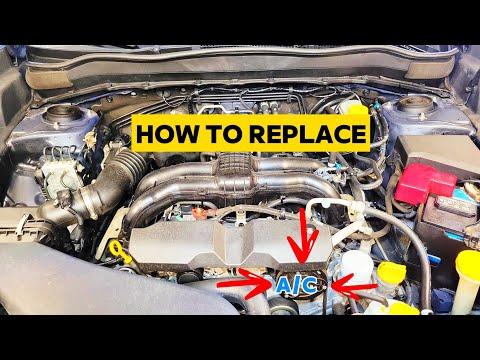



How to Replace the A/C Compressor on a 2015-2019 Subaru Outback (Trim: 2.5i | Engine: Flat 4 2.5L)
Step-by-step guide with tools, parts, torque specs, refrigerant safety, and recharge tips for 2015, 2016, 2017, 2018, 2019
How to Replace the A/C Compressor on a 2015-2019 Subaru Outback (Trim: 2.5i | Engine: Flat 4 2.5L)
Step-by-step guide with tools, parts, torque specs, refrigerant safety, and recharge tips for 2015, 2016, 2017, 2018, 2019


🔧 Outback - A/C Compressor Replacement
Replacing the A/C compressor on your Outback requires safely recovering the refrigerant, removing the drive belt, disconnecting the refrigerant lines and electrical connector, then installing the new compressor with fresh seals. The A/C system must be evacuated and recharged by weight afterward so it cools properly and protects the new compressor.
Difficulty Level: Advanced | Estimated Time: 3-5 hours
⚠️ Safety & Precautions
- ⚠️ Refrigerant is under high pressure and can cause frostbite or eye injury.
- ⚠️ Federal law requires refrigerant to be recovered with approved recovery equipment before opening the A/C system.
- ⚠️ Do not vent refrigerant into the air.
- ⚠️ Wear safety glasses and gloves any time you work near A/C lines.
- ⚠️ Disconnect the negative battery cable before unplugging the compressor connector.
- ⚠️ If the old compressor failed internally, replace the condenser and expansion valve and flush approved lines, or the new compressor can fail quickly.
🔧 Required Tools
You'll need the following tools for this repair:
- Refrigerant recovery machine (specialty)
- R-134a manifold gauge set (specialty)
- A/C vacuum pump (specialty)
- Refrigerant scale (specialty)
- 10mm socket
- 12mm socket
- 14mm socket
- 10mm wrench
- 12mm wrench
- 14mm wrench
- 3/8-inch drive ratchet
- 3/8-inch drive torque wrench (5-80 Nm)
- Serpentine belt tool (specialty)
- Plastic trim clip remover
- Flathead screwdriver
- Pick tool set
- A/C line cap and plug kit (specialty)
- Oil measuring cup marked in ounces
- UV leak detection light (specialty)
- Safety glasses
- Nitrile gloves
- Fender cover
🔩 Required Parts
HowToo sells all the parts you need for this repair:
- A/C compressor with clutch - Qty: 1
- A/C compressor O-ring seal kit - Qty: 1
- PAG 46 A/C compressor oil - Qty: As needed
- R-134a refrigerant - Qty: Charge by under-hood label
- Serpentine drive belt - Qty: 1
- A/C condenser with receiver/drier - Qty: 1 if compressor failed internally
- A/C expansion valve - Qty: 1 if compressor failed internally
📋 Before You Begin
- Park your Outback on level ground with the engine off and fully cool.
- Have the refrigerant professionally recovered before loosening any A/C line.
- Open the hood and place a fender cover over the front body panel.
- Disconnect the negative battery cable using a 10mm wrench.
- Read the under-hood A/C label and note the exact refrigerant charge amount.
- An O-ring is a small rubber sealing ring that prevents refrigerant leaks at the line fitting.
- Evacuation means using a vacuum pump to remove air and moisture before charging the system.
🔨 Step-by-Step Instructions
Follow these steps in order:
Step 1: Recover the Refrigerant
- Use an R-134a manifold gauge set and refrigerant recovery machine to recover the refrigerant through the service ports.
- Confirm both high-side and low-side gauges read zero pressure before opening the system.
- Never vent refrigerant.
Step 2: Disconnect the Battery
- Use a 10mm wrench to loosen the negative battery terminal.
- Move the cable aside so it cannot spring back onto the battery post.
Step 3: Remove Upper Air Intake Ducting
- Use a plastic trim clip remover to remove the intake duct clips at the radiator support.
- Use a flathead screwdriver to loosen any intake duct clamp if needed.
- Lift the ducting out to create working room at the front of the engine.
Step 4: Remove the Serpentine Belt
- Use a serpentine belt tool or 14mm wrench on the belt tensioner.
- Rotate the tensioner to release belt tension.
- Slip the belt off the A/C compressor pulley and remove it from the engine.
- Note the belt routing before removal.
Step 5: Unplug the Compressor Connector
- Use your fingers or a pick tool set to release the compressor electrical connector lock.
- Pull the connector straight off without yanking the wires.
Step 6: Disconnect the A/C Lines
- Use a 10mm socket or 12mm socket to remove the compressor line retaining bolt.
- Carefully wiggle the suction and discharge line block away from the compressor.
- Use an A/C line cap and plug kit to cap the open lines immediately.
- Use a pick tool set to remove the old O-rings from the line fittings.
- Keep dirt out of A/C lines.
Step 7: Remove the Compressor Mounting Bolts
- Support the compressor by hand.
- Use a 12mm socket or 14mm socket and 3/8-inch drive ratchet to remove the compressor mounting bolts.
- Lift the compressor out of the engine bay carefully.
Step 8: Check Oil Amount in the Old Compressor
- Drain oil from the old compressor into an oil measuring cup marked in ounces.
- Rotate the old compressor clutch plate by hand while draining to remove trapped oil.
- Compare the amount drained with the oil instructions supplied with the new compressor.
- Add the same amount of fresh PAG 46 A/C compressor oil to the new compressor unless the compressor manufacturer gives a different instruction.
Step 9: Prepare the New Compressor
- Use clean nitrile gloves to handle the new O-rings.
- Lightly coat the new O-rings with PAG 46 A/C compressor oil.
- Install the new O-rings onto the suction and discharge line fittings by hand.
- Turn the compressor clutch plate by hand 10-15 rotations to spread oil inside the compressor.
Step 10: Install the New Compressor
- Lower the new compressor into position.
- Start all mounting bolts by hand to avoid cross-threading.
- Use a 12mm socket or 14mm socket and 3/8-inch drive torque wrench to tighten the mounting bolts evenly.
- Torque to 25 Nm (18 ft-lbs)
Step 11: Reconnect the A/C Lines
- Remove the caps from the A/C lines using your hands.
- Seat the line block squarely against the compressor.
- Use a 10mm socket or 12mm socket and 3/8-inch drive torque wrench to tighten the line retaining bolt.
- Torque to 8 Nm (71 in-lbs)
Step 12: Reconnect the Electrical Connector
- Push the compressor electrical connector on by hand until it clicks.
- Gently tug the connector to confirm it is locked.
Step 13: Install the Serpentine Belt
- Route the belt around the pulleys using the belt routing you noted earlier.
- Use a serpentine belt tool or 14mm wrench to rotate the tensioner.
- Slip the belt over the final pulley, then slowly release the tensioner.
- Check that the belt ribs sit fully in every pulley groove.
Step 14: Reinstall Intake Ducting
- Set the intake ducting back into place.
- Use a plastic trim clip remover to reinstall the clips by hand.
- Use a flathead screwdriver to tighten any intake duct clamp if removed.
Step 15: Reconnect the Battery
- Use a 10mm wrench to reconnect the negative battery terminal.
- Torque to 5 Nm (44 in-lbs)
Step 16: Evacuate the A/C System
- Connect the R-134a manifold gauge set to the high-side and low-side service ports.
- Connect the A/C vacuum pump to the manifold gauge set.
- Run the vacuum pump for at least 30-45 minutes.
- Close the manifold valves and confirm the system holds vacuum for 10-15 minutes.
- If vacuum drops, use a UV leak detection light after charging with dye-compatible refrigerant to find the leak.
Step 17: Recharge the A/C System
- Use a refrigerant scale to charge the exact R-134a amount listed on the under-hood label.
- Charge through the low-side service port using the R-134a manifold gauge set.
- Start the engine only when your manifold gauge set instructions say it is safe.
- Set climate control to max A/C, lowest temperature, and medium blower speed.
✅ After Repair
- ✅ Let the A/C run for 10 minutes and verify cold air from the vents.
- ✅ Check the compressor cycles normally and the belt runs straight.
- ✅ Inspect the compressor line fittings for oily residue or dye, which can show a leak.
- ✅ If the battery was disconnected, reset the clock and any saved window or radio settings as needed.
- ✅ If cooling is weak, recover and recharge by exact weight again before condemning parts.
💰 DIY vs Shop Cost
Shop Cost: $900-$1,600 (parts + labor)
DIY Cost: $350-$800 (parts only)
You Save: $550-$800 by doing it yourself!
Shop labor rates vary but typically run $100-$150/hour. This repair takes a shop approximately 3-5 hours.
🎯 Ready to get started?
HowToo makes it easy: same-day/2-day shipping on every part, plus all the tools and specialty tools you need! Check out the parts and tools sections below to add everything to your cart.