









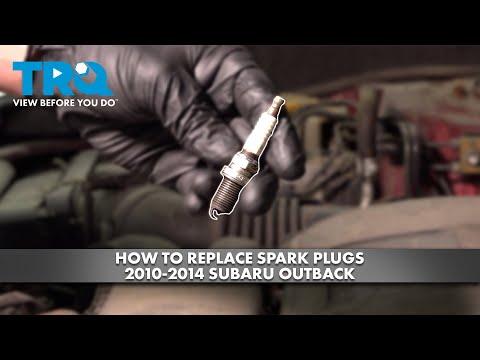





How to Replace Spark Plugs on a 2001-2019 Subaru Outback 3.6L (Engine: Flat 6 3.6L)
Step-by-step DIY guide with tools, parts, gap specs, torque specs, and safety tips for 2001, 2002, 2003, 2004
How to Replace Spark Plugs on a 2001-2019 Subaru Outback 3.6L (Engine: Flat 6 3.6L)
Step-by-step DIY guide with tools, parts, gap specs, torque specs, and safety tips for 2001, 2002, 2003, 2004


🔧 Outback - Spark Plug Replacement
Replacing the spark plugs on your Outback helps restore smooth idle, strong acceleration, and fuel efficiency. The 3.6L flat-six engine has three spark plugs on each side, and access is tight because the plugs sit low on the cylinder heads near the frame rails.
Difficulty Level: Intermediate | Estimated Time: 2-4 hours
⚠️ Safety & Precautions
- ⚠️ Work only on a completely cool engine. The spark plugs thread into aluminum cylinder heads, which can be damaged if hot.
- ⚠️ Disconnect the negative battery cable before unplugging ignition coils.
- ⚠️ Do not force a spark plug. Cross-threading means the plug is going in crooked and can damage the cylinder head.
- ⚠️ Keep dirt out of the spark plug holes. Anything that falls in can enter the engine.
- ⚠️ Use only the correct iridium spark plugs for the 3.6L flat-six. Do not use anti-seize unless the plug manufacturer specifically requires it.
🔧 Required Tools
You'll need the following tools for this repair:
- 10mm socket
- 12mm socket
- 14mm socket
- 3/8-inch ratchet
- 3/8-inch torque wrench
- 5/8-inch spark plug socket
- 3-inch 3/8-inch extension
- 6-inch 3/8-inch extension
- 3/8-inch universal joint adapter
- Flat-blade screwdriver
- Needle-nose pliers
- Compressed air nozzle
- Spark plug gap gauge
- Dielectric grease
- Fender cover
- Mechanic gloves
- Safety glasses
🔩 Required Parts
HowToo sells all the parts you need for this repair:
- Iridium spark plugs - Qty: 6
- Ignition coil boots - Qty: 6, replace if oil-soaked, cracked, swollen, or torn
- Air intake duct clamp gasket - Qty: 1, replace if damaged
📋 Before You Begin
- 🚗 Park your Outback on level ground, shift to Park, and apply the parking brake.
- 🧊 Let the engine cool fully before starting.
- 🔋 Use a 10mm socket to loosen the negative battery terminal, then move the cable aside so it cannot spring back.
- 🧼 Blow dirt away from the ignition coil and spark plug areas with a compressed air nozzle before removing parts.
- 📏 Check the new plug gaps with a spark plug gap gauge. A gap gauge measures the space between the plug’s center and ground electrode.
🔨 Step-by-Step Instructions
Follow these steps in order:
Step 1: Remove the Engine Cover
- Use your hands to lift the plastic engine cover upward from the rubber mounts.
- Set the cover aside where it will not get stepped on.
- Pull straight up gently.
Step 2: Disconnect the Battery
- Use a 10mm socket to loosen the negative battery terminal nut.
- Lift the negative cable off the battery post and tuck it aside.
- This prevents accidental electrical shorts while unplugging ignition coils.
Step 3: Remove the Air Intake Duct
- Use a flat-blade screwdriver to loosen the intake duct clamps at the throttle body and air filter box.
- Use needle-nose pliers to release any small hose clamp attached to the duct, if equipped.
- Lift the duct out of the engine bay and inspect it for cracks.
- Cover the throttle body opening with a clean rag so nothing falls inside.
Step 4: Improve Access to the Driver-Side Spark Plugs
- Use a 10mm socket to remove any small brackets or plastic wire harness retainers blocking the driver-side ignition coils.
- Move wiring gently by hand. Do not pull on the wires themselves.
- Use a compressed air nozzle to blow dirt away from the ignition coil area.
Step 5: Remove One Ignition Coil at a Time
- Start with the easiest coil so you can learn the feel before working in tighter spaces.
- Press the ignition coil connector tab by hand and unplug the connector.
- Use a 10mm socket to remove the ignition coil retaining bolt.
- Twist the coil gently by hand, then pull it straight out.
- An ignition coil makes the high voltage spark for each spark plug.
- Do one plug at a time.
Step 6: Remove the Old Spark Plug
- Use a compressed air nozzle to blow out the spark plug tube before removing the plug.
- Use a 5/8-inch spark plug socket, 3-inch extension, 3/8-inch universal joint adapter, and 3/8-inch ratchet to loosen the spark plug.
- A universal joint adapter lets the socket bend slightly in tight spaces.
- Turn counterclockwise slowly until the plug is loose.
- Carefully pull the plug out with the spark plug socket.
Step 7: Check and Install the New Spark Plug
- Use a spark plug gap gauge to confirm the gap is approximately 0.039-0.043 in.
- Do not pry hard on iridium plug electrodes. They are delicate.
- Place the new plug into the 5/8-inch spark plug socket.
- Thread the spark plug in by hand using the extension only, with no ratchet at first.
- If it does not turn easily, remove it and start again.
- Use a 3/8-inch torque wrench with the 5/8-inch spark plug socket to tighten the plug to Torque to 21 Nm (15 ft-lbs).
Step 8: Reinstall the Ignition Coil
- Apply a small amount of dielectric grease inside the end of the ignition coil boot.
- Dielectric grease helps seal out moisture but does not conduct electricity.
- Push the ignition coil straight onto the spark plug until it seats fully.
- Use a 10mm socket to install the coil retaining bolt.
- Use a 3/8-inch torque wrench and 10mm socket to tighten the coil bolt to Torque to 6.4 Nm (57 in-lbs).
- Reconnect the electrical connector until it clicks.
Step 9: Repeat for the Remaining Five Spark Plugs
- Repeat Steps 5 through 8 for each remaining spark plug.
- Use the 3-inch extension, 6-inch extension, and 3/8-inch universal joint adapter as needed for each plug location.
- Keep each old plug lined up by cylinder location so you can inspect engine condition later.
- Look for oil on a coil boot. Oil may mean a leaking spark plug tube seal.
Step 10: Reinstall Removed Brackets and Intake Duct
- Use a 10mm socket to reinstall any brackets or wiring retainers removed earlier.
- Remove the clean rag from the throttle body opening.
- Reinstall the air intake duct by hand onto the throttle body and air filter box.
- Use a flat-blade screwdriver to tighten the intake duct clamps snugly.
- Reconnect any hoses using needle-nose pliers if spring clamps were removed.
Step 11: Reinstall the Engine Cover and Battery Cable
- Press the engine cover straight down onto its rubber mounts by hand.
- Use a 10mm socket to reconnect and tighten the negative battery terminal.
- Do not overtighten the battery terminal. It only needs to be snug.
Step 12: Start and Check Your Work
- Start the engine and let it idle.
- Listen for smooth running with no popping, misfire, or air hissing noise.
- If the engine shakes or the check engine light flashes, shut it off and recheck the coil connectors.
✅ After Repair
- ✅ Let the engine idle for 2-3 minutes and confirm it runs smoothly.
- ✅ Test drive gently for 10-15 minutes.
- ✅ Recheck that the intake duct clamps are tight after the test drive.
- ✅ If the battery was disconnected, reset the clock and radio presets if needed.
- ✅ If a check engine light remains on, scan for codes and clear only after confirming no active misfire is present.
💰 DIY vs Shop Cost
Shop Cost: $450-$750 (parts + labor)
DIY Cost: $90-$180 (parts only)
You Save: $270-$660 by doing it yourself!
Shop labor rates vary but typically run $100-$150/hour. This repair takes a shop approximately 2-3 hours.
🎯 Ready to get started?
HowToo makes it easy: same-day/2-day shipping on every part, plus all the tools and specialty tools you need! Check out the parts and tools sections below to add everything to your cart.