









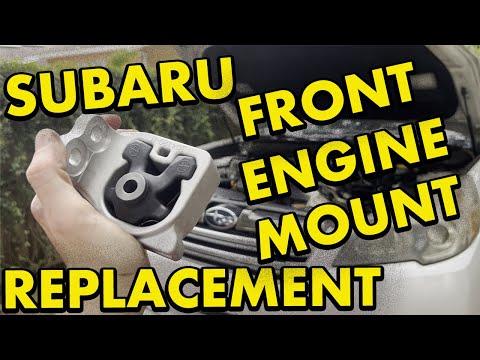



How to Replace Engine Mounts on a 2019 Subaru Outback 2.5L
Step-by-step DIY guide with tools, parts, torque specs, safety tips, and cost savings for 2015, 2016, 2017, 2018, 2019
How to Replace Engine Mounts on a 2019 Subaru Outback 2.5L
Step-by-step DIY guide with tools, parts, torque specs, safety tips, and cost savings for 2015, 2016, 2017, 2018, 2019


🔧 Engine Mounts - Replacement
Replacing the engine mounts on your Outback means safely supporting the 2.5L flat-four engine, removing the worn rubber mounts, and installing new mounts so the engine sits correctly again. Bad mounts can cause vibration, clunks during shifting, or excessive engine movement.
Difficulty Level: Advanced | Estimated Time: 4-6 hours
⚠️ Safety & Precautions
- ⚠️ The engine must be supported before any mount fasteners are removed.
- ⚠️ Never place any part of your body under an engine supported only by a jack.
- ⚠️ Use a wide wood block between the jack and oil pan to spread the load and prevent damage.
- ⚠️ Disconnect the negative battery cable before working near the starter, exhaust, or engine harness areas.
- ⚠️ Exhaust parts may be hot; let your Outback cool completely before starting.
- ⚠️ This job is not beginner-friendly because the engine and front subframe area are involved.
🔧 Required Tools
You'll need the following tools for this repair:
- 10mm socket
- 12mm socket
- 14mm socket
- 17mm socket
- 19mm socket
- 22mm socket
- Ratchet handle
- Breaker bar 1/2-inch drive
- Torque wrench 3/8-inch drive
- Torque wrench 1/2-inch drive
- 6-inch extension
- 12-inch extension
- Universal joint socket adapter
- 17mm box-end wrench
- 19mm box-end wrench
- Flat-blade screwdriver
- Trim clip removal tool
- Floor jack rated 3-ton minimum
- Jack stands rated 3-ton minimum
- Wheel chocks
- Wood block 12-inch by 12-inch minimum
- Engine support bar 1,000-lb minimum (specialty)
- Pry bar 18-inch
- Paint marker
- Penetrating oil
- Safety glasses
- Mechanic gloves
🔩 Required Parts
HowToo sells all the parts you need for this repair:
- Left engine mount - Qty: 1
- Right engine mount - Qty: 1
- Engine mount retaining nuts - Qty: 4
- Engine mount bracket bolts - Qty: 4
- Exhaust flange gasket - Qty: 1-2 if exhaust is loosened
- Exhaust flange nuts - Qty: 2-4 if exhaust is loosened
📋 Before You Begin
- Park your Outback on level ground.
- Set the parking brake and place wheel chocks behind the rear wheels.
- Let the engine and exhaust cool fully.
- Spray penetrating oil on the engine mount nuts and any exhaust fasteners you may loosen.
- Use a 10mm socket to disconnect the negative battery cable.
- An engine support bar is a beam that sits across the fenders and holds the engine from above while mounts are removed.
- If you do not have an engine support bar, use a floor jack and wide wood block under the oil pan only as a support aid, not as your only safety method.
🔨 Step-by-Step Instructions
Follow these steps in order:
Step 1: Raise and Support the Vehicle
- Use wheel chocks at the rear wheels.
- Use a floor jack rated 3-ton minimum to lift the front of your Outback at the front center jacking point.
- Place jack stands rated 3-ton minimum under the front side pinch weld support points.
- Lower the vehicle gently onto the jack stands.
- Shake the vehicle lightly by hand to confirm it is stable.
- Never work under an unstable vehicle.
Step 2: Remove the Lower Engine Cover
- Use a trim clip removal tool to remove the plastic clips from the lower engine cover.
- Use a 12mm socket and ratchet handle to remove any lower cover bolts.
- Lower the cover and set it aside.
Step 3: Disconnect the Battery
- Use a 10mm socket and ratchet handle to loosen the negative battery terminal clamp.
- Move the negative cable away from the battery post.
Step 4: Support the Engine from Above
- Place the engine support bar across the upper fender support areas using the padded feet.
- Attach the support chain or hook to a solid engine lifting point.
- Tighten the support bar adjuster until it just takes the engine weight.
- Do not lift the engine yet; only remove the weight from the mounts.
Step 5: Add Lower Support Under the Engine
- Place a wood block 12-inch by 12-inch minimum on the saddle of the floor jack.
- Position the wood block under the flat reinforced area of the engine oil pan.
- Raise the floor jack gently until the wood block contacts the pan.
- Do not dent the oil pan or lift the vehicle off the jack stands.
Step 6: Mark the Mount Positions
- Use a paint marker to mark the current position of each engine mount and bracket.
- These marks help line up the new mounts during installation.
Step 7: Remove the Engine Mount Upper Nuts
- Work from below the vehicle.
- Use a 14mm socket, 6-inch extension, universal joint socket adapter, and ratchet handle to loosen the upper engine mount nuts.
- Use a breaker bar 1/2-inch drive if the nuts are tight.
- Remove the upper nuts from both engine mounts.
Step 8: Remove the Engine Mount Lower Nuts
- Use a 14mm socket, 6-inch extension, and ratchet handle to remove the lower nuts that secure the mounts to the front crossmember.
- Keep one hand under each nut while removing it so it does not fall into the crossmember area.
Step 9: Check Exhaust Clearance
- Use a flashlight to check whether the exhaust header or front pipe blocks mount removal.
- If clearance is tight, use a 14mm socket and breaker bar to loosen the exhaust flange nuts enough to create movement.
- If a flange is separated, replace the exhaust flange gasket during reassembly.
- Do not pull hard on oxygen sensor wiring.
Step 10: Raise the Engine Slightly
- Use the engine support bar adjuster and floor jack together to raise the engine only enough to unload the mounts.
- Raise slowly and watch all hoses, wiring, and exhaust parts.
- Stop if anything stretches or binds.
- Usually only a small amount of lift is needed.
Step 11: Remove the Old Engine Mounts
- Use a pry bar 18-inch only for gentle positioning if the mount is stuck.
- Slide the old left engine mount out by hand.
- Slide the old right engine mount out by hand.
- Compare each old mount to the new part before installation.
Step 12: Install the New Engine Mounts
- Place the new left engine mount into position by hand.
- Place the new right engine mount into position by hand.
- Align the locating pins and studs with the crossmember and engine bracket holes.
- Start all nuts by hand before tightening anything.
- Hand-starting prevents crossed threads.
Step 13: Lower the Engine Onto the Mounts
- Use the engine support bar adjuster and floor jack to lower the engine slowly.
- Make sure the mount studs slide cleanly into their holes.
- Use a pry bar 18-inch gently only if minor alignment is needed.
- Do not force the engine mount studs into place.
Step 14: Tighten the Engine Mount Fasteners
- Use a 14mm socket, 6-inch extension, and torque wrench 3/8-inch drive to tighten the upper engine mount nuts.
- Torque to 35 Nm (26 ft-lbs).
- Use a 14mm socket, 6-inch extension, and torque wrench 3/8-inch drive to tighten the lower engine mount nuts.
- Torque to 35 Nm (26 ft-lbs).
Step 15: Retighten Exhaust Fasteners if Loosened
- If the exhaust flange was loosened or separated, install a new exhaust flange gasket by hand.
- Use a 14mm socket and torque wrench 3/8-inch drive to tighten the exhaust flange nuts evenly.
- Torque to 30 Nm (22 ft-lbs).
- Make sure oxygen sensor wiring is clipped back into its original position.
Step 16: Remove Engine Supports
- Use the floor jack handle to lower the jack slightly until the wood block no longer touches the oil pan.
- Remove the wood block and floor jack.
- Loosen the engine support bar adjuster and remove the support chain or hook.
- Lift the engine support bar off the vehicle.
Step 17: Reinstall the Lower Engine Cover
- Lift the lower engine cover into position by hand.
- Use a 12mm socket and ratchet handle to reinstall the cover bolts.
- Torque to 7 Nm (62 in-lbs).
- Use your hands to reinstall the plastic clips until they click.
Step 18: Reconnect the Battery and Lower the Vehicle
- Use a 10mm socket and ratchet handle to reconnect the negative battery cable.
- Use a floor jack rated 3-ton minimum to raise the front slightly off the jack stands.
- Remove the jack stands rated 3-ton minimum.
- Lower your Outback slowly to the ground.
✅ After Repair
- ✅ Start the engine and let it idle while watching for abnormal vibration.
- ✅ Shift from Park to Reverse and Drive while holding the brake firmly.
- ✅ Listen for clunks and watch for excessive engine movement.
- ✅ Check under the vehicle for exhaust leaks if any exhaust flange was loosened.
- ✅ Road test gently and recheck the mount fasteners after the first drive if accessible.
💰 DIY vs Shop Cost
Shop Cost: $650-$1,100 (parts + labor)
DIY Cost: $180-$450 (parts only)
You Save: $470-$650 by doing it yourself!
Shop labor rates vary but typically run $100-$150/hour. This repair takes a shop approximately 3.5-5.0 hours.
🎯 Ready to get started?
HowToo makes it easy: same-day/2-day shipping on every part, plus all the tools and specialty tools you need! Check out the parts and tools sections below to add everything to your cart.