









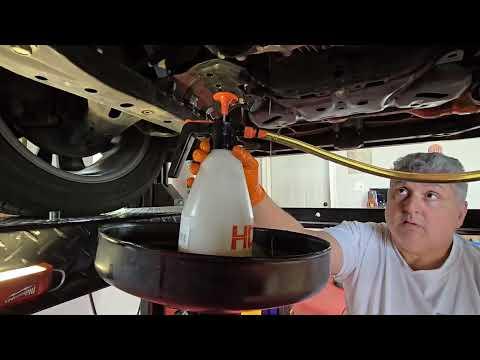





How to Change CVT Transmission Fluid on a 2019 Subaru Outback
Step-by-step Lineartronic CVT fluid service with tools, parts, torque specs, and safety tips for 2012, 2013, 2014, 2015, 2016, 2017, 2018, 2019
How to Change CVT Transmission Fluid on a 2019 Subaru Outback
Step-by-step Lineartronic CVT fluid service with tools, parts, torque specs, and safety tips for 2012, 2013, 2014, 2015, 2016, 2017, 2018, 2019


🔧 Outback - CVT Fluid Change
This repair replaces the automatic CVT fluid in your Outback’s Lineartronic CVT. This transmission does not use a dipstick, so the fluid level must be set from underneath the vehicle at the correct fluid temperature.
Difficulty Level: Advanced | Estimated Time: 1.5-2.5 hours
⚠️ Safety & Precautions
- ⚠️ The CVT fluid level must be checked with the vehicle level and the fluid at the correct temperature range.
- ⚠️ Use only Subaru-approved CVT fluid for your Outback. The wrong fluid can damage the CVT.
- ⚠️ The engine must be running during the final level check, so keep hands, clothing, and tools away from moving parts.
- ⚠️ CVT fluid can be hot enough to burn skin. Wear gloves and safety glasses.
- ⚠️ Support the vehicle with jack stands or use a lift. Never work under a vehicle supported only by a jack.
- ⚠️ Do not remove the CVT pan unless you are replacing the pan gasket or servicing an internal issue.
🔧 Required Tools
You'll need the following tools for this repair:
- Floor jack rated 3-ton minimum
- Jack stands rated 3-ton minimum
- Wheel chocks
- 10mm socket
- 12mm socket
- 14mm socket
- 17mm socket
- 8mm hex socket
- 3/8-inch ratchet
- 3/8-inch extension
- Torque wrench foot-pound
- Torque wrench inch-pound
- Fluid transfer pump
- Drain pan 10-quart minimum
- OBD2 scan tool with live CVT fluid temperature
- Infrared thermometer
- Shop towels
- Nitrile gloves
- Safety glasses
🔩 Required Parts
HowToo sells all the parts you need for this repair:
- Subaru High Torque CVT fluid - Qty: 6 quarts
- CVT drain plug crush washer - Qty: 1
- CVT fill plug gasket - Qty: 1
- CVT level check plug gasket - Qty: 1
📋 Before You Begin
- 🚗 Park your Outback on a flat, level surface.
- 🧊 Start with the transmission cool or only slightly warm.
- 🛞 Place wheel chocks behind the rear wheels before lifting.
- 📏 The vehicle must remain level while filling and checking the CVT fluid.
- 🌡️ Connect an OBD2 scan tool with live data and monitor CVT fluid temperature. A scan tool reads vehicle data through the diagnostic port under the dash.
- 🧰 A fluid transfer pump is a hand pump used to push new fluid upward into the transmission fill hole.
- ⚠️ Subaru CVTs have separate drain plugs for engine oil, front differential, and CVT. Make sure you are working on the CVT plug before draining.
🔨 Step-by-Step Instructions
Follow these steps in order:
Step 1: Raise and Level the Vehicle
- Use wheel chocks to secure the rear wheels.
- Use a floor jack rated 3-ton minimum to lift the front of your Outback.
- Place jack stands rated 3-ton minimum under the proper front support points.
- Lift the rear and support it with jack stands so the vehicle sits level.
- Gently shake the vehicle by hand to confirm it is stable before going underneath.
- Level vehicle equals correct fluid level.
Step 2: Remove the Underbody Splash Shield
- Use a 10mm socket and 12mm socket to remove the splash shield bolts.
- Use a flat hand to support the shield as the last bolts come out.
- Set the splash shield and bolts aside in order.
Step 3: Identify the Correct CVT Plugs
- Use safety glasses and a shop light if needed.
- Locate the CVT drain plug on the bottom of the transmission case.
- Locate the CVT fill plug on the side of the transmission case.
- Locate the CVT level check plug on the transmission pan or lower side area.
- Do not remove the front differential drain plug. It drains a different oil system.
Step 4: Remove the Fill Plug First
- Use an 8mm hex socket and 3/8-inch ratchet to loosen the CVT fill plug.
- Remove the fill plug and gasket by hand.
- If the fill plug will not come loose, stop. Do not drain the CVT until you know you can refill it.
- Always prove it can be refilled first.
Step 5: Drain the Old CVT Fluid
- Place a drain pan 10-quart minimum under the CVT drain plug.
- Use a 17mm socket and 3/8-inch ratchet to remove the CVT drain plug.
- Let the fluid drain until it slows to a drip.
- Inspect the drained fluid. Fine gray paste on the plug magnet is normal; shiny metal flakes are not normal.
Step 6: Reinstall the Drain Plug
- Clean the drain plug with shop towels.
- Install a new CVT drain plug crush washer by hand.
- Thread the drain plug in by hand first to avoid cross-threading.
- Use a torque wrench foot-pound and 17mm socket to tighten the drain plug to Torque to 31 Nm (23 ft-lbs).
Step 7: Pump in New CVT Fluid
- Insert the fluid transfer pump hose into the CVT fill hole.
- Use the fluid transfer pump to add Subaru High Torque CVT fluid.
- Add fluid until it begins to run back out of the fill opening.
- Install the fill plug loosely by hand so fluid does not spill during the warm-up step.
Step 8: Warm the CVT Fluid
- Connect the OBD2 scan tool to the diagnostic port under the driver side dash.
- Use the scan tool to display CVT fluid temperature.
- Start the engine and keep your foot on the brake.
- Move the shifter slowly through P-R-N-D, pausing 3 seconds in each position, then return to P.
- Keep the engine idling until the CVT fluid temperature reaches the checking range of 35-45°C (95-113°F).
Step 9: Set the Final Fluid Level
- Keep the engine running and the vehicle level.
- Use an 8mm hex socket and 3/8-inch ratchet to remove the level check plug.
- If no fluid comes out, use the fluid transfer pump to add CVT fluid through the fill hole until fluid begins to trickle from the level check opening.
- If fluid pours out strongly, let it drain until it becomes a thin trickle.
- The correct level is reached when fluid comes out as a light trickle at 35-45°C (95-113°F).
Step 10: Reinstall the Level Check Plug
- Install a new CVT level check plug gasket by hand.
- Thread the level check plug in by hand first.
- Use a torque wrench foot-pound and 8mm hex socket to tighten the level check plug to Torque to 25 Nm (18 ft-lbs).
Step 11: Reinstall the Fill Plug
- Shut the engine off after the level check plug is installed.
- Install a new CVT fill plug gasket by hand.
- Thread the fill plug in by hand first.
- Use a torque wrench foot-pound and 8mm hex socket to tighten the fill plug to Torque to 50 Nm (37 ft-lbs).
Step 12: Reinstall the Splash Shield
- Position the underbody splash shield by hand.
- Use a 10mm socket and 12mm socket to reinstall the shield bolts.
- Use a torque wrench inch-pound to tighten small splash shield bolts snugly to Torque to 7 Nm (62 in-lbs).
Step 13: Lower the Vehicle
- Use the floor jack rated 3-ton minimum to lift the vehicle slightly off the jack stands.
- Remove the jack stands by hand.
- Lower your Outback slowly to the ground.
- Remove the wheel chocks.
✅ After Repair
- ✅ Test drive your Outback gently for 10-15 minutes.
- ✅ Confirm smooth engagement from Park to Drive and Reverse.
- ✅ Check underneath for leaks at the drain, fill, and level check plugs.
- ✅ Dispose of used CVT fluid at a recycling center or parts store that accepts used oil.
- ✅ If the CVT warning light appears, stop driving and scan for transmission codes.
💰 DIY vs Shop Cost
Shop Cost: $300-$550 (parts + labor)
DIY Cost: $90-$180 (parts only)
You Save: $210-$370 by doing it yourself!
Shop labor rates vary but typically run $100-$150/hour. This repair takes a shop approximately 1-1.5 hours.
🎯 Ready to get started?
HowToo makes it easy: same-day/2-day shipping on every part, plus all the tools and specialty tools you need! Check out the parts and tools sections below to add everything to your cart.