








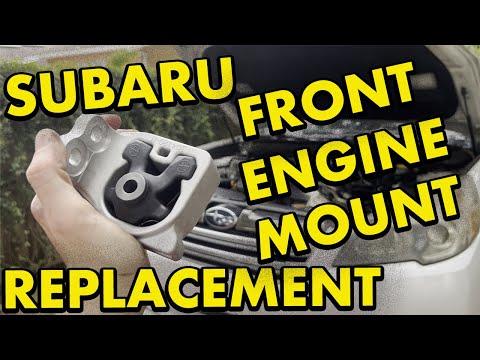







How to Replace Engine Mounts on a 2014 Subaru Outback (Left & Right)
Step-by-step DIY instructions with required tools, parts list, safety tips, and torque specs
How to Replace Engine Mounts on a 2014 Subaru Outback (Left & Right)
Step-by-step DIY instructions with required tools, parts list, safety tips, and torque specs


🔧 Outback - Engine Mount Replacement
Worn engine mounts let the engine rock too much. That can cause clunks on takeoff/shifting, extra vibration in the cabin, and even stress the exhaust and axles.
Difficulty Level: Advanced | Estimated Time: 3-6 hours
Assumption: Replacing the left and right engine mounts (most common). Pitch-stop mount is listed as optional.
⚠️ Safety & Precautions
- 🛑 Never get under the vehicle supported only by a jack; always use jack stands.
- 🔥 Let the exhaust cool fully before working near the crossmember.
- 🔋 Disconnect the negative battery cable to prevent accidental shorting near the starter/ground cables.
- 🪵 Always support the engine with a jack and a wood block; the wood spreads the load so you don’t dent the oil pan.
- 🧤 Keep fingers clear when lifting/lowering the engine; mounts can shift suddenly.
🔧 Required Tools
You'll need the following tools for this repair:
- Wheel chocks
- Floor jack (rated 2-ton minimum)
- Jack stands (rated 2-ton minimum)
- Wood block (2x4 or 2x6)
- Safety glasses
- Mechanic gloves
- 10mm socket
- 12mm socket
- 14mm socket
- 17mm socket
- 3/8" ratchet
- 1/2" breaker bar
- Socket extensions (3", 6", 10")
- Torque wrench (10–150 ft-lbs range)
- Flat trim tool
- Pry bar
- Needle-nose pliers
- Flashlight
🔩 Required Parts
HowToo sells all the parts you need for this repair:
- Right engine mount - Qty: 1
- Left engine mount - Qty: 1
- Engine mount self-locking nuts - Qty: 4
- Pitch stop mount (optional) - Qty: 1
- Pitch stop mounting bolts (optional) - Qty: 2
📋 Before You Begin
- Park on a level surface, set the parking brake, and place wheel chocks behind the rear wheels.
- Open the hood and remove loose items so nothing falls into the engine bay.
- Use a 10mm socket to disconnect the negative battery terminal and move it aside.
- Raise the front of the vehicle with a floor jack and support it securely on jack stands at the front pinch welds or approved lift points.
- Tip: Spray mount fasteners with penetrating oil first.
🔨 Step-by-Step Instructions
Follow these steps in order:
Step 1: Remove the lower splash shield (if equipped)
- Use a flat trim tool and needle-nose pliers to remove the plastic clips.
- Use a 12mm socket to remove any bolts holding the shield, then set it aside.
Step 2: Create access to the mounts (top side)
- Right side access: Use a 10mm socket to loosen the intake snorkel/duct clamps and move the ducting aside.
- Left side access: Use a 10mm socket to remove the battery hold-down, then lift out the battery (it’s heavy; lift with legs). Remove the battery tray with a 12mm socket if it blocks access.
Step 3: Support the engine
- Place the wood block on the floor jack pad.
- Position the jack under the engine oil pan and raise it until the wood block just contacts the pan.
- Lift the engine only enough to take the weight off the mounts (usually 5–10 mm). Do not “jack the car up” by the engine.
Step 4: Loosen the engine mount-to-crossmember nuts (both sides)
- From underneath, locate the mount studs/nuts where each mount attaches to the front crossmember.
- Use a 14mm socket with extensions and a ratchet to loosen (and remove) the nut on the right mount.
- Use a 14mm socket with extensions and a ratchet to loosen (and remove) the nut on the left mount.
- Tip: If tight, use a 1/2" breaker bar carefully.
Step 5: Remove the right engine mount
- From the top and/or bottom (whichever gives you best access), use a 14mm socket to remove the right mount-to-engine bracket bolts.
- Use the floor jack to slightly raise/lower the engine until the mount is free (you’re “taking tension off” the bolts).
- Use a pry bar gently to walk the mount out of its pocket if it’s stuck.
- Install the new right mount in the same orientation.
- Hand-start all fasteners before tightening anything.
- Torque to 50 Nm (37 ft-lbs) for the mount-to-crossmember nut.
- Torque to 50 Nm (37 ft-lbs) for the mount-to-engine bracket bolts.
Step 6: Remove the left engine mount
- Use a 14mm socket to remove the left mount-to-engine bracket bolts.
- Use the floor jack to slightly raise/lower the engine to align the studs/bolt holes.
- Remove the old mount and install the new mount in the same orientation.
- Hand-start all fasteners first, then snug them evenly.
- Torque to 50 Nm (37 ft-lbs) for the mount-to-crossmember nut.
- Torque to 50 Nm (37 ft-lbs) for the mount-to-engine bracket bolts.
Step 7: Optional: Replace the pitch stop mount (top rear of engine)
- The pitch stop is the small “dog bone” mount between the firewall bracket and the top rear of the engine. It limits fore/aft rocking.
- Use a 14mm socket to remove the two pitch stop bolts.
- Install the new pitch stop mount and hand-start both bolts.
- Torque to 50 Nm (37 ft-lbs) for both pitch stop bolts.
Step 8: Reassemble and lower the engine
- Use the floor jack to slowly lower the engine fully onto the new mounts.
- Reinstall the battery tray (12mm socket), battery, and hold-down (10mm socket).
- Reconnect the negative battery terminal using a 10mm socket.
- Reinstall the intake ducting using a 10mm socket.
- Reinstall the splash shield using a 12mm socket and trim tool.
Step 9: Final fastener check
- Use a flashlight to confirm both mount studs are fully seated through the crossmember and the nuts are torqued.
- Make sure no wiring, hoses, or the intake duct are rubbing on the mounts or brackets.
✅ After Repair
- Start the engine and let it idle. Listen for clunks or metal contact.
- With the hood open, lightly blip the throttle and watch for excessive engine movement (a small amount is normal).
- Test drive at low speed first. Pay attention to takeoff, shifting, and on/off throttle.
- Recheck mount fasteners after the test drive if anything felt off.
💰 DIY vs Shop Cost
Shop Cost: ₹18,000-₹45,000 (parts + labor)
DIY Cost: ₹6,000-₹20,000 (parts only)
You Save: ₹12,000-₹25,000 by doing it yourself!
Shop labor rates vary but typically run ₹1,000-₹2,500/hour. This repair takes a shop approximately 3-6 hours.
🎯 Ready to get started?
HowToo makes it easy: same-day/2-day shipping on every part, plus all the tools and specialty tools you need! Check out the parts and tools sections below to add everything to your cart.