









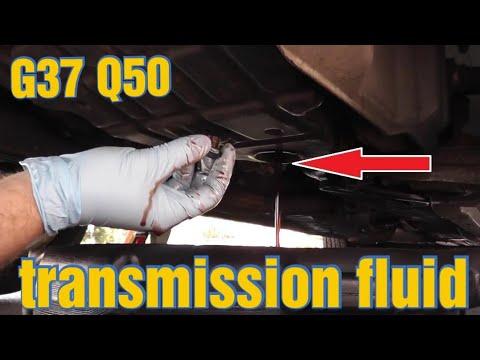







How to Change Transmission Fluid & Filter on a 2016 INFINITI Q50 (7-Speed Auto)
Step-by-step drain, pan drop, filter swap, refill, and temp-based level check with tools and torque specs
How to Change Transmission Fluid & Filter on a 2016 INFINITI Q50 (7-Speed Auto)
Step-by-step drain, pan drop, filter swap, refill, and temp-based level check with tools and torque specs


🔧 Q50 - Transmission Fluid & Filter Service
On your Q50, changing the automatic transmission fluid helps protect the internal clutches, valve body, and bearings from wear and overheating. This service is done by draining the pan, replacing the filter, then refilling and setting the fluid level at a specific transmission temperature.
Assumption: Your Q50 2.0T uses the Mercedes-based 7-speed automatic (722.9) with no factory dipstick, so level must be set by temperature with a service dipstick tool.
Difficulty Level: Advanced | Estimated Time: 2.0-3.5 hours
⚠️ Safety & Precautions
- ⚠️ Work on a level surface and support the car with jack stands; never rely on a jack alone.
- ⚠️ Transmission fluid can be hot; let the exhaust and pan cool enough to avoid burns.
- ⚠️ Keep the car level when checking/filling fluid level, or the reading will be wrong.
- ⚠️ Engine will run during final level check—keep hands, hair, and clothing away from belts/fans.
- ⚠️ No battery disconnect is required for this service.
🔧 Required Tools
You'll need the following tools for this repair:
- Floor jack (rated 3-ton minimum)
- Jack stands (rated 3-ton minimum)
- Wheel chocks
- Safety glasses
- Nitrile gloves
- Drain pan (10-quart minimum)
- Shop rags
- 10mm socket
- Ratchet (3/8")
- Torque wrench (5–30 Nm range)
- Allen hex bit set (5mm, 6mm)
- Torx bit set (T25, T30)
- Plastic trim clip tool
- Brake cleaner spray
- Fluid transfer pump
- Mercedes 722.9 transmission service dipstick (specialty)
- OBD2 scan tool that reads transmission fluid temperature (specialty)
🔩 Required Parts
HowToo sells all the parts you need for this repair:
- Automatic transmission fluid (MB 236.14 / MB 236.15 spec) - Qty: 8-10 quarts
- Transmission filter - Qty: 1
- Transmission pan gasket - Qty: 1
- Transmission drain plug seal/washer - Qty: 1
- Transmission fill tube cap seal (if equipped) - Qty: 1
📋 Before You Begin
- Park on level ground, set the parking brake, and place wheel chocks behind the rear wheels.
- Plan to keep the car level in the air (front and rear supported) for the final fluid level setting.
- Have your OBD2 scan tool ready to display transmission fluid temperature (often shown as “A/T Fluid Temp” or similar).
- Lay cardboard under the work area.
🔨 Step-by-Step Instructions
Follow these steps in order:
Step 1: Warm the transmission slightly
- Drive 10–15 minutes so the transmission is warm (not fully hot).
- Park on a level spot and leave the engine off for a few minutes so the exhaust isn’t scorching.
Step 2: Lift and level the car
- Use a floor jack to lift the front, then set it on jack stands.
- Lift the rear and set it on jack stands so the car sits level.
- Shake the car lightly to confirm it’s stable before going underneath.
Step 3: Remove the underbody covers
- Use a 10mm socket and plastic trim clip tool to remove the splash shield/undertray panels under the transmission area.
- Set hardware aside in a tray so nothing gets lost.
Step 4: Drain the transmission pan
- Place a drain pan under the transmission pan drain plug.
- Remove the drain plug using a 5mm Allen hex bit and ratchet.
- Let it drain until it slows to a drip.
Step 5: Remove the transmission pan
- Keep the drain pan under the transmission—more fluid will come out when the pan drops.
- Remove the pan bolts using a Torx T30 bit and ratchet.
- Support the pan with one hand as you remove the last bolts, then lower it carefully.
Step 6: Replace the filter and clean the pan
- Remove the transmission filter (typically held by Torx) using a Torx T25/T30 bit.
- Install the new filter (push/seat it fully, then install fasteners).
- Clean the pan and magnets using brake cleaner spray and shop rags.
- Remove the old gasket and install the new pan gasket.
- Clean magnets until they look “like new.”
Step 7: Reinstall the pan and drain plug
- Position the pan and hand-start all bolts.
- Tighten pan bolts evenly in a crisscross pattern using a torque wrench: Torque to 8 Nm (71 in-lbs).
- Install the drain plug with a new seal/washer using a torque wrench: Torque to 14 Nm (10 ft-lbs).
Step 8: Add initial fluid fill
- Locate the transmission fill/dipstick tube and remove the locking cap (cap may require prying) using a plastic trim clip tool.
- Using a fluid transfer pump, add about 4–5 quarts of MB 236.14 / 236.15 spec ATF as an initial fill.
- A “fluid transfer pump” is a hand pump that pushes fluid from the bottle into the fill tube.
Step 9: Circulate fluid and bring to level-check temperature
- Start the engine.
- With your foot on the brake, slowly move the shifter through P-R-N-D and back, pausing 2–3 seconds in each gear.
- Use the OBD2 scan tool to monitor transmission fluid temperature.
- Target temperature range for level setting: 45°C (113°F) (acceptable window is typically around 40–50°C).
Step 10: Set the final fluid level (service dipstick method)
- With engine idling and the car level, insert the Mercedes 722.9 transmission service dipstick (specialty) into the dipstick tube until it bottoms.
- Remove it and read the level against the markings that correspond to your measured fluid temperature (your dipstick tool has a chart/scale).
- If low, add ATF using the fluid transfer pump in small amounts (about 0.25 quart at a time), then re-check.
- If overfilled, you must drain a small amount using the 5mm Allen hex bit at the drain plug, then re-check.
- Small changes make big level differences.
Step 11: Reinstall the fill tube cap and undertrays
- Install the fill tube cap (replace seal if applicable) by hand, then secure it fully.
- Reinstall underbody covers using a 10mm socket and any clips with a plastic trim clip tool.
✅ After Repair
- Start the engine and check underneath for leaks around the pan gasket and drain plug.
- Test drive 10–15 minutes. Confirm smooth shifting and no slipping or flare.
- Recheck for leaks after the test drive.
- If you have a scan tool, check for transmission-related codes and confirm fluid temperature readings look normal.
💰 DIY vs Shop Cost
Shop Cost: $350-$700 (parts + labor)
DIY Cost: $120-$260 (parts only)
You Save: $230-$440 by doing it yourself!
Shop labor rates vary but typically run $100-$150/hour. This repair takes a shop approximately 2-3 hours.
🎯 Ready to get started?
HowToo makes it easy: same-day/2-day shipping on every part, plus all the tools and specialty tools you need! Check out the parts and tools sections below to add everything to your cart.