









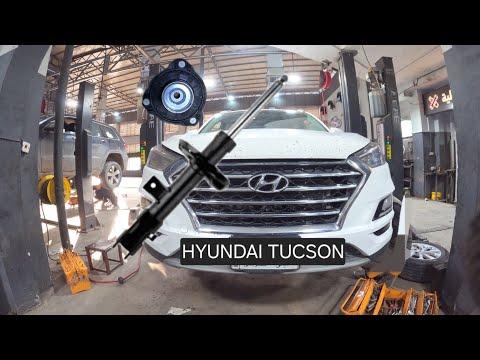






How to Replace Front & Rear Struts on a 2020 Hyundai Tucson (DIY Guide)
Step-by-step instructions with required tools, parts list, safety tips, and alignment notes
How to Replace Front & Rear Struts on a 2020 Hyundai Tucson (DIY Guide)
Step-by-step instructions with required tools, parts list, safety tips, and alignment notes


🔧 Tucson - Strut Replacement
Replacing the struts on your Tucson means removing the strut assemblies (front) and/or shock/strut assemblies (rear, depending on suspension) and installing new units, then reassembling everything to factory specs. Because strut hardware and torque specs vary by front vs rear and by whether you’re swapping complete assemblies or transferring springs, I need 2 quick details to give you exact, dealership-accurate steps and torque values.
Difficulty Level: Advanced | Estimated Time: 3-6 hours
⚠️ Safety & Precautions
- ⚠️ If you are transferring springs: a compressed coil spring can cause severe injury—use a proper coil spring compressor (specialty) and keep hands/face out of the spring’s path.
- ⚠️ Support the vehicle with jack stands on solid lift points; never rely on a floor jack alone.
- ⚠️ Keep the steering knuckle supported so you don’t over-stretch the CV axle, ABS wiring, or brake hose.
- ⚠️ Plan for an alignment after front strut work; driving without one can cause tire wear and pulling.
🔧 Required Tools
You'll need the following tools for this repair:
- Floor jack (rated 3-ton minimum)
- Jack stands (rated 3-ton minimum)
- Wheel chocks
- Lug nut socket set (metric)
- Socket set (metric)
- Wrench set (metric)
- Breaker bar (1/2")
- Torque wrench (1/2", 20–200 ft-lbs range)
- Torque wrench (3/8", 10–80 ft-lbs range)
- Pry bar (24")
- Needle-nose pliers
- Paint marker
- Penetrating oil
- Coil spring compressor (specialty)
- Safety glasses
- Mechanic gloves
🔩 Required Parts
HowToo sells all the parts you need for this repair:
- Front strut assemblies - Replace in pairs - Qty: 2
- Rear shock/strut assemblies - Replace in pairs - Qty: 2
- Front strut mount(s) - Replace in pairs - Qty: 2
- Front strut bearing(s) - Replace in pairs - Qty: 2
- Bump stop(s) and dust boot(s) - Replace in pairs - Qty: 2
- New self-locking strut nuts/bolts (as required) - Qty: 1 set
📋 Before You Begin
- Park on level ground, wheels straight, and set the parking brake.
- Loosen lug nuts slightly before lifting the vehicle.
- Two quick questions so I can give exact factory steps + torque specs:
- Are you replacing front struts, rear, or all four corners?
- Did you buy complete quick-strut assemblies (strut + spring + mount preassembled), or just bare struts that require transferring the spring?
🔨 Step-by-Step Instructions
Follow these steps in order:
Step 1: Confirm which struts and what parts you have
- Reply with: front / rear / all four, and quick-strut / bare strut.
- Once confirmed, I’ll provide the exact Tucson procedure including the correct fastener locations, handling of ABS/brake line brackets, and Torque to XX Nm (YY ft-lbs) for every bolt/nut you touch.
- Quick-struts are safest for beginners.
✅ After Repair
- Get a 4-wheel alignment after any front strut replacement.
- Test drive at low speed first; listen for clunks and recheck lug nut torque.
- After 25–50 km, recheck for any looseness/noise around the repaired corner(s).
💰 DIY vs Shop Cost
Shop Cost: ₹18,000-₹45,000 (parts + labor, per axle depending on parts used)
DIY Cost: ₹8,000-₹28,000 (parts only, per axle depending on quick-strut vs bare strut)
You Save: ₹10,000-₹20,000 by doing it yourself!
Shop labor rates vary but typically run ₹1,000-₹2,500/hour. This repair takes a shop approximately 3-5 hours.
🎯 Ready to get started?
HowToo makes it easy: same-day/2-day shipping on every part, plus all the tools and specialty tools you need! Check out the parts and tools sections below to add everything to your cart.