









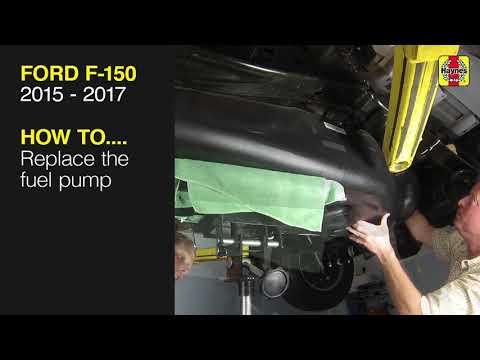







How to Replace the Fuel Pump on a 2016 Ford F-150 (In-Tank Module Guide)
Step-by-step bed-lift or tank-drop instructions with tools, parts list, safety tips, and key torque specs
How to Replace the Fuel Pump on a 2016 Ford F-150 (In-Tank Module Guide)
Step-by-step bed-lift or tank-drop instructions with tools, parts list, safety tips, and key torque specs


🔧 F-150 - Fuel Pump Replacement
The fuel pump on your F-150 is part of the in-tank fuel pump module. Replacing it means accessing the top of the fuel tank, disconnecting the fuel lines and wiring, and swapping the module and seal to restore proper fuel pressure and drivability.
Difficulty Level: Advanced | Estimated Time: 3-6 hours
⚠️ Safety & Precautions
- ⚠️ Work outdoors or in a very well-ventilated area—fuel vapors are extremely flammable.
- ⚠️ No smoking, no sparks, no hot work lights—use an LED work light.
- ⚠️ Relieve fuel pressure before disconnecting any fuel line to prevent fuel spray.
- ⚠️ Support the truck with jack stands on solid ground—never rely on a jack alone.
- ⚠️ Disconnect the negative battery cable before starting to reduce spark risk.
- ⚠️ Fuel is hazardous—wear nitrile gloves and safety glasses.
🔧 Required Tools
You'll need the following tools for this repair:
- Floor jack (rated 3-ton minimum)
- Jack stands (rated 3-ton minimum)
- Wheel chocks
- Safety glasses
- Nitrile gloves
- Fire extinguisher (Class B)
- Socket set (8mm, 10mm, 13mm, 15mm, 18mm)
- Ratchet (3/8")
- Breaker bar (1/2")
- Torque wrench (10–200 ft-lbs range)
- Torx T50 bit
- Flathead screwdriver
- Fuel line disconnect tool set (5/16", 3/8")
- Pliers
- Trim clip remover
- Drain pan (at least 2 gallons)
- Shop rags
- Hand siphon pump (fuel-safe)
- Transmission jack (specialty)
- Fuel pump lock ring tool (specialty)
- Brass drift punch (specialty)
- Rubber mallet
- Marker pen
- LED work light
🔩 Required Parts
HowToo sells all the parts you need for this repair:
- Fuel pump module assembly (in-tank) - Qty: 1
- Fuel pump module tank seal (O-ring/gasket) - Qty: 1
- Fuel pump lock ring - Qty: 1 (recommended if corroded)
📋 Before You Begin
- Park on level ground, set the parking brake, and chock the rear wheels with wheel chocks.
- Run the fuel level down as low as possible. Less fuel = much easier job.
- Disconnect the battery: use a 10mm socket to remove the negative cable and set it aside.
- Relieve fuel pressure before opening any line (steps below).
🔨 Step-by-Step Instructions
Follow these steps in order:
Assumption (for best-effort guidance): Your F-150 uses an in-tank pump module retained by a lock ring. Exact torque specs can vary by configuration—verify in Ford service information when available.
Step 1: Relieve fuel system pressure
- Open the hood and remove the engine cover (if equipped) by pulling upward by hand.
- Locate the under-hood fuse box. Remove the fuel pump fuse/relay (use the fuse puller or pliers).
- Start the engine and let it run until it stalls.
- Crank the engine for 3–5 seconds one more time to bleed off remaining pressure.
Step 2: Choose your access method (Bed lift = easier, Tank drop = common)
- Method A (Recommended): Lift/slide the truck bed back to access the pump from above.
- Method B: Lower the fuel tank to access the pump from above the tank.
Step 3A (Method A): Disconnect bed wiring and remove bed bolts
- Unplug the tail light harness/bed harness connectors near the rear (use a trim clip remover if clips are holding the loom).
- Remove the fuel filler neck screws at the bedside (use an 8mm socket or Torx bit if equipped).
- Remove the bed-to-frame bolts using a Torx T50 bit, breaker bar, and ratchet.
- With help from 2–3 people, lift the bed and set it back a foot or two (or lift it off completely).
- Torque on reassembly: Torque bed bolts to 90–110 Nm (66–81 ft-lbs).
Step 3B (Method B): Raise the truck and support the fuel tank
- Raise the truck with a floor jack and support it on jack stands.
- Place a transmission jack (specialty) under the fuel tank. (A transmission jack is a wide, stable jack made to safely support heavy items like a fuel tank.)
- If needed, siphon fuel out using a hand siphon pump (fuel-safe) into approved containers.
Step 4: Disconnect filler/vent hoses, electrical connector, and fuel lines
- Clean dirt around connections using shop rags. Cleanliness prevents fuel system problems.
- Disconnect the fuel pump module electrical connector (use a flathead screwdriver gently on the lock tab if needed).
- Disconnect the EVAP/vent lines using pliers (for spring clamps) or by releasing the quick-connect tabs.
- Disconnect the fuel supply line using the fuel line disconnect tool set (5/16", 3/8"). (This tool slides into the fitting to release the internal spring.)
- Catch any spill in a drain pan and wipe with shop rags.
Step 5 (Method B only): Lower the tank enough to access the pump
- Remove/loosen the fuel tank shield(s) if equipped using a 13mm socket.
- Remove the fuel tank strap bolts using a 13mm or 15mm socket (varies by hardware).
- Slowly lower the tank with the transmission jack (specialty) just enough to reach the pump module area on top.
- Torque on reassembly: Torque tank strap bolts to 35–55 Nm (26–41 ft-lbs).
Step 6: Remove the fuel pump lock ring and pull out the module
- Clean the top of the tank thoroughly with shop rags. Do not let dirt fall into the tank opening.
- Mark the pump module orientation with a marker pen so the new one goes in the same way.
- Remove the lock ring:
- Preferred: use a fuel pump lock ring tool (specialty) with a ratchet.
- Alternate: use a brass drift punch (specialty) and rubber mallet to tap the ring loose. (Brass helps reduce spark risk.)
- Lift the module straight up. Tilt as needed to clear the float arm without bending it.
- Remove the old tank seal (O-ring) by hand and discard it.
Step 7: Install the new seal and fuel pump module
- Install the new tank seal into the groove (do not reuse the old seal).
- Lower the new pump module into the tank, keeping it aligned with your marks.
- Install the lock ring and tighten:
- Use the fuel pump lock ring tool (specialty) and ratchet to snug it evenly.
- Lock ring: tighten fully to seat the seal (spec depends on ring style; ensure it locks fully under all tabs).
Step 8: Reconnect lines/wiring and reassemble (bed or tank)
- Reconnect the electrical connector until it clicks.
- Reconnect the fuel line quick-connect until it clicks, then tug lightly to confirm it’s locked.
- Reconnect EVAP/vent lines and clamps using pliers.
- If you dropped the tank, raise it back into position with the transmission jack (specialty) and reinstall straps using the correct socket.
- If you lifted the bed, set it back in place and install bed bolts using Torx T50 bit and torque wrench to 90–110 Nm (66–81 ft-lbs).
- Reinstall filler neck screws using an 8mm socket.
- Reconnect bed wiring connectors.
Step 9: Restore power and prime the fuel system
- Reinstall the fuel pump fuse/relay.
- Reconnect the negative battery cable using a 10mm socket.
- Prime the system: turn the key to ON (engine off) for 10 seconds, then OFF. Repeat 3–4 times.
- Start the engine and let it idle.
✅ After Repair
- Inspect for leaks at the pump seal area (top of tank) and at every quick-connect fitting.
- Road test for 10–15 minutes, then re-check for leaks.
- If a check engine light appears, read codes with an OBD2 scanner and address any EVAP/fuel pressure related codes.
💰 DIY vs Shop Cost
Shop Cost: $900-$1,800 (parts + labor)
DIY Cost: $250-$800 (parts only)
You Save: $650-$1,000 by doing it yourself!
Shop labor rates vary but typically run $100-$150/hour. This repair takes a shop approximately 3-6 hours.
🎯 Ready to get started?
HowToo makes it easy: same-day/2-day shipping on every part, plus all the tools and specialty tools you need! Check out the parts and tools sections below to add everything to your cart.