









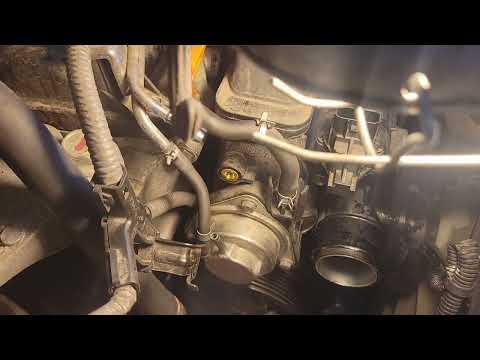







How to Replace the Water Pump on a 2018 Honda CR‑V 2.4L
Step-by-step DIY water pump replacement with tools, parts list, torque specs, safety tips, and cost savings guide
How to Replace the Water Pump on a 2018 Honda CR‑V 2.4L
Step-by-step DIY water pump replacement with tools, parts list, torque specs, safety tips, and cost savings guide


🔧 CR-V - Water Pump Replacement
You’ll be removing the drive belt, draining the coolant, and unbolting the water pump from the front of the engine on your CR-V. This restores proper coolant flow and prevents overheating or leaks.
Difficulty Level: Intermediate | Estimated Time: 3–4 hours
⚠️ Safety & Precautions
- ⚠️ Let the engine fully cool (at least 1 hour) before opening the coolant system to avoid serious burns.
- ⚠️ Support the vehicle securely with jack stands, never rely on a floor jack alone.
- ⚠️ Coolant is poisonous to people and animals; collect and dispose of it properly.
- ⚠️ Keep tools and hands clear of the radiator fan area; it can start unexpectedly with key ON.
- ⚠️ Disconnect the negative battery cable if your hands will be near the starter or main wiring.
- ⚠️ Work in a well-ventilated area and keep rags away from the serpentine belt area.
🔧 Required Tools
You'll need the following tools for this repair:
- 🛠️ Floor jack (rated 3-ton minimum)
- 🛠️ Jack stands (rated 3-ton minimum)
- 🛠️ Wheel chocks
- 🛠️ Metric socket set (8mm–19mm)
- 🛠️ 3/8" drive ratchet
- 🛠️ 1/2" drive ratchet
- 🛠️ 3/8" drive torque wrench (5–80 ft-lbs)
- 🛠️ 1/2" drive torque wrench (30–150 ft-lbs)
- 🛠️ Metric combination wrench set (8mm–19mm)
- 🛠️ Serpentine belt tool or 14mm long-handled wrench
- 🛠️ Short and long extension bars (3/8" drive)
- 🛠️ Flathead screwdriver (medium)
- 🛠️ Phillips screwdriver
- 🛠️ Trim clip removal tool (specialty)
- 🛠️ Plastic scraper
- 🛠️ Drain pan (at least 10-liter capacity)
- 🛠️ Clean funnel
- 🛠️ Pliers (standard slip-joint)
- 🛠️ Needle-nose pliers
- 🛠️ Shop rags or paper towels
- 🛠️ Work light
- 🛠️ Gloves (mechanic)
- 🛠️ Safety glasses
🔩 Required Parts
HowToo sells all the parts you need for this repair:
- 🔩 Engine water pump (2.4L) - Qty: 1
- 🔩 Water pump gasket or O-ring (matching pump) - Qty: 1
- 🔩 Serpentine drive belt - Qty: 1
- 🔩 Honda Type 2 blue coolant (premixed 50/50) - Qty: 2 gallons
- 🔩 Water pump mounting bolts (optional, recommended) - Qty: 1 set
- 🔩 Hose clamp(s) for coolant hoses (if originals are rusty) - Qty: 2–4
- 🔩 RTV silicone sealant (Honda coolant-safe, if specified with your pump) - Qty: 1 tube
- 🔩 Anti-seize compound (for bolt threads, optional) - Qty: 1 small tube
- 🔩 Brake cleaner or parts cleaner spray - Qty: 1 can
- 🔩 Distilled water - Qty: 1 gallon (for rinsing spills)
📋 Before You Begin
- Park the CR-V on level ground, set the parking brake, and put the transmission in Park.
- Turn the ignition OFF and remove the key; let the engine cool completely.
- Open the hood and support it securely.
- Disconnect the negative battery terminal using a 10mm socket and move the cable aside.
- Place wheel chocks behind the rear wheels.
- Locate the coolant reservoir and radiator cap so you know where to refill later.
🔨 Step-by-Step Instructions
Follow these steps in order:
Step 1: Raise and prepare the vehicle
- Use the floor jack to lift the front of the CR-V at the front jacking point.
- Place jack stands under the proper support points on both sides and lower the vehicle onto them.
- Remove the right front wheel with a 19mm socket and 1/2" ratchet to improve access through the wheel well.
- Keep lug nuts in a tray so you don’t lose them.
Step 2: Remove splash shields for access
- Use a Phillips screwdriver and trim clip removal tool to remove plastic clips and screws from the right front inner fender liner.
- Gently pull the liner back or out to expose the side of the engine and belt area.
- If needed, remove the small lower splash shield using a 10mm socket.
Step 3: Drain the engine coolant
- Place the drain pan under the radiator drain area.
- Slowly loosen the radiator cap (on a cool engine) to release any remaining pressure.
- Use pliers to open the radiator petcock if present, or remove the lower radiator hose clamp with pliers and pull the hose off.
- Allow the coolant to fully drain into the pan.
- Wipe up spills quickly to avoid slippery surfaces.
Step 4: Remove the serpentine drive belt
- From the wheel well, locate the belt tensioner (spring-loaded pulley).
- Use a 14mm long-handled wrench or serpentine belt tool on the tensioner bolt and rotate to relieve belt tension.
- While holding tension off, slide the belt off the pulleys, then slowly release the tensioner.
- Note the belt routing or take a clear photo for reinstallation.
Step 5: Access the water pump area
- The water pump on your CR-V is mounted on the front of the engine block, near the belt area.
- If any small plastic covers or brackets block access, remove them using a 10mm socket and ratchet.
- Move hoses or wiring gently aside as needed; use needle-nose pliers to release small clips carefully.
Step 6: Disconnect hoses from the water pump (if applicable)
- Some 2.4L setups have a small coolant bypass hose near the pump.
- Use pliers to slide the hose clamp away from the pump connection.
- Gently twist the hose with your hand to break it loose, then pull it off.
- If it’s stuck, use a flathead gently—don’t cut the hose.
Step 7: Remove the water pump
- Locate all the water pump mounting bolts around the pump body.
- Use a 10mm socket, extension, and 3/8" ratchet to remove each bolt. Note bolt lengths and positions.
- After the bolts are out, lightly tap the pump with the palm of your hand or a soft hammer to break the seal and pull it away from the engine.
- Have the drain pan under the pump area; more coolant will spill.
Step 8: Clean the mounting surface
- Use a plastic scraper to carefully remove old gasket material from the engine surface.
- Do not scratch or gouge the aluminum surface.
- Spray a little brake cleaner on a rag and wipe the surface clean.
- The surface should be smooth, clean, and dry.
Step 9: Prepare the new water pump
- Install the new gasket or O-ring onto the new pump as directed by the instructions.
- If the manufacturer calls for RTV sealant, apply a thin, even bead with the RTV silicone sealant only where specified.
- Optionally apply a tiny amount of anti-seize compound to the bolt threads (avoid the first thread and do not over-apply).
Step 10: Install the new water pump
- Position the new pump onto the engine, lining up the bolt holes and gasket.
- Hand-thread all pump bolts using your fingers to avoid cross-threading.
- Use a 10mm socket and ratchet to snug all bolts evenly in a crisscross pattern.
- Then use the 3/8" torque wrench to tighten each bolt to 12 N·m (8.7 ft-lbs).
- Do not overtighten; you can crack the pump or cover.
Step 11: Reattach any hoses and clamps
- Push the bypass hose (if present) back onto the new pump fitting.
- Reposition the clamp using pliers and ensure it sits over the raised barb on the fitting.
Step 12: Reinstall the serpentine belt
- Route the new belt according to your photo or the belt routing label under the hood.
- Use the 14mm long-handled wrench or serpentine belt tool to rotate the tensioner and slip the belt over the final pulley.
- Release the tensioner slowly and double-check that the belt is seated fully in all pulley grooves.
Step 13: Reinstall splash shields and wheel
- Reinstall the inner fender liner and any lower splash shields using the original clips and screws with a Phillips screwdriver and 10mm socket.
- Reinstall the right front wheel and hand-tighten lug nuts.
- Raise the vehicle slightly with the floor jack, remove the jack stands, and lower the vehicle to the ground.
- Torque the lug nuts with a 1/2" torque wrench and 19mm socket to 108 N·m (80 ft-lbs) in a star pattern.
Step 14: Reconnect the battery and refill coolant
- Reconnect the negative battery cable with a 10mm socket and tighten snugly.
- Using a funnel, slowly fill the radiator with Honda Type 2 coolant until full.
- Fill the coolant reservoir to the “MAX” line.
Step 15: Bleed air from the cooling system
- Leave the radiator cap off for now.
- Start the engine and let it idle; turn the heater to HOT and the blower to medium.
- Watch the coolant level in the radiator neck; as the thermostat opens, the level may drop—top it off as needed with coolant using the funnel.
- When you see no more large bubbles and the upper radiator hose is hot, install the radiator cap securely.
- Check the reservoir level again and adjust to “MAX” if needed.
Step 16: Final leak check
- Let the engine reach normal operating temperature and inspect the water pump area, hose connections, and under the vehicle for any leaks.
- Shut the engine off and allow it to cool fully, then recheck the coolant level in the reservoir and top off if necessary.
✅ After Repair
- Drive gently for the first few trips and monitor the temperature gauge; it should stay in the normal range.
- After 1–2 heat cycles (drive, cool down), recheck coolant level in the reservoir and top off if needed.
- Inspect under the CR-V and around the water pump once more for any signs of fresh coolant.
- Listen for any unusual noises from the belt area that could indicate incorrect belt routing.
💰 DIY vs Shop Cost
Shop Cost: $550–$850 (parts + labor)
DIY Cost: $150–$250 (parts only)
You Save: $400–$600 by doing it yourself!
Shop labor rates typically run $100–$150/hour. This repair takes a shop approximately 2.5–3.0 hours.
🎯 Ready to get started?
HowToo makes it easy: same-day/2-day shipping on every part, plus all the tools and specialty tools you need! Check out the parts and tools sections above to add everything to your cart.