








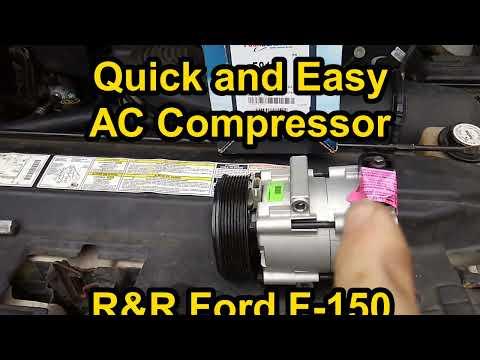







How to Replace the A/C Compressor on a 2016 Ford F-150 (R-134a System)
Step-by-step DIY instructions with required tools/parts, safety tips, vacuum & recharge-by-weight guidance, and torque spec notes
How to Replace the A/C Compressor on a 2016 Ford F-150 (R-134a System)
Step-by-step DIY instructions with required tools/parts, safety tips, vacuum & recharge-by-weight guidance, and torque spec notes


🔧 A/C Compressor - Replacement
On your F-150, replacing the A/C compressor means recovering the refrigerant, removing the belt and compressor, replacing seals (and ideally the accumulator and orifice tube), then vacuuming and recharging the system by weight. This matters because any dirt or moisture left in the system can destroy the new compressor quickly.
Difficulty Level: Advanced | Estimated Time: 3-6 hours
⚠️ Safety & Precautions
- ⚠️ Do not open any A/C line until the refrigerant is professionally recovered.
- ⚠️ Wear safety glasses and gloves—refrigerant/oil can cause frostbite and eye injury.
- ⚠️ Let the engine cool fully—hot pulleys and exhaust parts burn.
- ⚠️ Disconnect the negative battery cable before unplugging A/C electrical connectors.
- ⚠️ Cap/plug open A/C lines immediately to keep moisture out.
🔧 Required Tools
You'll need the following tools for this repair:
- Safety glasses
- Nitrile gloves
- Floor jack (rated 3-ton minimum)
- Jack stands (rated 3-ton minimum)
- Wheel chocks
- 3/8" drive ratchet
- 1/2" drive ratchet
- 10mm socket
- 13mm socket
- Socket set (8mm-18mm)
- Wrench set (8mm-18mm)
- 3/8" drive torque wrench (10-80 ft-lbs range)
- 1/2" drive torque wrench (30-250 ft-lbs range)
- Serpentine belt tool
- Trim clip removal tool
- Flathead screwdriver
- Pick set
- Line caps/plugs kit
- Drain pan
- Shop towels
- A/C manifold gauge set for R-134a (specialty)
- A/C vacuum pump (specialty)
- Refrigerant recovery machine (specialty)
- Refrigerant scale (specialty)
🔩 Required Parts
HowToo sells all the parts you need for this repair:
- A/C compressor assembly - Qty: 1
- A/C compressor O-ring/seal kit - Qty: 1
- A/C accumulator/receiver-drier - Qty: 1
- Orifice tube - Qty: 1
- PAG A/C compressor oil (Ford-spec equivalent) - Qty: 1
- R-134a refrigerant - Qty: Charge by under-hood label
📋 Before You Begin
- Park on level ground, set the parking brake, and install wheel chocks.
- Have the refrigerant recovered before you start. Never vent refrigerant.
- Disconnect the negative battery cable using a 10mm socket.
- Know the specialty tools: an A/C manifold gauge set for R-134a (specialty) shows system pressures; an A/C vacuum pump (specialty) removes air/moisture; a refrigerant scale (specialty) measures the exact charge.
- Assumption: Fastener torque values vary by compressor/line hardware; use Ford service torque specs for your exact fasteners.
🔨 Step-by-Step Instructions
Follow these steps in order:
Step 1: Confirm the A/C system is empty
- After recovery, connect the A/C manifold gauge set for R-134a (specialty).
- Verify both gauges read 0 psi before loosening any A/C connection.
Step 2: Raise the front safely
- Lift with a floor jack (rated 3-ton minimum) and support with jack stands (rated 3-ton minimum).
- Give the truck a firm push test to confirm it’s stable.
Step 3: Remove lower shields as needed
- Remove splash shield fasteners using a socket set (8mm-18mm), 3/8" drive ratchet, and trim clip removal tool.
- Keep bolts/clips in labeled cups.
Step 4: Remove the belt from the A/C compressor pulley
- Relieve tension with a serpentine belt tool (a long handle made to move the belt tensioner safely).
- Slip the belt off the compressor pulley, then slowly release the tensioner.
Step 5: Unplug the compressor connector
- Release the connector lock using a pick set or flathead screwdriver.
- Pull the connector straight off.
Step 6: Disconnect A/C lines at the compressor
- Place a drain pan under the compressor.
- Remove the line retaining bolt(s) using a 10mm socket or 13mm socket with a 3/8" drive ratchet (head size can vary by fitting).
- Gently work the manifold/lines loose—some oil may drip.
- Immediately cap the open lines and compressor ports using a line caps/plugs kit.
Step 7: Remove the compressor
- Support the compressor with one hand.
- Remove the mounting bolts using a socket set (8mm-18mm) and ratchet.
- Lower and remove the compressor from the truck.
- Torque on install: Torque mounting bolts to Ford specification using a torque wrench.
Step 8: Replace the accumulator/receiver-drier
- Remove fittings/retainers using a wrench set (8mm-18mm) and/or socket set (8mm-18mm).
- Swap in the new accumulator.
- Install new O-rings from the A/C compressor O-ring/seal kit.
- Coat O-rings with a thin film of PAG A/C compressor oil before assembly. This prevents tearing.
- Torque on install: Torque fittings/fasteners to Ford specification using a torque wrench.
Step 9: Replace the orifice tube
- Open the line section that contains the orifice tube using a wrench set (8mm-18mm).
- Extract the orifice tube with a pick set (it’s a small metering “screen” in the line).
- Install the new orifice tube in the same direction, then reassemble with new lubricated O-rings.
- Torque on install: Torque line fittings to Ford specification using a torque wrench.
Step 10: Install the new compressor
- Remove shipping caps only when you’re ready to connect lines.
- If the compressor instructions call for it, set the oil amount using PAG A/C compressor oil (oil amount matters for cooling and compressor life).
- Position the compressor and start bolts by hand to avoid cross-threading.
- Tighten using a torque wrench and appropriate socket.
- Torque: Torque compressor bolts to Ford specification.
Step 11: Reconnect the A/C lines with new O-rings
- Install new O-rings from the A/C compressor O-ring/seal kit, lightly oiled with PAG A/C compressor oil.
- Install the retaining bolt(s) using a 10mm socket or 13mm socket and ratchet.
- Torque: Torque line retaining fastener(s) to Ford specification using a torque wrench.
- Wipe everything clean with shop towels so leaks are easy to see later.
Step 12: Reinstall the belt and shields
- Reinstall the belt using a serpentine belt tool.
- Visually confirm the belt is seated in every pulley groove.
- Reinstall shields using a socket set (8mm-18mm), ratchet, and trim clip removal tool.
Step 13: Vacuum the system and verify it holds
- Connect the A/C manifold gauge set for R-134a (specialty) and pull vacuum with an A/C vacuum pump (specialty) for 30–45 minutes.
- Close the valves and let it sit 10–20 minutes.
- If vacuum drops, you have a leak that must be fixed before charging.
Step 14: Recharge by weight
- Charge with R-134a refrigerant measured on a refrigerant scale (specialty).
- Use the exact refrigerant weight listed on the under-hood A/C label.
- Do not “charge by pressure.”
Step 15: Reconnect the battery
- Reconnect the negative battery cable using a 10mm socket.
✅ After Repair
- Start the engine and turn A/C to MAX and RECIRC.
- Confirm the compressor engages and air gets cold at the vents.
- Listen for squealing/grinding; shut off if heard and recheck belt alignment.
- Inspect all A/C fittings for fresh oil residue after a short drive.
💰 DIY vs Shop Cost
Shop Cost: $1,100-$2,200 (parts + labor)
DIY Cost: $350-$900 (parts only)
You Save: $750-$1,300 by doing it yourself!
Shop labor rates vary but typically run $100-$150/hour. This repair takes a shop approximately 3-6 hours.
🎯 Ready to get started?
HowToo makes it easy: same-day/2-day shipping on every part, plus all the tools and specialty tools you need! Check out the parts and tools sections below to add everything to your cart.