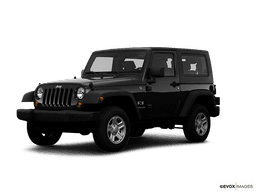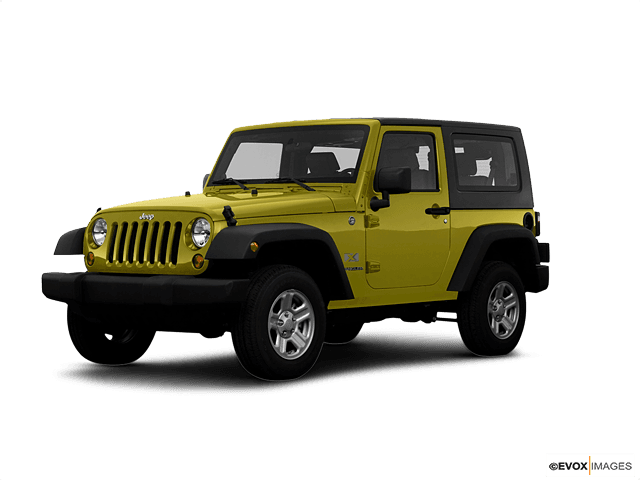









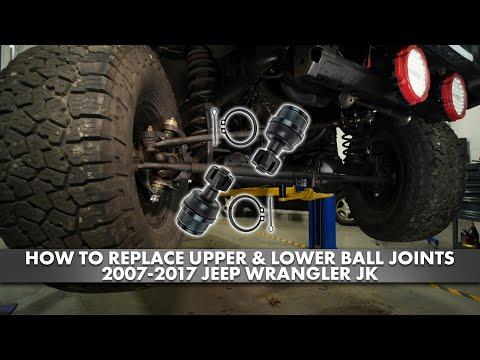







How to Replace Front Upper & Lower Ball Joints on a 2008 Jeep Wrangler
Step-by-step DIY guide with required tools, parts list, safety tips, and factory torque specs
How to Replace Front Upper & Lower Ball Joints on a 2008 Jeep Wrangler
Step-by-step DIY guide with required tools, parts list, safety tips, and factory torque specs


🔧 Wrangler - Front Ball Joint Replacement
On your Wrangler, the front upper and lower ball joints are pressed into the steering knuckle and they let the knuckle pivot smoothly for steering. When they wear out, you can get clunks, wandering steering, uneven tire wear, or looseness when you shake the tire.
Difficulty Level: Advanced | Estimated Time: 4-7 hours (both sides)
⚠️ Safety & Precautions
- 🛑 Support the front axle with jack stands; never rely on a jack.
- 🛑 Chock the rear wheels and leave the transmission in 1st gear with the parking brake set.
- 🛑 Don’t let the brake caliper hang by the hose—support it with a hanger.
- 🛑 If your Wrangler has ABS, be gentle with the wheel speed sensor wiring.
- 🛑 No battery disconnect is required for this job.
🔧 Required Tools
You'll need the following tools for this repair:
- Floor jack (rated 3-ton minimum)
- Jack stands (rated 3-ton minimum)
- Wheel chocks
- Safety glasses
- Mechanic gloves
- Breaker bar (1/2")
- Torque wrench (30–200 ft-lbs range)
- Socket set (metric, 1/2" drive)
- 36mm socket
- 21mm socket
- 18mm socket
- 13mm 12-point socket
- Ratchet (1/2")
- Wrench set (metric)
- Needle-nose pliers
- Punch set
- Dead blow hammer
- Ball joint press kit (specialty)
- Tie rod end puller (specialty)
- Brake parts cleaner
- Bungee cord or caliper hanger
- Wire brush
- Grease gun
🔩 Required Parts
HowToo sells all the parts you need for this repair:
- Front upper ball joints - Replace in pairs - Qty: 2
- Front lower ball joints - Replace in pairs - Qty: 2
- Cotter pins (assorted) - Qty: 1
- Chassis grease (if using greaseable ball joints) - Qty: 1
- Anti-seize compound - Qty: 1
📋 Before You Begin
- Park on level ground, set the parking brake, put the transmission in 1st gear, and chock the rear wheels.
- Loosen (don’t remove) the front lug nuts using a 21mm socket and breaker bar.
- Tip: Spray hub/bolts with penetrant the night before.
🔨 Step-by-Step Instructions
Follow these steps in order:
Step 1: Lift and support the front axle
- Lift the front using a floor jack (rated 3-ton minimum) under the front axle tube.
- Set the axle securely on jack stands (rated 3-ton minimum) and keep the jack lightly supporting the axle.
- Remove the wheels with a 21mm socket.
Step 2: Remove the front brake caliper and rotor
- Remove the caliper mounting bolts using a 21mm socket.
- Lift the caliper off and hang it with a bungee cord or caliper hanger.
- Remove the rotor (use a light tap with a dead blow hammer if it’s stuck).
Step 3: Remove the axle nut
- Remove the axle nut using a 36mm socket and breaker bar (1/2").
- Tip: Have a helper press the brake pedal.
Step 4: Disconnect the tie rod end from the knuckle
- Remove the cotter pin using needle-nose pliers.
- Remove the tie rod end nut using an 18mm socket.
- Separate the tie rod end from the knuckle using a tie rod end puller (specialty).
Step 5: Remove the unit bearing/hub assembly and axle shaft
- From the back side of the knuckle, remove the 3 unit bearing bolts using a 13mm 12-point socket.
- Tap the unit bearing loose with a dead blow hammer (work evenly around it).
- Slide the unit bearing off, then carefully pull the axle shaft out.
- Support the axle shaft and avoid dragging the splines on the axle seal.
Step 6: Remove the steering knuckle from the ball joints
- Remove the upper ball joint nut using an 18mm socket.
- Remove the lower ball joint nut using a 21mm socket.
- Strike the knuckle “ear” area with a dead blow hammer to pop it loose from the tapered studs.
- Lift the knuckle off and move it to a sturdy work surface.
Step 7: Press out the old ball joints
- Set up the ball joint press kit (specialty). (This is a big C-clamp tool that pushes the joint out using adapters.)
- Use the press to remove the upper ball joint first.
- Reconfigure the adapters and press out the lower ball joint.
- Clean the bores in the knuckle using a wire brush and brake parts cleaner.
Step 8: Press in the new ball joints
- Apply a thin film of anti-seize compound to the outside of the new ball joint shells (unless the ball joint maker says “install dry”).
- Press the new lower ball joint in first using the ball joint press kit (specialty).
- Press the new upper ball joint in next using the ball joint press kit (specialty).
- If your new joints have grease fittings, install them using the correct wrench set (metric) and don’t overtighten.
Step 9: Reinstall the knuckle and torque the ball joint nuts
- Place the knuckle back onto the upper and lower ball joint studs.
- Install and tighten the lower ball joint nut using a 21mm socket: Torque to 108 Nm (80 ft-lbs).
- Install and tighten the upper ball joint nut using an 18mm socket: Torque to 95 Nm (70 ft-lbs).
Step 10: Reinstall the axle shaft, unit bearing, and axle nut
- Slide the axle shaft back in carefully.
- Reinstall the unit bearing and start all 3 bolts by hand.
- Tighten the unit bearing bolts using a 13mm 12-point socket: Torque to 102 Nm (75 ft-lbs).
- Install the axle nut using a 36mm socket: Torque to 136 Nm (100 ft-lbs).
Step 11: Reconnect the tie rod end
- Install the tie rod end stud into the knuckle and thread the nut on.
- Tighten using an 18mm socket: Torque to 85 Nm (63 ft-lbs).
- Install a new cotter pin using needle-nose pliers. If the holes don’t line up, tighten a bit more—don’t loosen to align.
Step 12: Reinstall brakes and wheels
- Reinstall the rotor.
- Reinstall the brake caliper bolts using a 21mm socket: Torque to 169 Nm (125 ft-lbs).
- Reinstall the wheel and hand-start the lug nuts.
- Lower the Jeep and torque lug nuts using a torque wrench (30–200 ft-lbs range): Torque to 129 Nm (95 ft-lbs).
Step 13: Grease the new ball joints (if applicable)
- Use a grease gun to add grease until the boot just starts to swell.
- Tip: Don’t blow the boot off with too much grease.
✅ After Repair
- Pump the brake pedal until it feels firm before driving.
- Turn steering lock-to-lock while parked and listen for any clunks or binding.
- Test drive at low speed first, then recheck for looseness and any grease leaks at the boots.
- Get a professional front-end alignment as soon as possible (ball joint work can affect steering feel and tire wear).
💰 DIY vs Shop Cost
Shop Cost: $900-$1,800 (parts + labor)
DIY Cost: $150-$450 (parts only)
You Save: $750-$1,350 by doing it yourself!
Shop labor rates vary but typically run $100-$150/hour. This repair takes a shop approximately 4-7 hours.
🎯 Ready to get started?
HowToo makes it easy: same-day/2-day shipping on every part, plus all the tools and specialty tools you need! Check out the parts and tools sections below to add everything to your cart.