









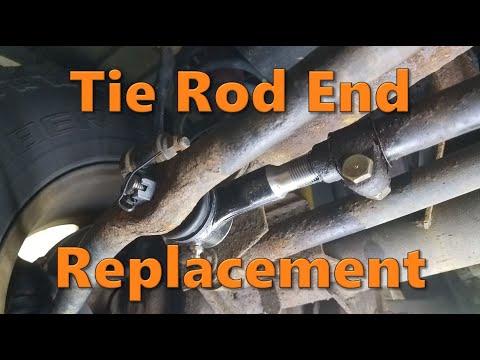







How to Replace the Outer Tie Rod End on a 2022 Jeep Grand Cherokee WK
Step-by-step DIY repair guide with tools, parts list, safety tips, and alignment advice
How to Replace the Outer Tie Rod End on a 2022 Jeep Grand Cherokee WK
Step-by-step DIY repair guide with tools, parts list, safety tips, and alignment advice


🔧 Grand Cherokee WK - Outer Tie Rod End Replacement
This guide covers replacing the outer tie rod end (the one near the wheel) on your Grand Cherokee WK. This part connects the steering to the wheel, and worn ends can cause loose steering, clunks, and uneven tire wear.
Difficulty Level: Intermediate | Estimated Time: 1.5–3 hours per side
⚠️ Safety & Precautions
- 🛑 Always use jack stands under the vehicle; never work under a car supported only by a jack.
- 🛑 Park on level ground, set the parking brake, and chock the rear wheels.
- 🛑 Keep your hands and tools clear of the brake rotor and suspension while someone turns the steering wheel.
- 🛑 A wheel alignment is required after replacing tie rod ends to avoid rapid tire wear and poor handling.
- 🛑 Do not let the brake hose or ABS sensor wire get stretched or kinked while the wheel is off.
🔧 Required Tools
You'll need the following tools for this repair:
- 🧰 Floor jack (rated 3-ton minimum)
- 🧰 Jack stands (rated 3-ton minimum, Qty: 2)
- 🧰 Wheel chocks
- 🧰 21mm socket
- 🧰 1/2" drive breaker bar
- 🧰 1/2" drive torque wrench (10–150 ft-lbs range)
- 🧰 18mm socket
- 🧰 19mm open-end wrench
- 🧰 22mm open-end wrench
- 🧰 Needle-nose pliers
- 🧰 Ball joint separator (pickle fork) (specialty)
- 🧰 Medium hammer
- 🧰 Paint marker or white correction pen
- 🧰 Tape measure (at least 1 meter)
- 🧰 Wire brush (small)
- 🧰 Shop rags
- 🧰 Penetrating oil spray
- 🧰 Mechanic’s gloves
- 🧰 Safety glasses
🔩 Required Parts
HowToo sells all the parts you need for this repair:
- 🔩 Outer tie rod end (front, side being repaired) - Qty: 1
- 🔩 New tie rod end nut - Qty: 1 (usually included with tie rod)
- 🔩 New cotter pin - Qty: 1 (only if your original uses one)
- 🔩 Anti-seize compound - Qty: small tube
- 🔩 Penetrating oil - Qty: 1 can
- 🔩 Brake cleaner spray - Qty: 1 can
📋 Before You Begin
- 🧾 Park your Grand Cherokee on a level surface, set the parking brake, and place wheel chocks behind the rear tires.
- 🧾 Loosen (do not remove) the front wheel lug nuts with the 21mm socket and breaker bar while the vehicle is still on the ground.
- 🧾 Decide which side you’re replacing. If in doubt, replace both outer tie rod ends in pairs for best steering feel.
- 🧾 Spray penetrating oil on the outer tie rod end threads (where it meets the inner tie rod) and on the nut at the steering knuckle. Let it soak a few minutes.
- 🧾 You do not need to disconnect the battery for this job.
🔨 Step-by-Step Instructions
Follow these steps in order:
Step 1: Lift and support the vehicle
- Use the floor jack under the front center jack point or appropriate crossmember to lift the front of the Grand Cherokee.
- Place jack stands under the recommended front frame or pinch weld points on both sides and slowly lower the vehicle onto the stands.
- Remove the front wheel on the side you’re working on using the 21mm socket and breaker bar.
- Give the vehicle a shake to confirm it’s stable.
Step 2: Identify and mark the tie rod position
- Locate the outer tie rod end: it’s the small pivoting joint that connects the steering linkage to the steering knuckle (behind the brake rotor).
- Use the paint marker to draw a line across the inner tie rod and outer tie rod end where they meet. This helps keep the length similar.
- Measure from a fixed point on the inner tie rod (like the end of the threads) to the center of the tie rod ball stud with the tape measure. Write down this distance.
- This rough setting helps you drive to the alignment shop.
Step 3: Loosen the jam nut
- The jam nut is the nut that locks the outer tie rod end onto the inner tie rod threads.
- Hold the flat part of the inner tie rod with a 22mm open-end wrench if needed so it doesn’t twist.
- Use the 19mm open-end wrench on the jam nut and turn it counterclockwise about 1–2 turns to loosen it. Do not remove yet.
- If it’s stuck, apply more penetrating oil and gently tap the wrench with the hammer.
Step 4: Remove the tie rod end from the steering knuckle
- Locate the nut that holds the tie rod stud into the steering knuckle (just behind the rotor).
- Use the 18mm socket and breaker bar to loosen and remove this nut.
- If there is a cotter pin through the stud, remove it first using the needle-nose pliers.
- To separate the tie rod end from the knuckle:
- Place the ball joint separator (pickle fork) between the tie rod end and the knuckle.
- Tap the back of the separator with the hammer until the joint pops free.
- A sharp hit usually works better than many light hits.
Step 5: Unscrew and count the turns
- Once the stud is free from the knuckle, hold the inner tie rod steady with the 22mm open-end wrench if needed.
- Turn the outer tie rod end by hand counterclockwise to unscrew it from the inner tie rod.
- Count each full turn out loud (or write it down). Example: “1, 2, 3…”
- Note the exact number of turns it took to remove it. You’ll screw the new one on by the same number of turns.
Step 6: Prepare and install the new tie rod end onto the inner rod
- Use the wire brush to clean the inner tie rod threads.
- Apply a very light coat of anti-seize compound to the threads (optional but helpful for future service).
- Start threading the new outer tie rod end onto the inner tie rod by hand.
- Turn it the same number of full turns you recorded in Step 5.
- Align the paint marks you made earlier as closely as possible.
- Snug the jam nut against the new tie rod end with the 19mm open-end wrench, but do not fully tighten yet.
Step 7: Attach the new tie rod end to the steering knuckle
- Insert the new tie rod end stud into the hole in the steering knuckle.
- Install the new supplied nut on the stud by hand until snug.
- Use the 18mm socket and torque wrench to tighten the nut to Torque to manufacturer specification.
- If the design uses a cotter pin, line up the nut slots with the hole in the stud by tightening slightly more (never loosening), then install a new cotter pin with the needle-nose pliers.
Step 8: Final jam nut adjustment
- Make sure the tie rod end and inner rod are in a straight line (not twisted).
- Hold the new tie rod end with your hand to keep it from turning.
- Use the 19mm open-end wrench to tighten the jam nut firmly against the back of the tie rod end to Torque to manufacturer specification.
- Re-check your tape measurement from Step 2 to confirm it’s close to your original distance.
Step 9: Reinstall the wheel
- Put the wheel back on and start all lug nuts by hand to avoid cross-threading.
- Use the 21mm socket and breaker bar to snug the lug nuts in a star pattern while the vehicle is still on jack stands.
- Use the floor jack to raise the front slightly, remove the jack stands, then lower the vehicle to the ground.
- With the vehicle on the ground, torque the lug nuts in a star pattern with the torque wrench and 21mm socket to Torque to manufacturer specification.
Step 10: Quick steering check
- Sit in the driver’s seat and turn the steering wheel lock-to-lock slowly.
- Listen for clunks or popping from the side you worked on.
- Check that the steering wheel is roughly centered when you drive straight in a safe area. It may be slightly off until aligned.
- If anything feels very wrong, do not drive fast.
✅ After Repair
- ✅ Schedule a professional wheel alignment as soon as possible. Replacing tie rod ends changes the toe setting and will wear tires quickly if not corrected.
- ✅ After the first short drive, recheck the tie rod end nut and jam nut with your 18mm socket and 19mm wrench to make sure they are still tight.
- ✅ Verify the steering wheel is straight, the vehicle tracks straight, and there is no excessive play in the steering.
- ✅ Recheck for any fluid leaks, loose brake hoses, or ABS wires near the area you worked on.
💰 DIY vs Shop Cost
Shop Cost: $350–$550 (parts + labor for one side, including alignment)
DIY Cost: $80–$160 (parts) + $80–$120 (alignment)
You Save: About $150–$250 by doing the tie rod end yourself!
Shop labor rates vary but typically run $100–$150/hour. This repair takes a shop approximately 1.0–1.5 hours plus alignment time.
🎯 Ready to get started?
HowToo makes it easy: same-day/2-day shipping on every part, plus all the tools and specialty tools you need! Check out the parts and tools sections above to add everything to your cart.