















How to Replace Front & Rear Shock Absorbers on a 2016 Jeep Wrangler
Step-by-step DIY instructions with required tools, parts list, safety tips, and torque specs
How to Replace Front & Rear Shock Absorbers on a 2016 Jeep Wrangler
Step-by-step DIY instructions with required tools, parts list, safety tips, and torque specs


🔧 Wrangler - Shock Absorber Replacement
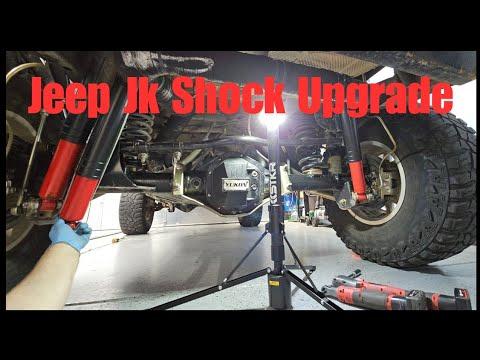
On your Wrangler, the shocks control bounce and keep the tires planted. Replacing worn shocks restores ride control and reduces nose-dive, body roll, and “after-bounce” over bumps.
Difficulty Level: Intermediate | Estimated Time: 2-4 hours
Assumption: Stock-style front and rear shocks (no lift kit).
⚠️ Safety & Precautions
- 🛑 Support the Jeep with jack stands (rated 3-ton minimum) before going under it—never rely on a floor jack alone.
- 🛑 Keep the axle supported with a floor jack so it doesn’t droop suddenly and strain brake lines/ABS wires.
- 🛑 Let the exhaust cool before working near the rear shocks.
- 🛑 Wear safety glasses; rust flakes fall straight down.
- ✅ Battery disconnect is not required for this job.
🔧 Required Tools
You'll need the following tools for this repair:
- Floor jack (rated 3-ton minimum)
- Jack stands (rated 3-ton minimum)
- Wheel chocks
- Lug wrench or 19mm socket
- Ratchet
- Breaker bar
- Torque wrench (10-150 ft-lbs range)
- Socket set: 13mm, 15mm, 18mm
- Wrench set: 13mm, 15mm, 18mm
- Deep socket: 15mm
- 6mm Allen key
- Pry bar
- Penetrating oil
- Wire brush
- Mechanic gloves
- Safety glasses
🔩 Required Parts
HowToo sells all the parts you need for this repair:
- Front shock absorbers - Replace in pairs - Qty: 2
- Rear shock absorbers - Replace in pairs - Qty: 2
- Shock mounting hardware kit - If not included with shocks - Qty: 1
📋 Before You Begin
- Park on level ground, put the transmission in 1st gear, and set the parking brake.
- Chock the wheels on the opposite end you’re lifting.
- Spray penetrating oil on all shock fasteners 10–15 minutes before removal.
- Do one axle at a time.
🔨 Step-by-Step Instructions
Follow these steps in order:
Step 1: Lift and secure the front
- Chock the rear wheels using wheel chocks.
- Loosen the front lug nuts 1 turn using a lug wrench or 19mm socket.
- Lift the front axle with a floor jack and set the frame on jack stands (rated 3-ton minimum).
- Remove the front wheels using a lug wrench or 19mm socket.
- Keep the front axle lightly supported with the floor jack.
Step 2: Remove the front shocks
- Clean exposed threads with a wire brush, then re-spray with penetrating oil.
- Remove the lower shock mounting bolts at the axle using an 18mm socket and breaker bar.
- Remove the upper shock stem nut at the shock tower using a deep 15mm socket.
- If the shock stem spins, hold it with a 6mm Allen key while loosening the nut with the deep 15mm socket. (The Allen key stops the rod from turning.)
- Work the shock out; use a pry bar gently if it’s stuck in the lower mount.
Step 3: Install the front shocks
- Install the new shock into the upper tower first, then align the lower mount at the axle by raising/lowering the axle with the floor jack.
- Start all fasteners by hand to avoid cross-threading.
- Tighten the lower bolts using an 18mm socket and finish with a torque wrench: Torque to 75 Nm (55 ft-lbs).
- Tighten the upper stem nut using a deep 15mm socket (hold with 6mm Allen key if needed): Torque to 23 Nm (17 ft-lbs).
- Don’t over-crush the upper bushings.
Step 4: Reinstall front wheels and lower the front
- Reinstall wheels and hand-tighten lug nuts using a lug wrench or 19mm socket.
- Lift slightly with the floor jack, remove jack stands, then lower to the ground.
- Tighten lug nuts in a star pattern using a torque wrench: Torque to 130 Nm (96 ft-lbs).
Step 5: Lift and secure the rear
- Chock the front wheels using wheel chocks.
- Loosen the rear lug nuts 1 turn using a lug wrench or 19mm socket.
- Lift the rear axle with a floor jack and set the frame on jack stands (rated 3-ton minimum).
- Remove the rear wheels using a lug wrench or 19mm socket.
- Keep the rear axle lightly supported with the floor jack.
Step 6: Remove the rear shocks
- Remove the lower rear shock bolt at the axle using an 18mm socket and breaker bar.
- Remove the upper rear shock bolts at the frame using a 13mm socket.
- Pull the shock out. If it’s stuck, adjust axle height with the floor jack and use a pry bar carefully.
Step 7: Install the rear shocks
- Position the new shock and start the upper bolts by hand using a 13mm socket.
- Install the lower bolt by raising/lowering the axle with the floor jack, then thread it in by hand.
- Tighten the upper bolts using a 13mm socket and finish with a torque wrench: Torque to 37 Nm (27 ft-lbs).
- Tighten the lower bolt using an 18mm socket and finish with a torque wrench: Torque to 75 Nm (55 ft-lbs).
Step 8: Reinstall rear wheels and lower the rear
- Reinstall wheels and hand-tighten lug nuts using a lug wrench or 19mm socket.
- Lift slightly with the floor jack, remove jack stands, then lower to the ground.
- Tighten lug nuts in a star pattern using a torque wrench: Torque to 130 Nm (96 ft-lbs).
✅ After Repair
- 🧪 Do a slow test drive. Listen for clunks over small bumps.
- 🧪 Recheck all shock fasteners with a torque wrench after 50–100 km.
- 🧪 If the steering feels off or the Jeep pulls, schedule an alignment check (new shocks can highlight existing alignment issues).
💰 DIY vs Shop Cost
Shop Cost: ₹8,000-₹18,000 (labor) + parts
DIY Cost: ₹12,000-₹40,000 (parts only, depending on brand/type)
You Save: ₹8,000-₹18,000 by doing it yourself!
Shop labor rates vary but typically run ₹1,000-₹2,500/hour. This repair takes a shop approximately 2-3 hours.
🎯 Ready to get started?
HowToo makes it easy: same-day/2-day shipping on every part, plus all the tools and specialty tools you need! Check out the parts and tools sections below to add everything to your cart.