









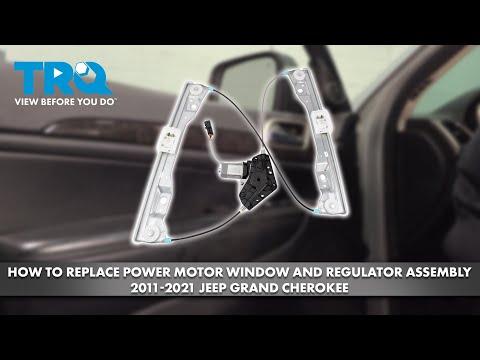




How to Replace Front Window Regulators on a 2022 Jeep Grand Cherokee WK
Step-by-step DIY guide with tools, parts list, torque specs, safety tips, and testing checklist
How to Replace Front Window Regulators on a 2022 Jeep Grand Cherokee WK
Step-by-step DIY guide with tools, parts list, torque specs, safety tips, and testing checklist


🔧 Grand Cherokee WK - Front Window Regulator Replacement
This guide covers replacing a front window regulator (the mechanism that moves the glass up and down) on your Grand Cherokee WK. The procedure is the same for either front door; just repeat on the other side if needed.
Difficulty Level: Intermediate | Estimated Time: 1.5–2.5 hours per door
⚠️ Safety & Precautions
- ⚠️ Disconnect the negative battery cable before starting to avoid accidental window switch activation.
- ⚠️ Wear safety glasses and gloves; broken glass edges and sharp metal inside the door can cut you.
- ⚠️ Support the window glass securely when you detach it from the regulator so it cannot drop and shatter.
- ⚠️ Work with the ignition OFF to avoid airbag or electrical system issues; do not probe yellow airbag connectors.
- ⚠️ Do not slam the door with the inner panel removed; the glass may not be fully supported.
🔧 Required Tools
You'll need the following tools for this repair:
- 🛠️ Ratchet handle 3/8"
- 🛠️ 10mm socket
- 🛠️ 8mm socket
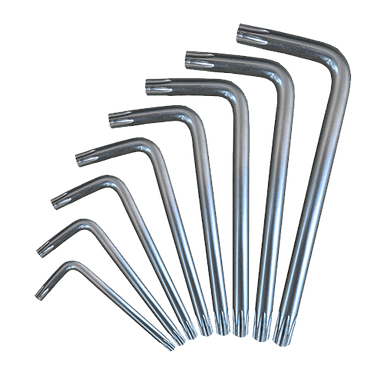
- 🛠️ T20 Torx screwdriver
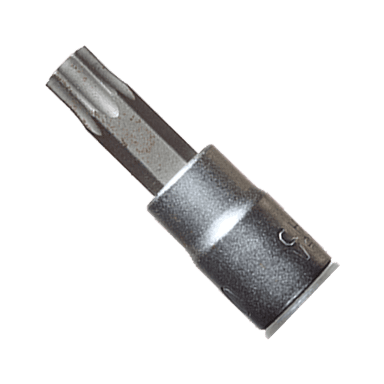
- 🛠️ T30 Torx bit
- 🛠️ Phillips #2 screwdriver
- 🛠️ Flat trim removal tool (plastic)
- 🛠️ Panel clip removal tool (specialty)
- 🛠️ Small flathead screwdriver 3mm
- 🛠️ Needle-nose pliers
- 🛠️ Torque wrench 3/8" drive (5–30 Nm range)
- 🛠️ Masking tape 1"
- 🛠️ Work light or headlamp
- 🛠️ Safety glasses
- 🛠️ Mechanic gloves
🔩 Required Parts
HowToo sells all the parts you need for this repair:
- 🔩 Front window regulator with motor assembly (driver side) - Qty: 1 (if replacing driver)
- 🔩 Front window regulator with motor assembly (passenger side) - Qty: 1 (if replacing passenger)
- 🔩 Front door trim panel clips - Qty: 6–10 per door have extras
- 🔩 Butyl seal or door vapor barrier adhesive rope - Qty: 1 roll
- 🔩 Dielectric grease (electrical connector safe) - Qty: small tube
- 🔩 Painter’s tape or masking tape - Qty: 1 roll
📋 Before You Begin
- Park the Grand Cherokee on level ground, gear selector in Park, and parking brake set.
- Lower the affected window until you can see the glass clamp bolts through the regulator access holes, if the regulator still moves. If it is stuck, you will handle glass later in the steps.
- Turn ignition OFF, remove the key (or turn off the start/stop button), and keep it away from the vehicle.
- Disconnect the negative battery terminal using a 10mm socket and move the cable aside so it cannot touch the post.
🔨 Step-by-Step Instructions
Follow these steps in order:
Step 1: Remove trim covers and visible screws
- Use the plastic trim removal tool to gently pry off the small trim cover behind the interior door handle; it hides a screw.
- Use the small flathead screwdriver 3mm to pop out any rubber or plastic plugs in the armrest or pull handle revealing screws.
- Remove exposed screws with the Phillips #2 screwdriver and the T20 Torx screwdriver as needed. Keep screws labeled by location. Take a phone photo for reference
Step 2: Remove the front door trim panel
- Starting at the bottom corner of the door, slide the plastic trim removal tool between the door panel and metal door to locate clips.
- Use the panel clip removal tool to pry each clip straight out; you will feel them pop loose. Work slowly to avoid cracking panel
- Once the perimeter clips are free, lift the door panel straight up to unhook it from the top window channel.
- Support the panel with one hand; do not pull it far until you disconnect electrical connectors.
Step 3: Disconnect electrical connectors and release door panel
- Use the small flathead screwdriver 3mm to release locking tabs on the power window switch connector and any mirror or door lock connectors; gently pull them apart.
- If equipped with door courtesy light, twist the bulb holder out by hand or disconnect its plug using your fingers or needle-nose pliers.
- Set the complete door trim panel aside in a safe place where it won’t get stepped on.
Step 4: Remove the inner moisture barrier or metal service panel
- If your door has a plastic sheet (moisture barrier), carefully peel it back starting at a corner using your hands. Use the plastic trim tool to help separate the butyl adhesive without tearing the sheet.
- If your door uses a metal service panel, remove the perimeter bolts with an 8mm socket and ratchet.
- Unplug any wires attached to the panel using the small flathead screwdriver 3mm to lift lock tabs. Gently set the barrier or panel aside.
Step 5: Secure the window glass in the up position
- If the glass is still attached to the regulator and in a mid position, have a helper hold it while you work. If you are alone, slide the glass fully up by hand.
- Use masking tape 1" to tape the glass to the top of the door frame from outside to inside. Use at least 4 strips across the top edge. More tape is safer
- Confirm the glass does not move when you gently push down with your hand.
Step 6: Detach the glass from the regulator clamps
- Look through the large access holes in the door to find the regulator glass clamps; they usually use 10mm bolts.
- Use a 10mm socket and ratchet to loosen each glass clamp bolt 3–4 turns; you usually do not need to remove them fully.
- Gently push the bottom edge of the glass away from the clamps using your hand so the glass is free from the regulator.
- Recheck the masking tape is holding the glass firmly in the full up position.
Step 7: Disconnect the window motor electrical connector
- Locate the window motor on the regulator assembly near the center of the door.
- Press the lock tab on the connector using the small flathead screwdriver 3mm if needed and pull the plug straight out.
- Apply a tiny amount of dielectric grease inside the connector seal if it looks dry or corroded.
Step 8: Remove the regulator and motor assembly
- Find all bolts holding the regulator rails and motor to the door (usually 10mm heads).
- Use a 10mm socket and ratchet to remove each bolt. Keep track of locations.
- Once all bolts are out, carefully slide the regulator assembly down and angle it to pull it out through the largest access opening.
- If cables snag, gently flex them free; do not force against sharp edges.
Step 9: Prepare and install the new regulator assembly
- Compare the old and new regulators side by side on a clean surface to confirm same shape, mounting points, and motor connector.
- Place the new regulator into the door cavity, feeding it in the same orientation the old one came out.
- Align the mounting holes with the door’s threaded holes.
- Install the mounting bolts by hand first, then snug them with a 10mm socket and ratchet.
- Torque regulator and motor bolts to 8–10 Nm (71–88 in-lbs) using the torque wrench 3/8".
Step 10: Reattach the glass to the new regulator
- With the glass still taped up, plug the window switch panel connector back in temporarily so you can move the regulator. Keep other connectors clear.
- Reconnect the negative battery cable with a 10mm socket, then turn ignition ON but do not start the engine.
- Use the window switch to move the regulator clamps to the correct position beneath the glass openings, then turn ignition OFF and disconnect the negative cable again.
- Carefully remove the masking tape from the glass while holding the glass with one hand.
- Lower the glass by hand into the regulator clamps until it seats fully.
- Tighten the clamp bolts with a 10mm socket until snug, then torque to 8 Nm (71 in-lbs) with the torque wrench 3/8".
Step 11: Final electrical connections and quick test
- Reconnect the motor connector firmly by hand; ensure it clicks.
- Reconnect any other door wiring harness connectors you unplugged earlier using your hands or needle-nose pliers if tight.
- Reconnect the negative battery terminal with a 10mm socket.
- Temporarily hold the door panel near its position, plug in the window switch, and cycle the window up and down fully to confirm smooth, quiet movement. Listen for grinding or binding
- If operation is good, turn ignition OFF and disconnect the negative cable once more before reassembly.
Step 12: Reinstall moisture barrier or metal service panel
- For a plastic sheet, press it back into place, reseating it firmly into the old adhesive. Add fresh butyl seal or adhesive rope where it no longer sticks.
- For a metal panel, position it on the door and start all bolts by hand.
- Use an 8mm socket and ratchet to tighten the panel bolts evenly, then torque to 5–6 Nm (44–53 in-lbs) with the torque wrench 3/8".
Step 13: Reinstall the door trim panel
- Bring the door panel close and reconnect all electrical connectors by hand until they click (window switch, mirror, lock, courtesy light).
- Hook the top edge of the panel into the window channel by lifting it slightly and setting it down into place.
- Align all plastic clips with their holes in the door, then press around the edges with your palm to snap them in. Go around the edge twice to confirm
- Reinstall all screws with the Phillips #2 screwdriver or T20 Torx screwdriver as removed, tightening them to 3–4 Nm (27–35 in-lbs) using the torque wrench 3/8" if possible.
- Press the trim covers back over the screws by hand.
Step 14: Final reconnection and window calibration
- Reconnect the negative battery cable using the 10mm socket and tighten to 7–9 Nm (62–80 in-lbs).
- Turn ignition ON.
- For auto-up/auto-down calibration (if equipped): hold the window switch to fully lower the window and keep it held for 2–3 seconds at the bottom, then raise it fully and keep it held for 2–3 seconds at the top. Repeat once more.
✅ After Repair
- ✅ Cycle the window up and down at least 5–10 times, watching and listening for smooth operation and no rattles.
- ✅ Check that the auto-up/auto-down feature works (if equipped) and that the window stops correctly at the top and bottom.
- ✅ Verify door locks, mirror adjustment, and door speaker all work properly.
- ✅ Drive slowly on a rough road and listen for new rattles from the repaired door.
💰 DIY vs Shop Cost
Shop Cost: $450–$700 per front regulator (parts + labor)
DIY Cost: $120–$250 per front regulator (parts only)
You Save: $330–$450 per door by doing it yourself!
Shop labor rates typically run $100–$150/hour. This repair takes a shop about 1.0–1.5 hours per door.
🎯 Ready to get started?
HowToo makes it easy: same-day/2-day shipping on every part, plus all the tools and specialty tools you need! Check out the parts and tools sections above to add everything to your cart.