









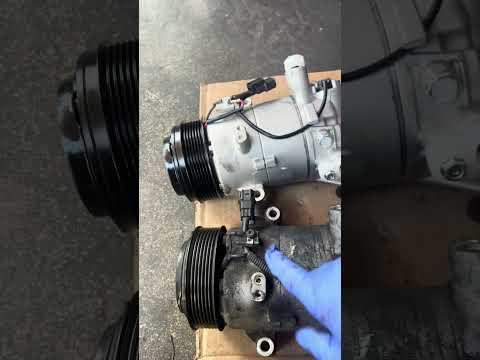




How to Replace the A/C Compressor on a 2022 Honda CR-V 1.5L
Step-by-step DIY compressor swap with tools, parts list, safety tips, and recharge instructions to restore cold air
How to Replace the A/C Compressor on a 2022 Honda CR-V 1.5L
Step-by-step DIY compressor swap with tools, parts list, safety tips, and recharge instructions to restore cold air


🔧 CR-V - A/C Compressor Replacement
You’ll be removing the A/C compressor from your CR-V and installing a new one, then having the system evacuated and recharged. This restores cooling when the compressor has failed or is noisy/seized.
Difficulty Level: Advanced | Estimated Time: 4-6 hours (plus shop time for refrigerant)
⚠️ Safety & Precautions
- ⚠️ Do NOT vent refrigerant to the air. It’s illegal, bad for the environment, and can cause frostbite and eye injury. Have a shop recover the refrigerant first.
- ⚠️ Refrigerant under pressure can cause serious eye and skin injury. Always wear safety glasses and gloves.
- ⚠️ Disconnect the negative battery terminal before working near the serpentine belt and compressor wiring.
- ⚠️ Support the vehicle securely with jack stands if you raise it. Never work under a car with only a jack.
- ⚠️ Keep hands and tools clear of the belt and pulleys when rotating the engine by hand.
- ⚠️ Work only on a cool engine to avoid burns from hot components.
🔧 Required Tools
You'll need the following tools for this repair:
- 🧰 3/8" drive ratchet
- 🧰 1/2" drive ratchet
- 🧰 10mm socket
- 🧰 12mm socket
- 🧰 14mm socket
- 🧰 17mm socket
- 🧰 3/8" drive extension set (3"-6")
- 🧰 Torque wrench (3/8" drive, 5-80 ft-lbs range)
- 🧰 Flat-blade screwdriver (medium)
- 🧰 Needle-nose pliers
- 🧰 Serpentine belt tool or long-handled 14mm wrench
- 🧰 Plastic trim clip remover
- 🧰 Floor jack (rated 3-ton minimum)
- 🧰 Jack stands (rated 3-ton minimum)
- 🧰 Wheel chocks
- 🧰 Drain pan (for any residual oil)
- 🧰 Shop rags
- 🧰 A/C manifold gauge set (R-134a) (specialty)
- 🧰 Vacuum pump (A/C) (specialty)
- 🧰 Digital scale for refrigerant charging (specialty)
- 🧰 Safety glasses
- 🧰 Mechanic’s gloves
- 🧰 Work light
🔩 Required Parts
HowToo sells all the parts you need for this repair:
- 🔩 A/C compressor (with clutch, for 1.5L turbo) - Qty: 1
- 🔩 A/C compressor mounting bolts (optional, recommended) - Qty: 4
- 🔩 A/C compressor O-ring set (suction and discharge lines) - Qty: 1 set
- 🔩 PAG A/C compressor oil (correct Honda spec) - Qty: As specified for your compressor
- 🔩 Serpentine belt (accessory drive belt, 1.5L turbo) - Qty: 1 (recommended while you’re there)
- 🔩 R-134a refrigerant (correct for your CR-V) - Qty: As per under-hood label
- 🔩 A/C system dye (optional) - Qty: 1
- 🔩 Dielectric grease (for electrical connectors) - Qty: small tube
- 🔩 Brake cleaner or A/C-safe cleaner - Qty: 1 can
📋 Before You Begin
- Park your CR-V on level ground, set the parking brake, and chock the rear wheels.
- Have a local A/C shop recover the refrigerant from your system. Tell them you’re replacing the compressor and will come back for vacuum and recharge.
- Open the hood and let the engine cool completely.
- Disconnect the negative battery terminal using a 10mm socket and move the cable aside so it can’t spring back.
- Locate the A/C compressor: it is mounted low on the front of the engine, driven by the serpentine belt.
- Read the under-hood A/C label for the exact refrigerant type and charge amount; you’ll need this when recharging.
🔨 Step-by-Step Instructions
Follow these steps in order:
Step 1: Safely raise and support the vehicle (if needed)
- Use the floor jack at the front jacking point to raise the front of your CR-V if you need more access underneath.
- Place jack stands under the proper support points and gently lower the vehicle onto them.
- Double-check stability by pushing the vehicle slightly; it should not move.
Step 2: Remove engine under-cover (splash shield)
- Use a plastic trim clip remover or flat-blade screwdriver to pop out the plastic clips holding the front under-cover.
- Remove any small bolts with a 10mm socket and ratchet.
- Lower the under-cover and set it aside.
Step 3: Relieve belt tension and remove the serpentine belt
- From the front/top of the engine bay, locate the belt tensioner pulley.
- Place a 14mm socket or 14mm serpentine belt tool on the tensioner bolt.
- Rotate the tensioner in the direction that loosens the belt (usually clockwise) and slide the belt off one of the upper pulleys.
- Slowly release the tensioner back to its rest position.
- Carefully remove the belt from all pulleys and note the routing. Take a photo of belt routing.
Step 4: Disconnect electrical connector at the compressor
- From below (or above if reachable), locate the electrical plug on the rear or side of the compressor.
- Use needle-nose pliers or your fingers to lift the plastic locking tab while gently pulling the connector off.
- If needed, use a flat-blade screwdriver to help release the tab, being careful not to break it.
Step 5: Disconnect A/C lines from the compressor
- Make sure the refrigerant has been professionally recovered. There should be no pressure in the system.
- Place a drain pan under the compressor area to catch any residual oil.
- Use a 12mm socket and ratchet to remove the bolt holding the suction and discharge line block to the compressor.
- Gently wiggle and pull the line block off the compressor. Some oil may drip out.
- Immediately plug or cover the open lines with clean caps or tape to keep dirt and moisture out.
Step 6: Remove the A/C compressor mounting bolts
- Identify the compressor mounting bolts (usually 3–4 bolts attaching it to the engine bracket).
- Use a 12mm or 14mm socket (depending on bolt head) with a 3/8" ratchet and extension to loosen and remove each bolt.
- Support the compressor with your hand as you remove the last bolt so it doesn’t drop suddenly.
- Lower the compressor out through the bottom if there is more clearance there.
Step 7: Prepare the new compressor
- Compare the old and new compressors to make sure the mounting points and line ports match.
- Drain the shipping oil from the new compressor into a clean container by removing the service caps and rotating the compressor by hand.
- Check your old compressor’s oil amount if possible, or follow the new compressor’s instructions for the correct PAG oil quantity to add.
- Measure out the correct amount of PAG oil and pour it into the new compressor through the suction port, then slowly rotate the center hub by hand to distribute the oil.
Step 8: Install the new compressor
- Lift the new compressor into position (from below is usually easiest).
- Install the mounting bolts by hand first to avoid cross-threading.
- Use a 12mm or 14mm socket and ratchet to snug all bolts evenly.
- Use a torque wrench with the correct socket to tighten the bolts to the Honda factory specification for compressor mounting bolts. Refer to a repair manual or data source for exact values.
Step 9: Install new O-rings and reconnect A/C lines
- Remove the old O-rings from the A/C line block using needle-nose pliers. Do not scratch the metal.
- Lightly coat the new O-rings with clean PAG oil so they seal properly.
- Install the new O-rings in the same positions as the old ones.
- Carefully align the line block with the compressor ports and push it straight on.
- Install the line bolt by hand, then tighten with a 12mm socket and torque wrench to the Honda factory specification for A/C line bolts.
Step 10: Reconnect electrical connector
- Inspect the compressor electrical connector for corrosion or damage. Clean if needed with brake cleaner on a rag.
- Apply a tiny amount of dielectric grease to the connector seal.
- Push the connector onto the compressor until you hear/feel a click.
Step 11: Reinstall serpentine belt
- Route the new or reused belt according to your photo or the routing diagram under the hood.
- Place a 14mm socket or serpentine belt tool on the tensioner and rotate it to release tension.
- Slip the belt over the final pulley, then slowly release the tensioner.
- Visually check that the belt is centered on all pulley grooves.
Step 12: Reinstall under-cover and lower the vehicle
- Lift the engine under-cover into place.
- Install the bolts with a 10mm socket and tighten them snugly.
- Reinstall the plastic clips using your fingers or a plastic clip tool.
- Use the floor jack to lift the vehicle slightly, remove the jack stands, and lower the vehicle fully to the ground.
Step 13: Reconnect battery and prepare for A/C service
- Reconnect the negative battery terminal using a 10mm socket and tighten it snugly.
- Do not run the A/C yet; the system must be evacuated and recharged first.
Step 14: Evacuate and recharge the A/C system
- If you are not experienced with A/C gauges and vacuum pumps, it is strongly recommended to have a shop perform this step.
- Connect the A/C manifold gauge set to the high and low service ports.
- Connect the vacuum pump to the manifold and run it to pull a deep vacuum (typically about 30–45 minutes).
- Close the valves and verify the system holds vacuum for at least 10–15 minutes (no leaks).
- With the engine off, charge the system with the exact amount of R-134a specified on the under-hood label, using a digital scale.
- Follow all standard A/C charging safety rules and local regulations.
✅ After Repair
- Start the engine and let it idle. Turn the A/C on to MAX COOL, fan on high, and recirculation mode.
- Verify the compressor clutch engages and that cold air comes from the vents within a few minutes.
- Listen for abnormal noises (squealing belt, grinding, rattling) from the compressor area.
- Check under the vehicle and around the compressor for any signs of refrigerant oil leaks.
- After a short drive, recheck belt routing and tension visually.
💰 DIY vs Shop Cost
Shop Cost: $1,000-$1,500 (parts + labor + refrigerant service)
DIY Cost: $400-$700 (compressor, belt, oil, refrigerant)
You Save: $600-$800 by doing it yourself!
Shop labor rates vary but typically run $100-$150/hour. This repair takes a shop approximately 3-4 hours, plus A/C machine time.
🎯 Ready to get started?
HowToo makes it easy: same-day/2-day shipping on every part, plus all the tools and specialty tools you need! Check out the parts and tools sections above to add everything to your cart.