















How to Replace Front Struts on a 2019 Nissan Rogue – Complete DIY Guide
Step-by-step 2019 Rogue front strut replacement with tools, parts list, torque specs, safety tips, and cost savings
How to Replace Front Struts on a 2019 Nissan Rogue – Complete DIY Guide
Step-by-step 2019 Rogue front strut replacement with tools, parts list, torque specs, safety tips, and cost savings


🔧 Rogue - Strut Replacement
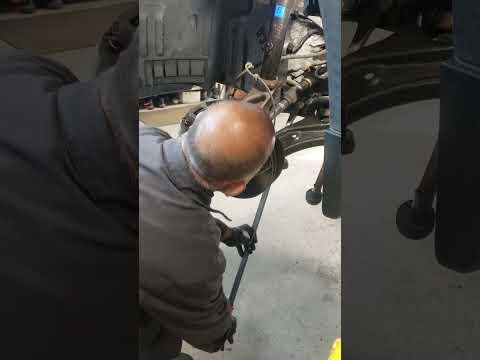
On your Rogue, “struts” usually refers to the front suspension units that combine a shock and a spring. Rear suspension uses separate shocks and coils. Replacing struts restores ride comfort and steering control.
Difficulty Level: Advanced | Estimated Time: 4-6 hours (full front pair)
⚠️ Safety & Precautions
- ⚠️ Do NOT disassemble a strut without a proper spring compressor. The coil spring is under high tension and can cause serious injury.
- ⚠️ Always support the vehicle with jack stands, never rely only on a floor jack.
- ⚠️ Wear safety glasses and mechanic gloves to protect your eyes and hands.
- ⚠️ Keep your head and body out from under the car unless it is solidly supported on stands.
- ⚠️ After suspension work, a professional wheel alignment is required to avoid tire wear and pulling.
- ⚠️ Battery disconnect is not required for this job.
🔧 Required Tools
You'll need the following tools for this repair:
- 🧰 Floor jack (rated 3-ton minimum)
- 🧰 Jack stands (3-ton pair)
- 🧰 Wheel chocks
- 🧰 Lug wrench 21mm
- 🧰 Socket set metric 10-21mm
- 🧰 Combination wrench set metric 10-21mm
- 🧰 Breaker bar 1/2-inch drive
- 🧰 Torque wrench 10-200 Nm range
- 🧰 Hex key 6mm
- 🧰 Strut spring compressor (external clamp style) (specialty)
- 🧰 Flat-blade screwdriver medium
- 🧰 Trim clip removal tool
- 🧰 Hammer medium
- 🧰 Pry bar 12-inch
- 🧰 Penetrating oil spray
- 🧰 Paint marker or white correction pen
- 🧰 Needle-nose pliers
- 🧰 Safety glasses
- 🧰 Mechanic gloves
🔩 Required Parts
HowToo sells all the parts you need for this repair:
- 🧱 Front complete strut assemblies (left and right) - Qty: 2
- 🧱 Front upper strut mounting nuts - Qty: 6
- 🧱 Front strut-to-steering knuckle bolts and nuts - Qty: 4
- 🧱 Front stabilizer link nuts - Qty: 2
- 🧱 Brake hose bracket bolt (front strut) - Qty: 2
- 🧱 Penetrating oil - Qty: 1
- 🧱 Anti-seize compound - Qty: 1
- 🧱 Paint marker (for alignment marks) - Qty: 1
📋 Before You Begin
- 📝 Park your Rogue on level ground, engage the parking brake, and place wheel chocks behind the rear wheels.
- 📝 Loosen front wheel lug nuts 1/2 turn with the 21mm lug wrench before lifting the vehicle.
- 📝 Plan to replace struts in pairs (both fronts) to keep handling balanced.
- 📝 Have a spring compressor ready if you are reusing springs and mounts. A spring compressor squeezes the coil spring safely.
- 📝 Take photos as you go so you can see hose and wire routing during reassembly.
🔨 Step-by-Step Instructions
Follow these steps in order:
Step 1: Lift and support the front of the Rogue
- Use the floor jack to lift the front of the vehicle at the front crossmember jacking point (center of the front underbody).
- Place jack stands under the left and right front pinch welds (under the doors) and slowly lower the vehicle onto the stands.
- Remove the front wheels using the 21mm lug wrench and set the wheels aside.
- Give the car a light shake to confirm stability.
Step 2: Identify and mark the front strut-to-knuckle position
- Locate the front strut where it bolts to the steering knuckle (the heavy part that holds the wheel hub).
- Spray the two large lower strut bolts and nuts with penetrating oil.
- Use the paint marker to trace around the strut bracket where it meets the steering knuckle. This helps keep alignment close.
Step 3: Disconnect brake hose and ABS wire from strut
- Find the small bracket where the brake hose attaches to the strut.
- Remove the bracket bolt using a 12mm socket and ratchet, then gently slide the hose out of the bracket.
- Use a trim clip removal tool or needle-nose pliers to gently pop any ABS sensor wire clips out of the strut.
- Do not stretch or twist hoses or wires.
Step 4: Disconnect the front stabilizer (sway bar) link from the strut
- Locate the stabilizer link where it bolts into a tab on the strut body.
- Hold the link stud with a 6mm hex key while loosening the nut with a 17mm wrench or 17mm socket.
- Remove the nut and push the link stud out of the strut tab. Use a hammer lightly if needed.
- Keep the nut if you are reusing it.
Step 5: Loosen the strut-to-knuckle bolts
- Use a 19mm socket and breaker bar on the nut side of the lower strut bolt and a 19mm wrench on the bolt head.
- Loosen and remove both lower bolts and nuts that clamp the strut to the steering knuckle.
- If the strut is stuck to the knuckle, use a hammer to tap on the knuckle ears while supporting the knuckle with your hand.
- Do not let the brake rotor hang by the hose.
Step 6: Support the steering knuckle
- Use a short floor jack or a box to support the lower control arm or knuckle so it does not drop and strain the CV axle.
- Make sure the knuckle is steady before moving to the top of the strut.
Step 7: Access and loosen upper strut mount nuts
- Open the hood.
- Locate the three upper strut mount nuts at the top of each strut tower (inside the engine bay, near the fender).
- Use a 13mm socket and ratchet to loosen all three nuts, but leave one nut threaded on several turns to hold the strut in place for now.
Step 8: Remove the front strut assembly
- While supporting the strut from below with one hand, remove the last upper nut using the 13mm socket.
- Carefully lower and maneuver the strut out of the wheel well. You may need to turn the steering wheel slightly for clearance.
- Set the strut upright on the ground.
Step 9: If using complete assemblies, skip spring transfer
- If you bought complete strut assemblies (with spring and mount installed), you can skip the next step and go straight to installation.
- Complete assemblies are safer and faster for beginners.
Step 10: Transfer spring and mount (if NOT using complete assemblies)
- Attach the spring compressor onto opposite sides of the coil spring, as far apart as possible.
- Evenly tighten each side with a ratchet and socket until the spring is just loose from the upper and lower seats.
- Hold the strut shaft with a hex key (if required) and remove the top center nut with the correct socket.
- Lift off the upper mount and bearing, then carefully remove the spring.
- Transfer the spring onto the new strut, ensuring the bottom of the spring sits correctly in the lower seat.
- Reinstall the upper mount and bearing, and install the new top nut. Tighten the nut to Torque to 44 Nm (32 ft-lbs) using a torque wrench while holding the shaft with a hex key if needed.
- Slowly release the spring compressor evenly, making sure the spring seats correctly at top and bottom.
- Keep your face and body away from the spring ends.
Step 11: Install the new strut assembly into the body
- Guide the new strut into the wheel well and align the studs of the upper mount with the holes in the strut tower.
- From the engine bay, start all three upper nuts by hand using a 13mm socket, but do not fully tighten yet.
- Snug them lightly so the strut hangs in place.
Step 12: Attach strut to steering knuckle
- Align the lower part of the strut with the steering knuckle.
- Insert the new lower bolts by hand through the strut bracket and knuckle.
- Install the new nuts and tighten them evenly using a 19mm socket and 19mm wrench.
- Torque both lower strut bolts to Torque to 133 Nm (98 ft-lbs) with a torque wrench.
- Check your paint marks and adjust slightly so the strut position matches your original outline.
Step 13: Reconnect stabilizer link, brake hose, and ABS wire
- Insert the stabilizer link stud into the hole on the strut tab.
- Install the nut and hold the stud with a 6mm hex key while tightening the nut with a 17mm wrench. Torque to Torque to 74 Nm (55 ft-lbs).
- Reattach the brake hose bracket using the 12mm socket and torque the bolt to Torque to 23 Nm (17 ft-lbs).
- Press the ABS wire clips back into their spots on the strut using your hands or needle-nose pliers.
Step 14: Tighten upper strut mount nuts
- From the engine bay, use a 13mm socket and torque wrench to tighten the three upper strut mount nuts.
- Torque each upper nut to Torque to 44 Nm (32 ft-lbs).
Step 15: Repeat on the other side
- Repeat Steps 2–14 for the opposite front strut.
- Work one side at a time to use the other as reference.
Step 16: Reinstall wheels and lower the vehicle
- Reinstall the front wheels and thread lug nuts by hand.
- Use the 21mm lug wrench to snug the lug nuts in a star pattern.
- Raise the vehicle slightly with the floor jack, remove the jack stands, and lower the vehicle to the ground.
- Torque the lug nuts in a star pattern to Torque to 113 Nm (83 ft-lbs) using a torque wrench.
✅ After Repair
- 🔍 Turn the steering wheel fully left and right while parked to confirm there are no noises and that brake hoses and ABS wires are not stretched or rubbing.
- 🔍 Take a short, slow test drive on a smooth road to listen for clunks, pops, or rubbing. Recheck torque on lug nuts after the drive.
- 🔍 Schedule a professional four-wheel alignment as soon as possible. This will correct camber and toe after strut replacement.
- 🔍 Over the next few days, listen for new noises over bumps. Reinspect mounting nuts and bolts if anything sounds off.
💰 DIY vs Shop Cost
Shop Cost: $700-$1,000 (parts + labor for both front struts)
DIY Cost: $250-$450 (parts only, both front complete struts)
You Save: $450-$550 by doing it yourself!
Shop labor rates vary but typically run $100-$150/hour. This repair takes a shop approximately 2-3 hours.
🎯 Ready to get started?
HowToo makes it easy: same-day/2-day shipping on every part, plus all the tools and specialty tools you need! Check out the parts and tools sections above to add everything to your cart.