









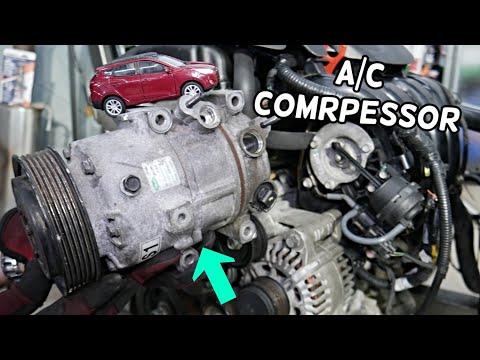







How to Replace the A/C Compressor on a 2014 Hyundai Tucson (R-134a System)
Step-by-step removal and install with required tools/parts, oil balancing, evac & recharge, and contamination flush tips
How to Replace the A/C Compressor on a 2014 Hyundai Tucson (R-134a System)
Step-by-step removal and install with required tools/parts, oil balancing, evac & recharge, and contamination flush tips


🔧 Tucson - A/C Compressor Replacement
Replacing the A/C compressor on your Tucson involves safely recovering the refrigerant, removing the belt and compressor, then installing the new unit with the correct oil amount and recharging the system to spec. The exact parts and steps change depending on whether the old compressor failed internally (metal debris) or you’re replacing it for a leak/noise.
Difficulty Level: Advanced | Estimated Time: 3-6 hours
⚠️ Safety & Precautions
- ⚠️ Do not vent refrigerant—have the system professionally recovered first.
- ⚠️ Refrigerant can cause frostbite and eye injury; wear gloves and safety glasses.
- ⚠️ Keep hands/tools clear of the belt path; engine must be OFF during belt removal.
- ⚠️ If the compressor failed internally, metal debris can destroy the new compressor unless the system is cleaned and key parts are replaced.
🔧 Required Tools
You'll need the following tools for this repair:
- Safety glasses
- Nitrile gloves
- Floor jack (rated 3-ton minimum)
- Jack stands (rated 3-ton minimum)
- Wheel chocks
- 10mm socket
- 12mm socket
- 14mm socket
- 17mm socket
- 3/8" drive ratchet
- 3/8" drive torque wrench
- Socket extensions (3" and 6")
- Serpentine belt tool (specialty)
- Trim clip remover
- Flat-blade screwdriver
- Refrigerant manifold gauge set for R-134a (specialty)
- Vacuum pump (specialty)
- Refrigerant scale (specialty)
- A/C flush gun kit (specialty)
🔩 Required Parts
HowToo sells all the parts you need for this repair:
- A/C compressor - Qty: 1
- A/C compressor clutch relay - Qty: 1
- A/C line O-ring set - Qty: 1
- PAG A/C compressor oil (R-134a compatible) - Qty: 1
- R-134a refrigerant - Qty: 1
- Receiver/drier or desiccant element - Qty: 1
- Expansion valve - Qty: 1
- A/C system flush solvent - Qty: 1
- Serpentine drive belt - Qty: 1
📋 Before You Begin
- Park on level ground, set the parking brake, and chock the rear wheels.
- Have a shop recover the refrigerant first (tell them you’re replacing the compressor).
- Disconnect the negative battery cable using a 10mm socket.
- If your old compressor seized or made “grinding” noise, plan on flush + receiver/drier + expansion valve replacement.
🔨 Step-by-Step Instructions
Follow these steps in order:
Step 1: Confirm the failure type (important)
- Look at the symptoms: squeal/grind, clutch smoke, seized pulley, or black debris in lines.
- If there’s internal failure (metal), you must replace the receiver/drier and expansion valve and flush the system, or the new compressor can fail fast.
- If unsure, treat it as contaminated.
Step 2: Raise the front of your Tucson
- Lift with a floor jack (rated 3-ton minimum) at the front center jacking point.
- Support with jack stands (rated 3-ton minimum) at the pinch welds/subframe points.
Step 3: Remove the lower splash shield (if equipped)
- Use a trim clip remover and 10mm socket to remove clips/bolts.
- Set fasteners aside in a tray so nothing gets lost.
Step 4: Remove the serpentine belt
- Use a serpentine belt tool (specialty) to rotate the belt tensioner and slip the belt off the A/C compressor pulley.
- Take a photo of the belt routing first.
Step 5: Unplug the compressor electrical connector
- Press the tab and remove the connector by hand.
- If stuck, gently help with a flat-blade screwdriver (don’t break the tab).
Step 6: Remove the A/C lines from the compressor
- Remove the line retaining bolts using a 12mm socket.
- Pull the lines straight off and immediately cap/tape the openings to keep dirt/moisture out.
- Remove and discard the old O-rings; install new O-rings during reassembly.
Step 7: Unbolt and remove the compressor
- Support the compressor with one hand.
- Remove the compressor mounting bolts using a 14mm socket and socket extensions (3" and 6").
- Lower the compressor out carefully; it’s heavier than it looks.
Step 8: If contaminated, flush the system (highly recommended after failure)
- Use an A/C flush gun kit (specialty) with A/C system flush solvent to flush the condenser and lines.
- Do not flush the receiver/drier; replace it.
- Blow out and dry until no solvent mist comes out (use the flush kit procedure).
Step 9: Replace the receiver/drier and expansion valve (if applicable)
- Replace the receiver/drier or desiccant element and the expansion valve per their mounting locations on your Tucson.
- Use a 10mm socket and 12mm socket as needed for brackets/fasteners.
Step 10: Prepare the new compressor (oil balancing)
- Drain and measure oil from the old compressor into a clean container (if it isn’t seized), then add the same amount of fresh PAG A/C compressor oil (R-134a compatible) to the new compressor.
- Rotate the new compressor hub by hand a few turns to distribute oil evenly.
- Too much oil reduces cooling.
Step 11: Install the new compressor
- Position the compressor and start bolts by hand to avoid cross-threading.
- Tighten mounting bolts using a 14mm socket and then a 3/8" drive torque wrench.
- Torque specs: I need one detail below to give the exact Tucson torque specs (there are production/fastener variations). Don’t torque yet if you’re unsure.
Step 12: Reinstall A/C lines with new O-rings
- Lightly coat new O-rings with clean PAG A/C compressor oil (R-134a compatible).
- Install lines straight into place and tighten the retaining bolts using a 12mm socket and 3/8" drive torque wrench.
- Torque specs: I’ll provide the exact spec after the quick questions below.
Step 13: Reinstall the belt and splash shield
- Route the belt correctly and use the serpentine belt tool (specialty) to set tension.
- Reinstall the splash shield using a trim clip remover and 10mm socket.
Step 14: Evacuate and recharge the A/C system
- Connect the refrigerant manifold gauge set for R-134a (specialty) and vacuum pump (specialty).
- Pull vacuum, confirm it holds, then charge by weight using a refrigerant scale (specialty).
- Refrigerant charge amount: I’ll provide the exact Tucson spec after the quick questions below.
Step 15: Restore power and function-check
- Reconnect the battery negative cable using a 10mm socket.
- Start the engine, turn A/C on MAX, and verify the compressor cycles and vent temps drop.
✅ After Repair
- Check for leaks at the compressor line connections (listen for hissing; look for oil residue).
- Verify the radiator fans operate when A/C is commanded ON.
- If cooling is weak, re-check charge weight and airflow through the condenser.
💰 DIY vs Shop Cost
Shop Cost: $1,200-$2,400 (parts + labor)
DIY Cost: $350-$1,200 (parts only)
You Save: $850-$1,200 by doing it yourself!
Shop labor rates vary but typically run $100-$150/hour. This repair takes a shop approximately 3-6 hours.
🎯 Ready to get started?
HowToo makes it easy: same-day/2-day shipping on every part, plus all the tools and specialty tools you need! Check out the parts and tools sections below to add everything to your cart.
Quick questions so I can give you the exact Tucson torque specs + exact R-134a charge amount
- Do you have manual A/C knobs or an automatic climate control temperature display?
- Did the old compressor seize/make grinding noise (possible metal contamination), or are you replacing it for a leak/noise while still cooling?