








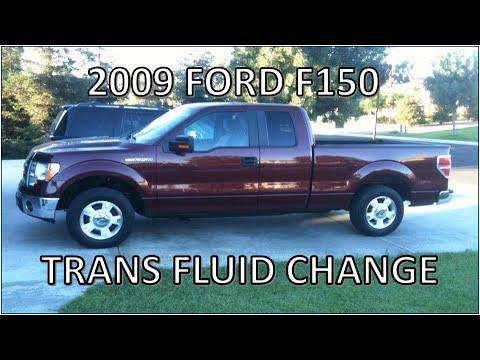







How to Change Transmission Fluid & Filter on a 2009 Ford F-150 (Pan Drop Service)
Step-by-step drain, pan removal, filter swap, refill, and temperature-based level check with tools, parts, and torque specs
How to Change Transmission Fluid & Filter on a 2009 Ford F-150 (Pan Drop Service)
Step-by-step drain, pan removal, filter swap, refill, and temperature-based level check with tools, parts, and torque specs


🔧 F-150 - Transmission Fluid & Filter Service
On your F-150, the correct way to “change” transmission fluid is typically a pan drop service: drain the fluid, remove the pan, replace the filter, then refill and set the fluid level at a specific transmission temperature. This replaces a large portion of the fluid and is the safest DIY method without a flush machine.
Difficulty Level: Intermediate | Estimated Time: 2-4 hours
⚠️ Safety & Precautions
- 🛑 Support the truck on jack stands on level ground; never rely on a jack.
- 🛑 Transmission fluid can be hot—wear gloves and safety glasses.
- 🛑 Keep the truck level during the final level check, or the fluid level will be wrong.
- 🛑 Engine must run during final level check—keep hands/tools clear of moving parts.
- 🛑 No battery disconnect is required for this service.
🔧 Required Tools
You'll need the following tools for this repair:
- Floor jack (rated 3-ton minimum)
- Jack stands (rated 3-ton minimum)
- Wheel chocks
- Safety glasses
- Nitrile gloves
- Drain pan (at least 15-quart capacity)
- Socket set (metric) with ratchet
- 8mm socket
- 10mm socket
- 19mm socket
- 5mm Allen key or 5mm hex bit socket
- Torque wrench (in-lb and ft-lb capable)
- Plastic scraper
- Brake cleaner spray
- Shop towels
- Fluid transfer pump (specialty)
- Long funnel
- Infrared thermometer
🔩 Required Parts
HowToo sells all the parts you need for this repair:
- Automatic transmission fluid (MERCON LV) - Qty: 8-12 quarts
- Transmission filter - Qty: 1
- Transmission pan gasket - Qty: 1
- Brake cleaner - Qty: 1
📋 Before You Begin
- Park on a level surface, set the parking brake, and place wheel chocks behind the rear tires.
- Raise the front and support with jack stands, then raise the rear if needed so the truck sits level.
- Lay out a big drain pan—this transmission pan removal is messy.
- If you have an infrared thermometer, plan to measure temperature on the transmission pan near the center.
🔨 Step-by-Step Instructions
Follow these steps in order:
Step 1: Warm the transmission fluid slightly
- Drive 5-10 minutes so the fluid is warm (not scorching hot).
- Warm fluid drains faster and carries more debris out.
Step 2: Safely lift and level the truck
- Use a floor jack (rated 3-ton minimum) to lift the truck and set it on jack stands (rated 3-ton minimum).
- Place wheel chocks and confirm the truck is stable before crawling underneath.
Step 3: Drain the transmission fluid (if equipped with a drain plug)
- Position the drain pan (at least 15-quart capacity) under the transmission pan.
- Use a 19mm socket to remove the main drain/level plug (outer plug).
- Then use a 5mm Allen key or 5mm hex bit socket to remove the inner standpipe plug to allow draining.
- Let it drain until it slows to a drip.
Step 4: Remove the transmission pan
- If your pan does not have a drain plug, skip Step 3 and expect more spillage here.
- Use an 8mm socket to loosen the pan bolts, leaving a few bolts threaded at one end to control the drop.
- Carefully lower the pan into the drain pan.
- Remove the remaining bolts with the 8mm socket.
Step 5: Replace the transmission filter
- Pull the filter straight down by hand; if it’s stubborn, gently work it loose.
- Make sure the old filter seal/O-ring comes out with the filter (don’t leave it stuck in the case).
- Install the new filter by pushing it up firmly until fully seated.
Step 6: Clean the pan and reinstall with a new gasket
- Clean the pan with brake cleaner spray and shop towels.
- Clean the magnet(s) in the pan; a gray paste is normal, but chunks/slivers are not.
- Use a plastic scraper to clean the mating surface (do not gouge aluminum).
- Position the new gasket and reinstall the pan bolts by hand.
- Tighten pan bolts evenly using an 8mm socket, then final tighten with a torque wrench: Torque to 10 Nm (89 in-lb).
Step 7: Reinstall drain/level plugs (if removed)
- Reinstall the inner standpipe plug using a 5mm Allen key or 5mm hex bit socket: Torque to 10 Nm (89 in-lb).
- Reinstall the outer plug using a 19mm socket and torque wrench: Torque to 35 Nm (26 ft-lb).
Step 8: Refill with MERCON LV
- Refill method depends on your fill point (most commonly through the fill/level port).
- Use a fluid transfer pump (specialty) to pump MERCON LV into the transmission.
- Add about what you drained out as a starting point (commonly 5-7 quarts for a pan drop).
Step 9: Set the transmission fluid level (critical)
- Start the engine and keep the truck on level jack stands.
- With foot on brake, shift slowly through P-R-N-D and back to P to fill circuits.
- Use an infrared thermometer to monitor transmission pan temperature.
- When the pan is about 35-45°C (95-113°F), remove the outer plug using a 19mm socket, then remove the inner standpipe plug with a 5mm Allen key or 5mm hex bit socket.
- Correct level is a thin steady stream/drip from the standpipe opening at that temperature.
- If no fluid comes out, add MERCON LV with the fluid transfer pump (specialty) until it starts to drip out.
- Reinstall the inner standpipe plug: Torque to 10 Nm (89 in-lb), then reinstall the outer plug: Torque to 35 Nm (26 ft-lb).
Step 10: Lower the truck and clean up
- Use the floor jack (rated 3-ton minimum) to lift slightly, remove jack stands, and lower the truck.
- Clean any spilled fluid with brake cleaner spray and shop towels.
✅ After Repair
- Test drive 10-15 minutes and verify smooth shifts (no flare, no harsh engagement).
- Recheck for leaks around the pan and plugs.
- If you notice delayed engagement, slipping, or new harsh shifts, recheck level using the same temperature-based method.
- Dispose of used ATF at a recycling center or parts store that accepts waste fluid.
💰 DIY vs Shop Cost
Shop Cost: $300-$650 (parts + labor)
DIY Cost: $90-$220 (parts only)
You Save: $210-$430 by doing it yourself!
Shop labor rates vary but typically run $100-$150/hour. This repair takes a shop approximately 2-3 hours.
🎯 Ready to get started?
HowToo makes it easy: same-day/2-day shipping on every part, plus all the tools and specialty tools you need! Check out the parts and tools sections below to add everything to your cart.