









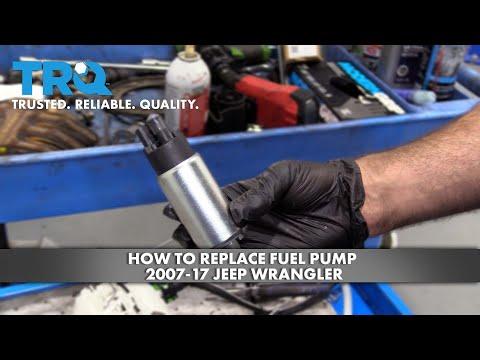







How to Replace the Fuel Pump Module on a 2013 Jeep Wrangler (In-Tank Pump)
Step-by-step tank drop guide with required tools, parts list, safety tips, and torque specs
How to Replace the Fuel Pump Module on a 2013 Jeep Wrangler (In-Tank Pump)
Step-by-step tank drop guide with required tools, parts list, safety tips, and torque specs


🔧 Wrangler - Fuel Pump Replacement
On your Wrangler, the fuel pump is part of an in-tank fuel pump module. Replacement requires lowering the fuel tank enough to remove the module lock ring and lift the module out safely.
Difficulty Level: Advanced | Estimated Time: 3-5 hours
⚠️ Safety & Precautions
- ⛽ Work outside or in a well-ventilated area; no sparks, flames, or smoking.
- 🧯 Keep a Class B fire extinguisher nearby.
- 🔋 Disconnect the negative battery cable before opening fuel lines.
- 🛑 Relieve fuel pressure before disconnecting the fuel line to avoid fuel spray.
- 🧱 Support the fuel tank with a jack and a wood block; do not let it hang by hoses/wires.
- 🧤 Wear safety glasses and fuel-resistant gloves.
🔧 Required Tools
You'll need the following tools for this repair:
- Safety glasses
- Fuel-resistant gloves
- Wheel chocks
- Floor jack (rated 3-ton minimum)
- Jack stands (rated 3-ton minimum)
- Wood block (2x6 or similar)
- Metric socket set (8mm, 10mm, 13mm, 15mm, 16mm, 18mm)
- 3/8" drive ratchet
- 1/2" drive breaker bar
- Socket extensions (3" and 6")
- Torque wrench (10-200 Nm range)
- Flathead screwdriver
- Trim clip removal tool
- Fuel line quick-disconnect tool set
- Brass drift punch
- Dead-blow hammer
- Shop rags
- Drain pan
- Flashlight
🔩 Required Parts
HowToo sells all the parts you need for this repair:
- Fuel pump module assembly (in-tank) - Qty: 1
- Fuel pump module seal / O-ring - Qty: 1
- Fuel pump strainer (sock filter) - Qty: 1
- EVAP hose clamp(s) - Qty: 1-2
📋 Before You Begin
- 🅿️ Park on level ground, set the parking brake, and chock the front wheels.
- ⛽ Run the tank down to 1/4 or less; a full tank is heavy and dangerous to lower.
- 🔋 Disconnect the negative battery cable using a 10mm socket.
- 🧠 If you have an aftermarket skid plate, lift kit, or relocated EVAP canister, tell me before you start (mounting can differ).
🔨 Step-by-Step Instructions
Follow these steps in order:
Step 1: Relieve fuel pressure
- Remove the fuel filler cap by hand to release tank vapor pressure.
- Open the under-hood fuse/relay box (TIPM).
- Remove the fuel pump relay using a trim clip removal tool or fingers (wiggle straight up).
- Start the engine and let it run until it stalls; crank 2-3 more seconds to finish depressurizing.
- Turn ignition OFF and reinstall the relay later during reassembly.
- Fuel spray risk drops a lot after this.
Step 2: Raise and support the Wrangler
- Use a floor jack (rated 3-ton minimum) to lift the rear at the axle.
- Place jack stands (rated 3-ton minimum) under the frame rails and lower onto stands.
- Keep the floor jack available to support the fuel tank.
Step 3: Support the fuel tank
- Place a wood block (2x6 or similar) on the floor jack saddle.
- Jack up gently until the wood block contacts the fuel tank/skid plate and supports it.
Step 4: Disconnect the EVAP and filler connections (as accessible)
- Locate the fuel filler and vent hoses near the tank/filler neck area.
- Use a flathead screwdriver to loosen worm clamps (if equipped) or release clamps carefully.
- Disconnect EVAP vapor line(s) by releasing the quick-connect tabs by hand; use a flashlight to confirm the tab is fully released before pulling.
- Have a drain pan and shop rags ready for any drips.
Step 5: Disconnect the electrical connector and main fuel line
- Find the fuel pump module wiring connector on top/front area of the tank.
- Release the connector lock and unplug by hand; use a flathead screwdriver only if needed (don’t break the tab).
- Disconnect the fuel supply line quick-connect using a fuel line quick-disconnect tool set.
- Wrap the connection with shop rags as you separate it.
Step 6: Remove the tank skid plate / straps and lower the tank
- Use a metric socket set (15mm, 16mm, 18mm), ratchet, and extensions to remove the fuel tank skid plate/strap fasteners (hardware varies by equipment).
- Use a 1/2" drive breaker bar if bolts are tight.
- Lower the tank slowly with the floor jack, stopping often to ensure no hose/wire is stretching.
- If anything is still attached, raise the tank slightly, disconnect it, then continue lowering.
- Torque to 54 Nm (40 ft-lbs) for fuel tank skid plate/strap fasteners during reassembly.
Step 7: Clean the top of the tank around the fuel pump module
- Use a shop rag to wipe dirt away from the module area so debris won’t fall into the tank.
- Dirt in the tank can ruin the new pump.
Step 8: Remove the fuel pump module lock ring
- Mark the module orientation with a flathead screwdriver scratch mark or paint marker (helps alignment).
- Use a brass drift punch and dead-blow hammer to tap the lock ring counterclockwise until it releases.
- A brass drift is a soft metal punch that reduces spark risk compared to steel.
- Lift the lock ring off and remove the old seal/O-ring.
- Torque to 65 Nm (48 ft-lbs) for the lock ring during reassembly (or tighten to the alignment marks if your ring uses index stops).
Step 9: Remove the fuel pump module
- Carefully lift the module straight up; angle it as needed to clear the float arm.
- Keep the module over the tank opening to drain fuel back into the tank.
- Place the module into a drain pan.
Step 10: Install the new seal and new fuel pump module
- Install the new fuel pump module seal / O-ring onto the tank opening (make sure it sits flat).
- Lower the new module into the tank, matching the orientation marks.
- Install the lock ring and tighten using the brass drift punch and dead-blow hammer.
- Torque to 65 Nm (48 ft-lbs) for the lock ring (or fully seat to the index stops).
Step 11: Raise the tank and reconnect lines
- Use the floor jack and wood block to raise the tank into position.
- Reconnect the electrical connector (push until it clicks).
- Reconnect the fuel line quick-connect (push until it clicks, then tug-test gently).
- Reconnect EVAP lines and filler/vent hoses; tighten clamps using a flathead screwdriver.
Step 12: Reinstall skid plate/straps and lower the Wrangler
- Install skid plate/strap bolts by hand first to avoid cross-threading.
- Tighten with a metric socket set (15mm, 16mm, 18mm) and ratchet.
- Torque to 54 Nm (40 ft-lbs) for fuel tank skid plate/strap fasteners.
- Lower the vehicle using the floor jack and remove jack stands.
✅ After Repair
- 🔋 Reconnect the negative battery cable using a 10mm socket.
- 🧠 Prime the system: key ON for 3 seconds, OFF for 3 seconds; repeat 3 times (do not crank).
- 🔎 Start the engine and inspect for leaks at the fuel line, module seal, and hose connections.
- 🛠️ If you have a check engine light, scan for codes; EVAP line issues are common if a connector didn’t click fully.
💰 DIY vs Shop Cost
Shop Cost: $900-$1,400 (parts + labor)
DIY Cost: $250-$600 (parts only)
You Save: $300-$1,000 by doing it yourself!
Shop labor rates vary but typically run $100-$150/hour. This repair takes a shop approximately 3-5 hours.
🎯 Ready to get started?
HowToo makes it easy: same-day/2-day shipping on every part, plus all the tools and specialty tools you need! Check out the parts and tools sections below to add everything to your cart.