








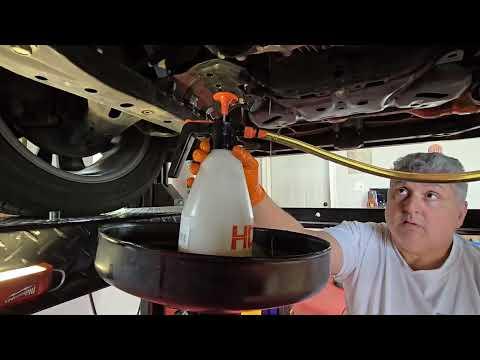







How to Change CVT Transmission Fluid on a 2019 Subaru Outback (Drain & Refill)
Step-by-step drain-and-refill with required tools, Subaru CVT fluid, fluid temp level check, and torque specs
How to Change CVT Transmission Fluid on a 2019 Subaru Outback (Drain & Refill)
Step-by-step drain-and-refill with required tools, Subaru CVT fluid, fluid temp level check, and torque specs


🔧 Outback - CVT Fluid Drain & Refill (Transmission Fluid Change)
This job is a drain-and-refill on your Outback’s CVT, then a very specific fluid level check at the correct temperature. CVTs are sensitive to fluid level, so the “set level at temperature” step is the most important part.
Difficulty Level: Advanced | Estimated Time: 2.0-3.5 hours
⚠️ Safety & Precautions
- ⚠️ Support the car on jack stands before going underneath.
- ⚠️ CVT fluid can be hot; wear gloves and safety glasses.
- ⚠️ Level-check is done with the engine running—keep hands/clothes away from belts/fans.
- ⚠️ Keep the car level (front-to-rear and side-to-side) or the fluid level will be wrong.
- ⚠️ Do not substitute “universal ATF/CVT fluid”—use the correct Subaru CVT fluid.
🔧 Required Tools
You'll need the following tools for this repair:
- Floor jack (rated 3-ton minimum)
- Jack stands (rated 3-ton minimum, set of 4)
- Wheel chocks (2-pack)
- Safety glasses
- Nitrile gloves
- Drain pan (10-quart minimum)
- Socket set (metric)
- 3/8" drive ratchet
- 1/2" drive torque wrench (20-100 ft-lbs range)
- 3/8" drive torque wrench (5-30 ft-lbs range)
- Trim clip tool
- Funnel with hose
- Fluid transfer pump (specialty)
- OBD2 scan tool or phone OBD2 adapter that reads CVT fluid temperature (specialty)
- Shop rags
- Brake cleaner spray
🔩 Required Parts
HowToo sells all the parts you need for this repair:
- Subaru High Torque CVT Fluid - Qty: 7 quarts
- CVT drain plug crush washer - Qty: 1
- CVT level check plug crush washer - Qty: 1
- CVT fill plug crush washer - Qty: 1
📋 Before You Begin
- Park on a flat, level surface and chock the rear wheels with wheel chocks.
- Lift and support the car level on 4 jack stands using a floor jack.
- Set up your OBD2 scan tool to view “CVT fluid temperature.” This is required to set the fluid level correctly.
- Tip: A “fluid transfer pump” pushes fluid into the fill port.
🔨 Step-by-Step Instructions
Follow these steps in order:
Step 1: Remove the lower under cover (if equipped)
- Use a trim clip tool and metric socket set with a 3/8" drive ratchet to remove the fasteners and take off the under cover.
- Set hardware aside in a tray so nothing gets lost.
Step 2: Identify the CVT plugs
- Locate the CVT drain plug at the bottom of the transmission case.
- Locate the CVT fill plug on the transmission (used to add fluid).
- Locate the CVT level check plug (used to set final fluid level at temperature).
- Tip: Clean around plugs before opening.
Step 3: Drain the old CVT fluid
- Place a drain pan (10-quart minimum) under the drain plug.
- Use the correct-size socket with a 3/8" drive ratchet to remove the drain plug.
- Let the fluid drain completely (usually 10–20 minutes).
- Clean the drain plug and sealing surface using shop rags and brake cleaner spray.
Step 4: Reinstall drain plug with new washer
- Install a new CVT drain plug crush washer on the drain plug.
- Thread the drain plug in by hand first.
- Tighten using a 1/2" drive torque wrench: Torque to 50 Nm (37 ft-lbs).
Step 5: Add initial fill amount of CVT fluid
- Remove the CVT fill plug using the correct-size socket and a 3/8" drive ratchet.
- Install your fluid transfer pump (specialty) and pump in fresh Subaru High Torque CVT Fluid.
- Add approximately the amount you drained (measure what came out in your drain pan if it has marks).
- Reinstall the fill plug loosely for now (you may need to add more later).
Step 6: Warm up CVT fluid and circulate it
- Start the engine and keep your foot on the brake.
- Use your OBD2 scan tool to monitor CVT fluid temperature.
- Slowly move the shifter through P-R-N-D, pausing 3 seconds in each position, then return to P.
- Bring CVT fluid temperature to 35–45°C (95–113°F).
Step 7: Set the CVT fluid level (critical step)
- With the engine running, vehicle level on stands, and temp at 35–45°C (95–113°F), place the drain pan under the level check area.
- Remove the CVT level check plug using the correct-size socket and a 3/8" drive ratchet.
- Correct level behavior:
- If fluid barely dribbles out, the level is close.
- If nothing comes out, add CVT fluid through the fill port using the fluid transfer pump (specialty) until it begins to dribble from the level check opening.
- If a strong stream pours out, let it drain until it becomes a thin dribble.
- Install a new CVT level check plug crush washer, then reinstall the plug.
- Tighten using a 3/8" drive torque wrench: Torque to 15 Nm (11 ft-lbs).
Step 8: Final fill plug install
- Remove the fill plug again if needed, install a new CVT fill plug crush washer, then reinstall the fill plug.
- Tighten using a 1/2" drive torque wrench: Torque to 50 Nm (37 ft-lbs).
- Clean any spilled fluid using shop rags and brake cleaner spray.
Step 9: Reinstall under cover and lower the vehicle
- Reinstall the under cover using the trim clip tool and metric socket set with a 3/8" drive ratchet.
- Lower the car safely using the floor jack (rated 3-ton minimum).
✅ After Repair
- Test drive 10–15 minutes, then re-check underneath for any seepage at the plugs.
- Re-scan for codes using the OBD2 scan tool; address any transmission-related codes before continuing to drive.
- Tip: Small leaks show best on a clean case.
💰 DIY vs Shop Cost
Shop Cost: $350-$650 (parts + labor)
DIY Cost: $120-$220 (parts only)
You Save: $230-$430 by doing it yourself!
Shop labor rates vary but typically run $100-$150/hour. This repair takes a shop approximately 1.5-2.5 hours.
🎯 Ready to get started?
HowToo makes it easy: same-day/2-day shipping on every part, plus all the tools and specialty tools you need! Check out the parts and tools sections below to add everything to your cart.